Tag: System Shaping
System Shaping is a framework for understanding why complex human systems repeat patterns, resist transformation, and evolve over time. It focuses on the deeper conditions that influence behavior: feedback, incentives, identity, leadership signals, and paradigm logic.
Most transformation efforts fail because they try to correct visible behavior while the surrounding environment continues to recreate the same outcomes.
On Paradigm Red, this framework is explored as a practical approach to organizational transformation, systems thinking, leadership, systemic coaching, and Spiral Dynamics.
Core questions
- What kind of environment keeps recreating this outcome?
- What patterns stabilize behavior inside the organization?
- What structures shape decisions under pressure?
- What does the environment reward, protect, or avoid?
Core principles
- Systems stabilize patterns over time
- Structure shapes behavior more consistently than intention
- Feedback loops reinforce recurring outcomes
- Transformation requires changing systemic conditions, not only surface behavior
- Different value systems resist change differently
- Leadership shapes environments, not just decisions
What this topic explores
- Organizational transformation
- Systems thinking and systemic coaching
- Leadership and organizational culture
- Spiral Dynamics and developmental systems
- Transformation resistance and systemic inertia
- Decision-making inside complex environments
- Adaptive and regenerative organizations
The framework path
- A New Framework for Organizational Transformation
- What Is System Shaping?
- System Shaping vs Change Management
- Leadership in Complex Systems
- The Transformation Diagnostic
- Transformation and Spiral Dynamics
Related concepts
- Systems Thinking
- Systems Transformation
- Systemic Coaching
- Spiral Dynamics
- Organizational Culture
- Transformation Strategy
About Paradigm Red
Paradigm Red explores systems thinking, organizational transformation, Spiral Dynamics, and complex human systems through the emerging framework of System Shaping.
The framework is developed by Denys Kostin, systems thinker, writer, and founder of Paradigm Red.
-

Premortem Analysis: How to Run One + Template and Example
Run a practical premortem analysis with a 60-minute agenda, a copy-and-fill worksheet, and a completed transformation example.
-

Transformation Management Office Governance: Decision Rights, Escalation, and Operating Cadence
A practical guide to operating TMO governance: decision rights, escalation rules, purposeful reviews, a reusable decision record, and a worked capacity-allocation example through System Shaping.
-

Why Ichak Adizes Misread russia: The Limits of Systems Thinking Without Power
Ichak Adizes denied that russia threatened the West weeks before the full-scale invasion of Ukraine. This evidence-led critique explains why his systems analysis failed—and how to…
-

Portfolio Transformation: How to Reshape What the Organization Funds, Builds, and Stops
Portfolio transformation redesigns the businesses, products, capabilities, assets and investments an organization chooses to scale, reshape, combine, acquire or stop.
-

Transformation Management Office Charter: Template, Example, and Decision Rights
Build a usable transformation management office charter with a 12-field template, a hypothetical onboarding example, decision rights, escalation rules, and an approval checklist grounded in System…
-

Systems Change Management: A Guide for Complex Organizations
Learn how systems change management works in complex organizations and use feedback, leverage, sequencing, and adaptive governance to improve change.
-
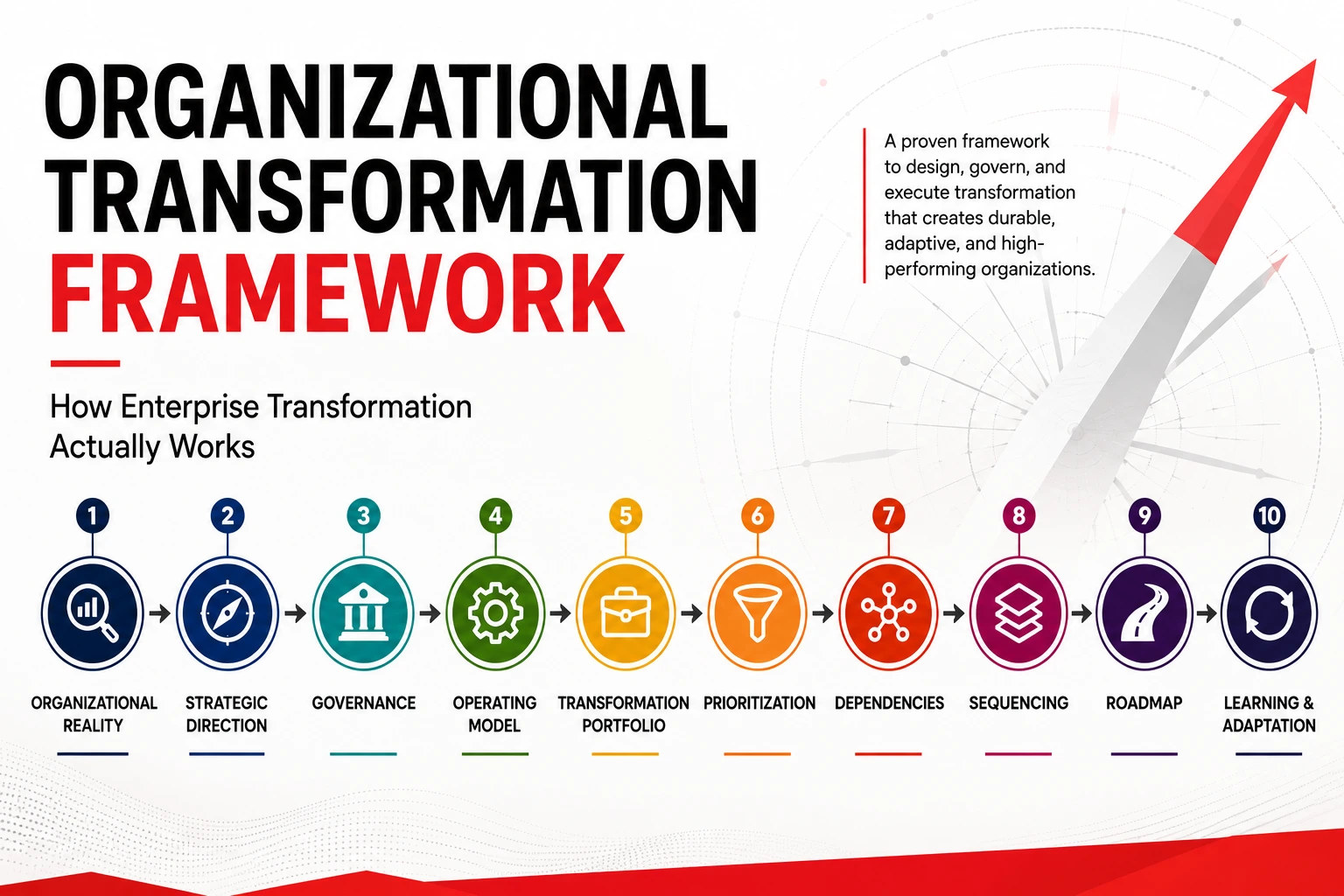
Organizational Transformation Framework: How Enterprise Transformation Actually Works
An organizational transformation framework connects reality, strategy, governance, portfolio choices, sequencing, roadmaps, and learning into one adaptive system.
-
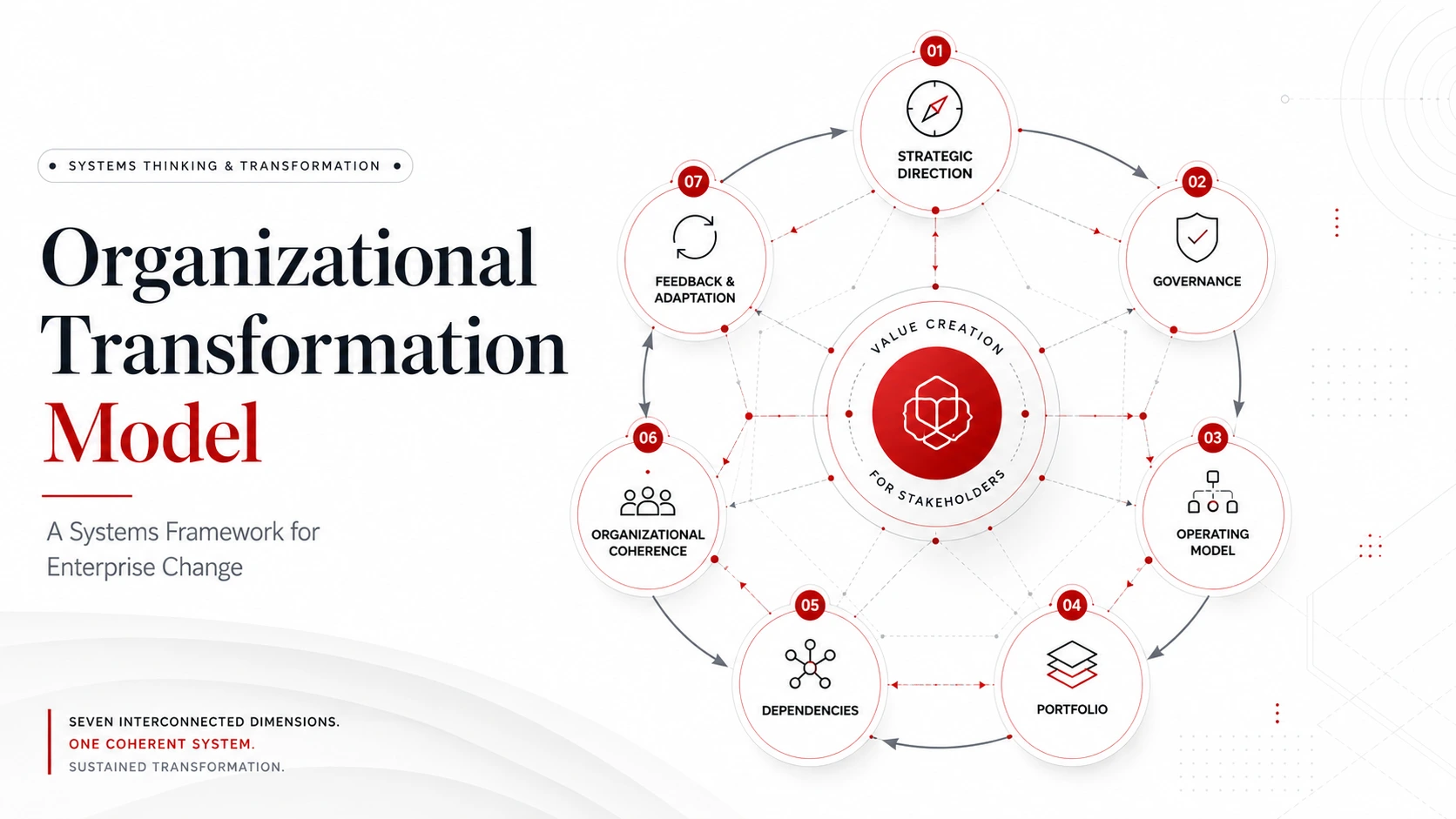
Organizational Transformation Model: A Systems Framework for Enterprise Change
A systems-based organizational transformation model connecting strategy, governance, operating model, portfolio choices, dependencies, coherence, feedback, and stakeholder value.
-
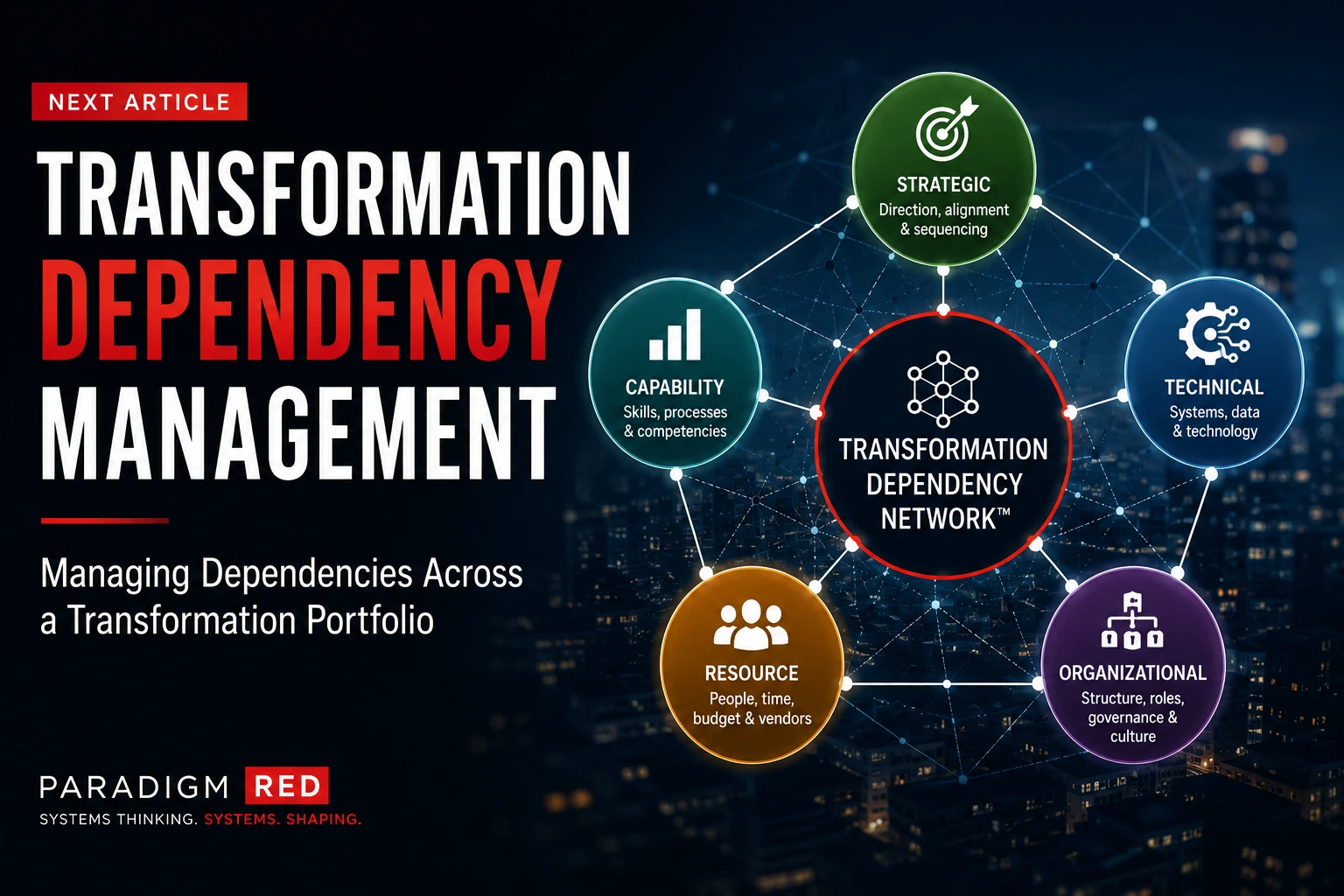
Transformation Dependency Management: How to Manage Dependencies Across a Transformation Portfolio
Learn how to map, sequence, govern, prioritize, and resolve dependencies across complex transformation portfolios.
-
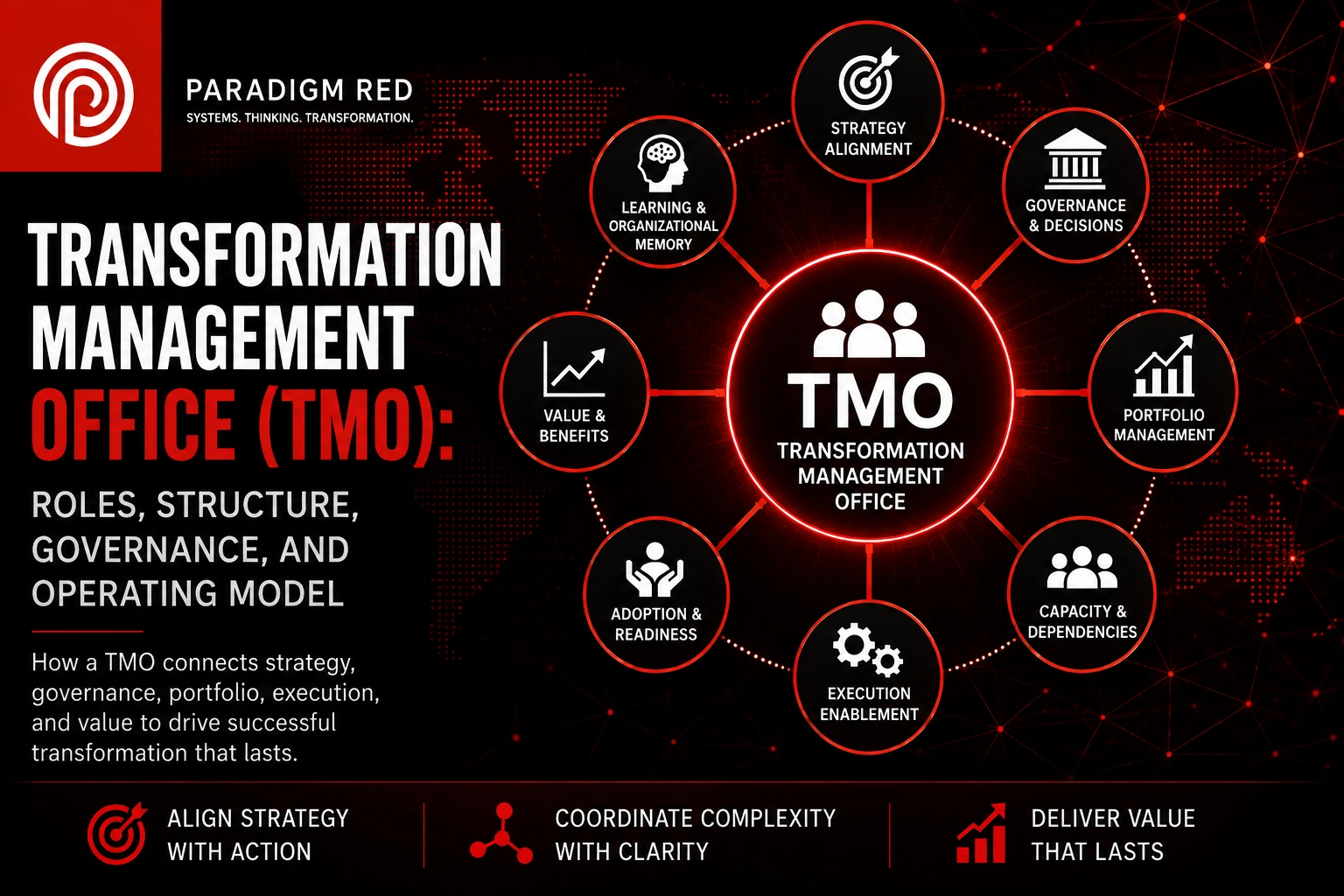
What Is a Transformation Management Office? Roles, Structure, Governance, and Operating Model
A Transformation Management Office connects enterprise strategy with portfolio decisions, governance, capacity, execution, adoption, benefits and organizational learning. This guide explains its roles, structure, operating models,…