Tag: systemic coaching
Systemic coaching is an approach that focuses on the system as a whole rather than on individual performance alone. It recognizes that behavior, decisions, and outcomes are shaped by structure, relationships, incentives, and patterns within the system.
Traditional coaching often works at the level of the individual—skills, mindset, or behavior. While valuable, this approach can be limited when challenges are rooted in the system itself. Systemic coaching expands the focus to include how the organization operates and how conditions influence results.
On Paradigm Red, systemic coaching is explored as a way to understand and influence complex systems. It emphasizes identifying patterns, revealing hidden dynamics, and working with leverage points to create sustainable change.
What defines systemic coaching
- Focus on system dynamics rather than isolated individuals
- Understanding patterns of behavior and interaction
- Working with feedback loops and systemic signals
- Identifying leverage points for meaningful change
Why systemic coaching matters
- Addresses root causes instead of symptoms
- Improves decision-making across the system
- Enables sustainable transformation
- Supports leadership in complex environments
Related articles
-

Premortem Analysis: How to Run One + Template and Example
Run a practical premortem analysis with a 60-minute agenda, a copy-and-fill worksheet, and a completed transformation example.
-

What Is Systemic Coaching? A Practical Guide for Complex Organizations
Systemic coaching is an approach to coaching that helps leaders, teams, and organizations understand the relationships, patterns, feedback loops, and hidden dynamics shaping behavior inside complex…
-
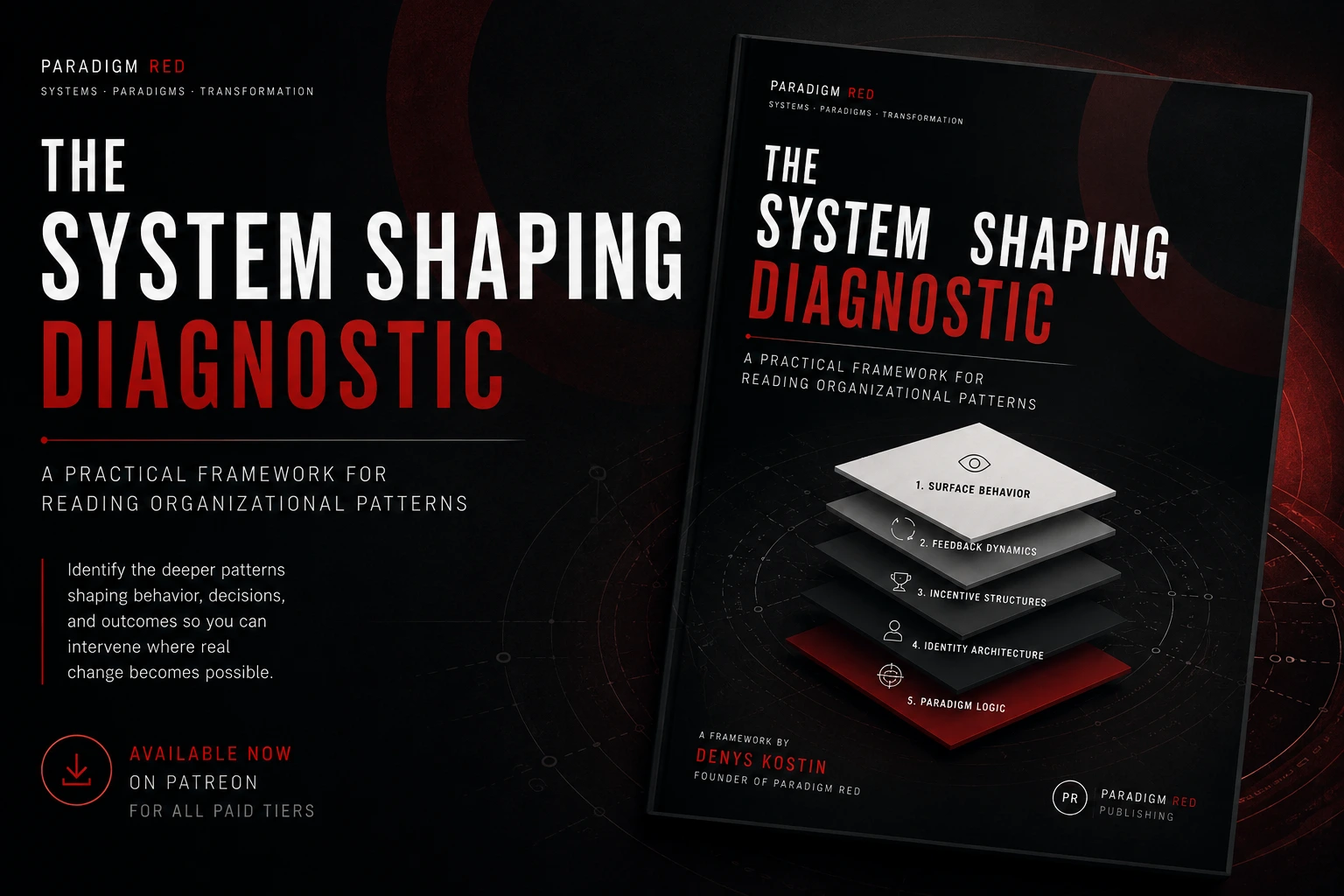
The System Shaping Diagnostic Is Now Available
System Shaping is an emerging framework for systems transformation, organizational change, and systemic leadership inside complex human systems. The new System Shaping Diagnostic explores why organizations…
-
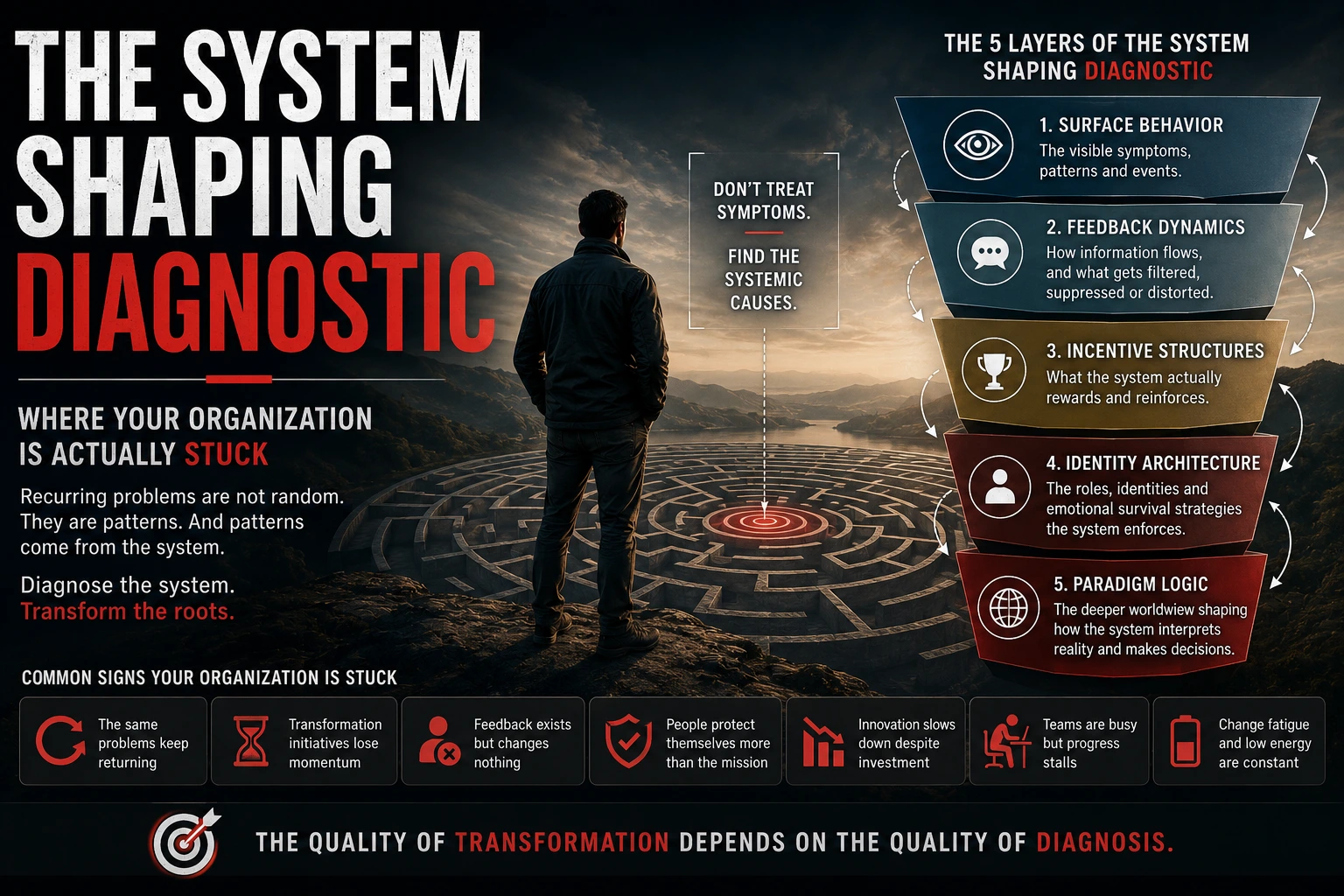
The System Shaping Diagnostic: Where Your Organization Is Actually Stuck
The System Shaping Diagnostic is a framework for identifying the deeper systemic patterns that keep organizations stuck, repeating the same problems, and resisting meaningful transformation. Most…
-
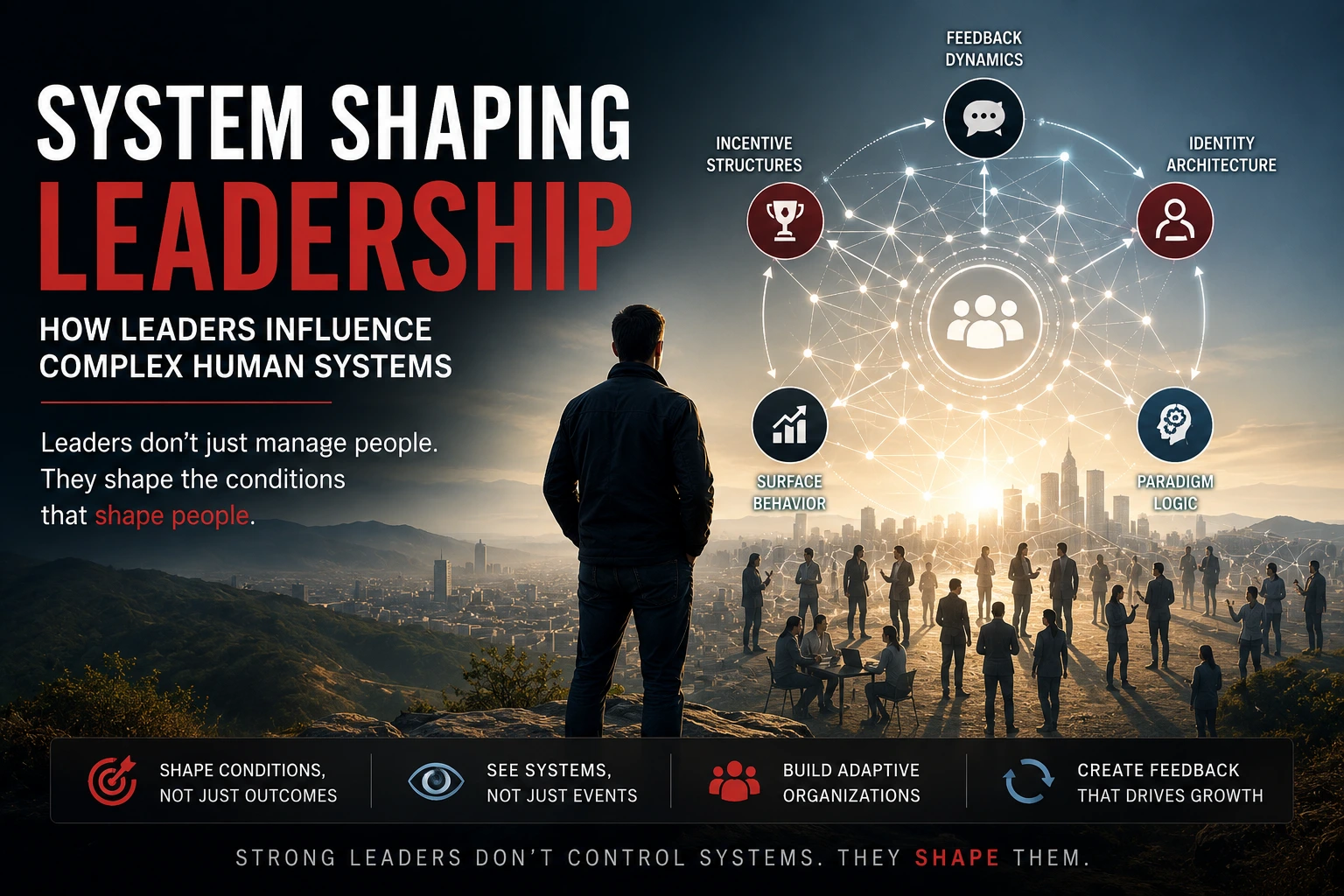
System Shaping Leadership: How Leaders Influence Complex Human Systems
System Shaping Leadership is the ability to influence the deeper conditions that shape behavior inside organizations, teams, cultures, and complex human systems. Most leadership models focus…
-
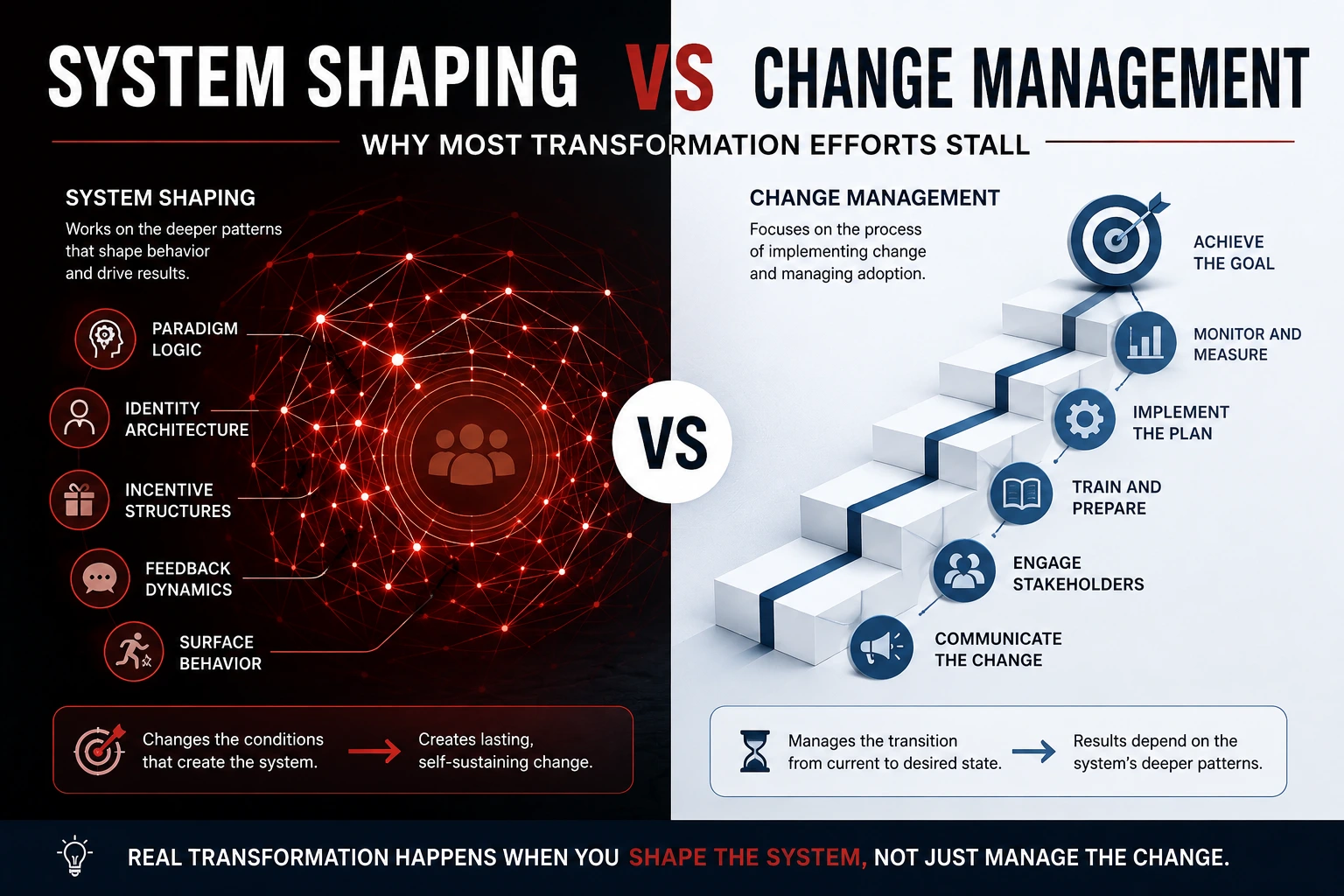
System Shaping vs Change Management: Why Most Transformation Efforts Stall
System Shaping vs change management is not a debate between old and new methods. It is a question of depth: are you managing the visible change…
-
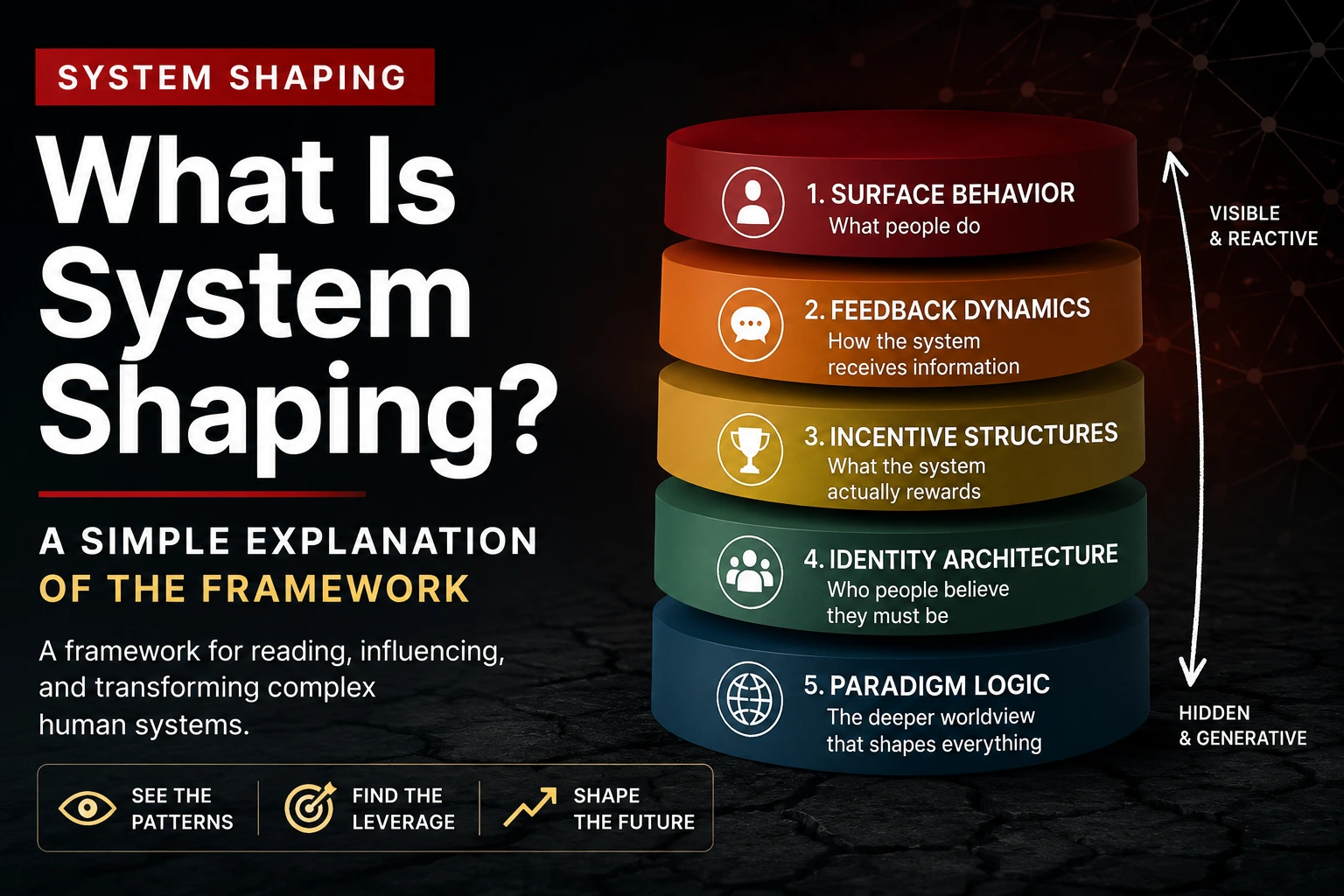
What Is System Shaping? A Simple Explanation of the Framework
System Shaping is a framework for understanding why people, teams, organizations, and cultures keep repeating the same patterns — even when everyone wants change. Most transformation…
-
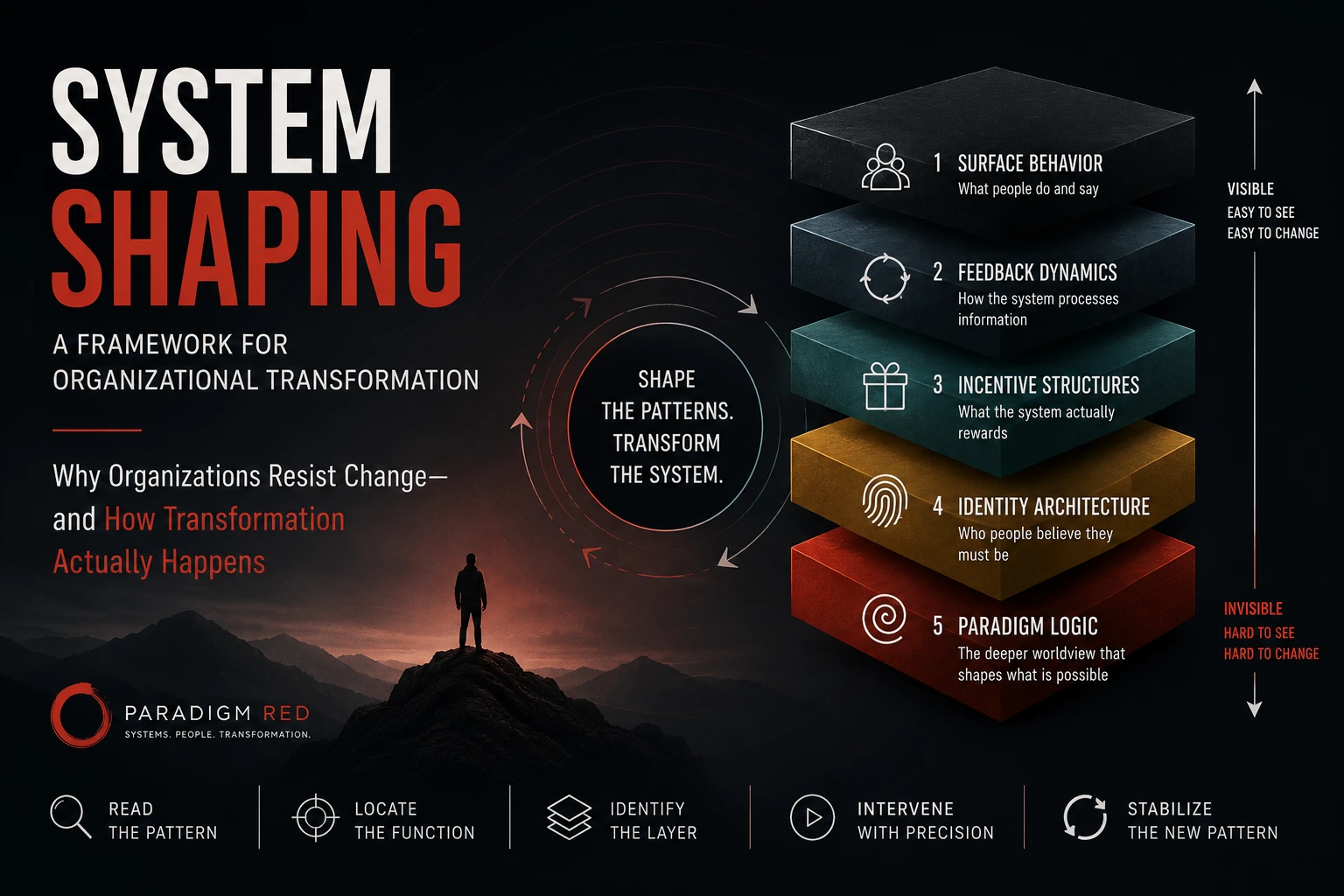
System Shaping: A New Framework for Organizational Transformation
System Shaping is a framework for understanding why organizations resist change, why transformation efforts often fail, and how real organizational transformation happens in complex human systems.…
-

System Transformation Is Not Organizational Change
Most organizational change efforts fail because they attempt to modify visible behavior without transforming the systems producing it. Leadership changes.Communication frameworks evolve.Transformation initiatives begin.New values appear…
-

Coaching for Complex Systems: Why Traditional Leadership Models Fail
Many leadership and coaching models fail because they were designed for stable environments rather than adaptive systems. Organizations today operate inside conditions shaped by: And yet…