Tag: organizational culture
Organizational culture is not defined by values statements or internal messaging—it is expressed through behavior under real conditions. It reflects how decisions are made, what is rewarded, how people respond to pressure, and how the system actually operates day to day.
Many organizations attempt to manage culture directly through communication, training, or initiatives. However, culture is an outcome, not a lever. It emerges from the interaction between leadership, structure, incentives, and shared experience. Without changing these underlying conditions, culture remains unchanged.
On Paradigm Red, organizational culture is explored through systems thinking, cultural evolution, and systemic transformation. The focus is on understanding how culture forms, why it persists, and how it can evolve through changes in system dynamics rather than surface-level interventions.
What shapes organizational culture
- Leadership behavior and implicit signals
- Incentives and performance systems
- Decision-making patterns and priorities
- Feedback loops that reinforce behavior
Why culture change fails
- Focusing on communication instead of system structure
- Misalignment between stated values and real incentives
- Short-term pressure overriding long-term consistency
- Attempting to change behavior without changing conditions
Related articles
-

Why Resistance to Change Is Often Rational — The Hidden Logic Behind Organizational Resistance
Rational resistance is one of the most misunderstood dynamics in organizational change. Leaders often describe resistance to change as fear, negativity, stubbornness, politics, or lack of…
-

Why Culture Change Fails — and Why Most Organizations Target the Wrong Thing
Updated with stronger search intent, definition section, comparison table, external authority link, CTA, internal path, and schema. External authority source used: HBS Working Knowledge on culture…
-

Organizational Change Assessment: What Blocks Transformation?
Free systems thinking diagnostic Organizational Change Assessment: What Is Really Blocking Transformation? Last updated: May 2026 Most organizational change fails because leaders treat symptoms while the…
-
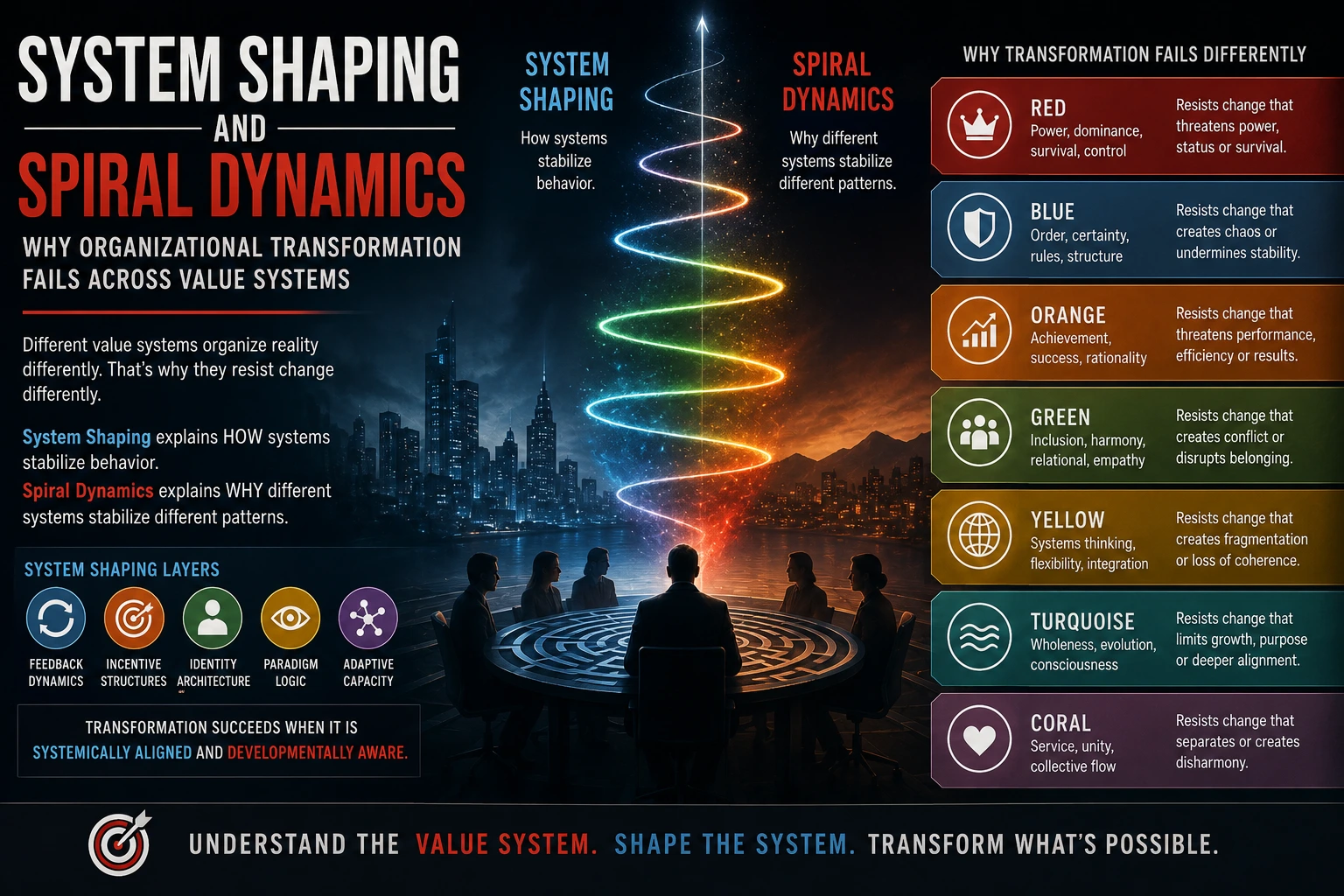
System Shaping and Spiral Dynamics: Why Organizational Transformation Fails Across Value Systems
System Shaping and Spiral Dynamics together explain why organizational transformation succeeds in some systems, fails in others, and produces radically different outcomes across cultures, leadership structures,…
-
Psychological Safety Is Not Comfort: Why Safe Teams Still Have Hard Conversations
Psychological safety has become one of the most celebrated ideas in modern leadership. Teams are encouraged to be safe. Leaders are trained to create safety. Organizations…
-
From Agreement to Coherence: How Teams Build Alignment That Lasts
There is a moment in every team’s life when words stop guiding the work — and connection takes over. Decisions become lighter. Conflict becomes creative. The…
-

The Trust Illusion: Why Forced Transparency Breaks What It Tries to Build
The trust illusion is one of the most common mistakes in modern leadership: the belief that more visibility automatically creates more trust. Dashboards, open data, constant…
-

The Collaboration Myth: Why More Meetings Don’t Mean Better Systems
Everywhere you turn, leaders call for “more collaboration.” It sounds right. If people talk more, coordinate more, spend more time together — surely the system improves.…
-
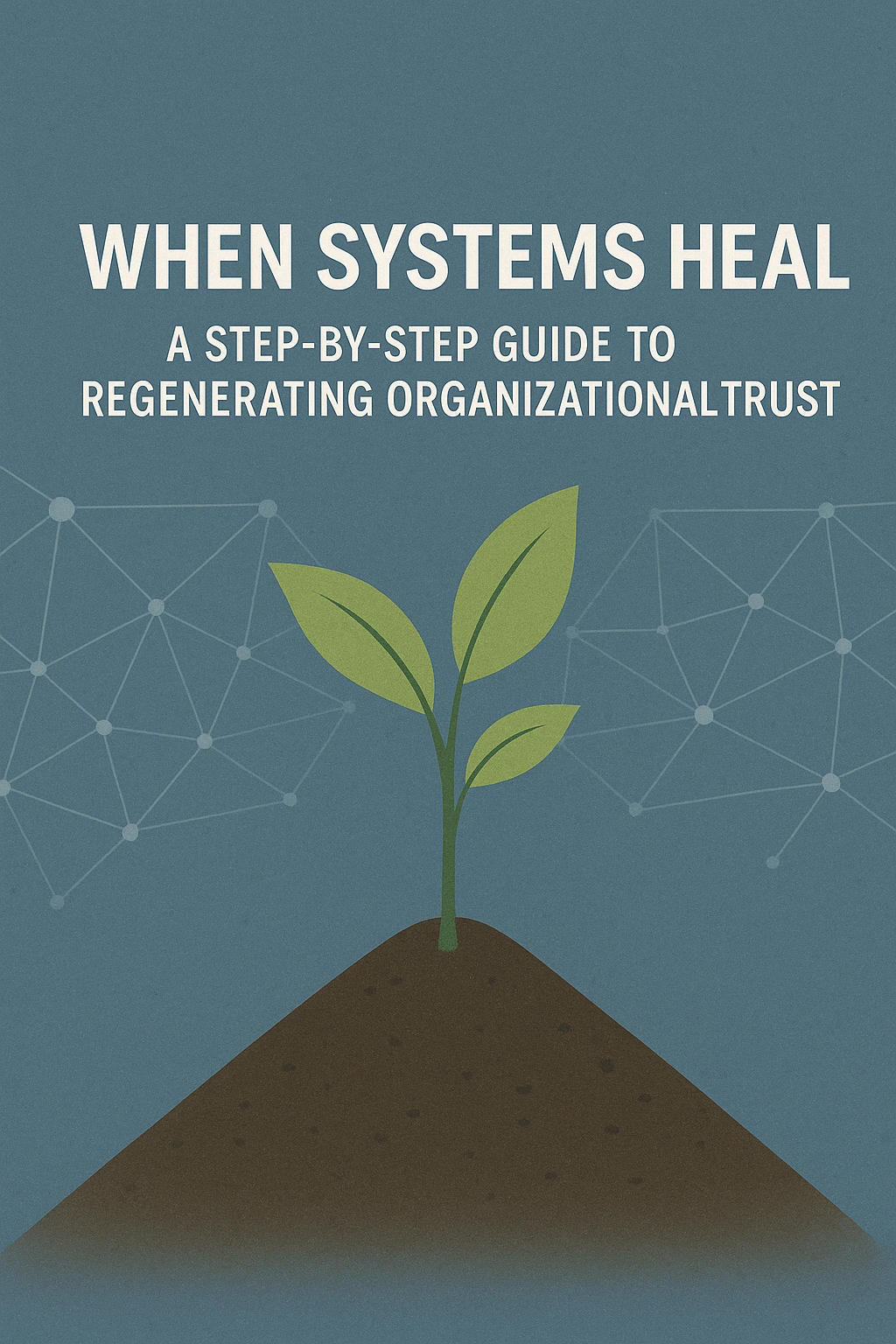
When Systems Heal: A Step-by-Step Guide to Regenerating Organizational Trust
In every complex system, trust is the invisible infrastructure. When it’s strong, collaboration flows, feedback loops function, and change is possible. But when trust breaks —…
-
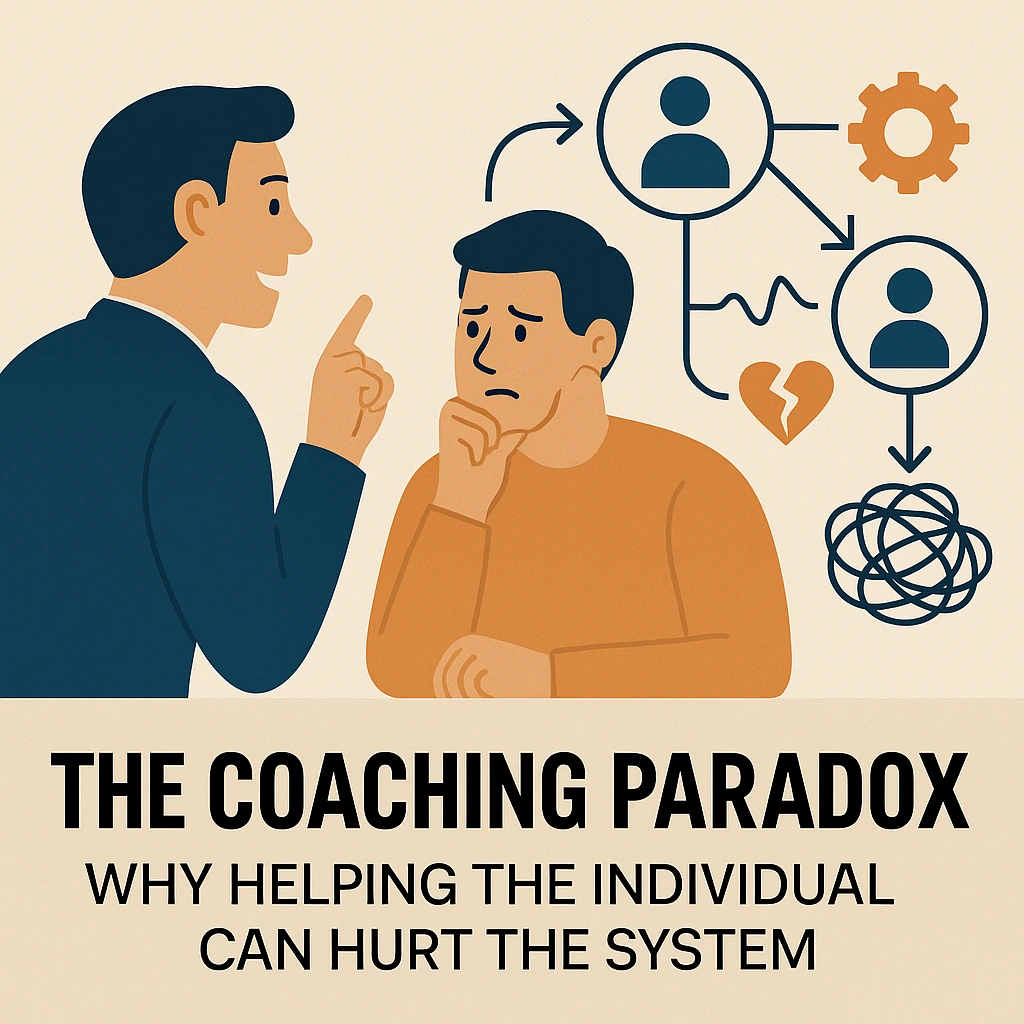
The Coaching Paradox: Why Helping the Individual Can Hurt the System
Coaching Success — and Systemic Failure They said it worked. The leader felt more empowered. Their team reported clearer communication. Goals were achieved faster. The coaching…