Tag: spiral dynamics
Spiral Dynamics is a framework that explains how human value systems evolve over time. It describes how individuals, organizations, and societies move through different stages of thinking, each with its own worldview, priorities, and way of responding to complexity.
Rather than seeing development as a simple progression, Spiral Dynamics reveals how different value systems coexist and interact. This helps explain conflict, misalignment, and the difficulty of leading change across diverse environments.
On Paradigm Red, Spiral Dynamics is used as a foundation for understanding systems transformation, cultural evolution, and leadership. It provides a map for recognizing where a system is, what challenges it faces, and how it can evolve.
Key principles
- Value systems evolve in response to life conditions
- Each stage has strengths and limitations
- Different stages coexist within the same system
- Development is non-linear and context-dependent
Why it matters in organizations
- Explains conflicts between different ways of thinking
- Helps leaders adapt to varying levels of complexity
- Supports more effective transformation strategies
- Provides insight into cultural and systemic change
Related articles
-
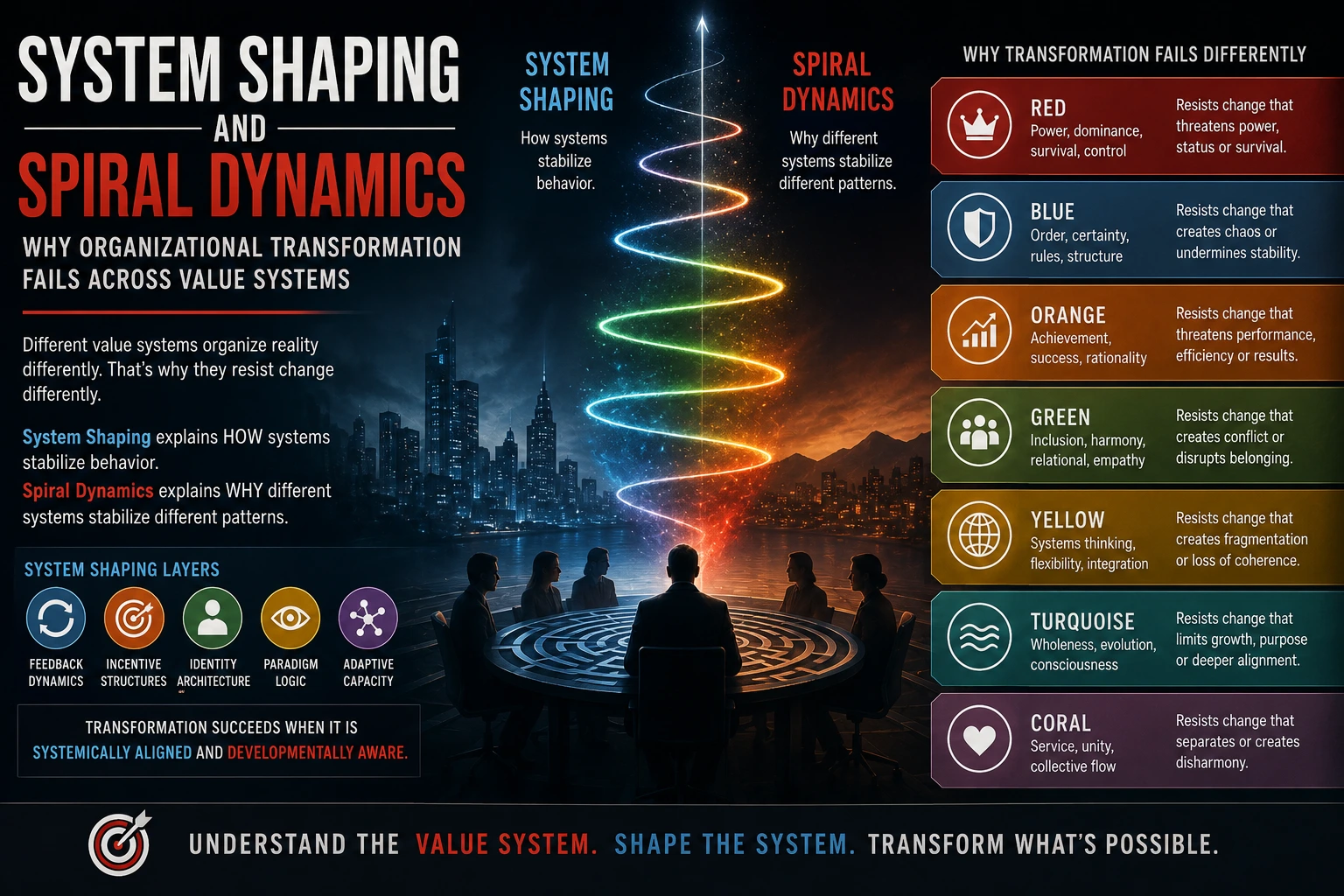
System Shaping and Spiral Dynamics: Why Organizational Transformation Fails Across Value Systems
System Shaping and Spiral Dynamics together explain why organizational transformation succeeds in some systems, fails in others, and produces radically different outcomes across cultures, leadership structures,…
-
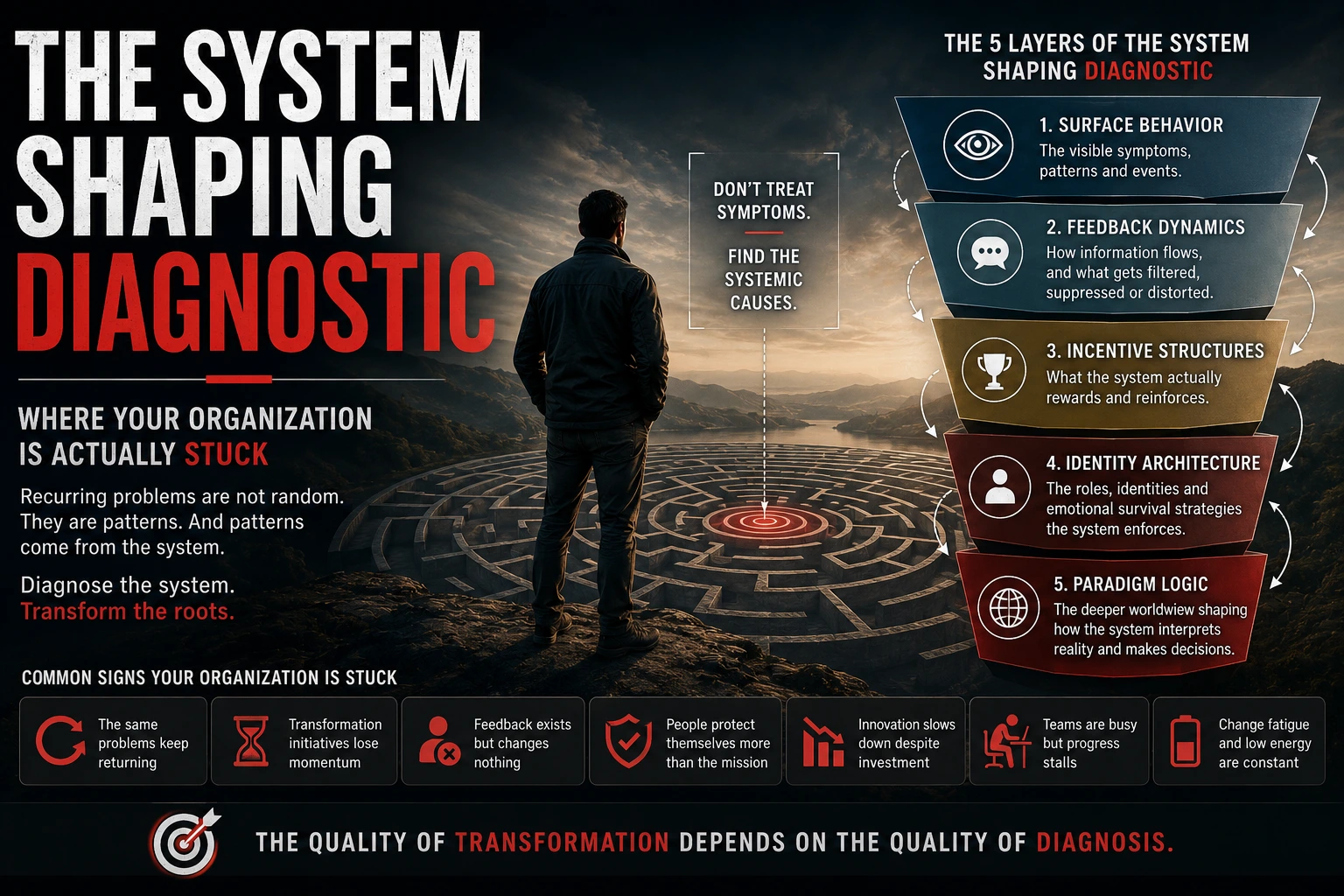
The System Shaping Diagnostic: Where Your Organization Is Actually Stuck
The System Shaping Diagnostic is a framework for identifying the deeper systemic patterns that keep organizations stuck, repeating the same problems, and resisting meaningful transformation. Most…
-
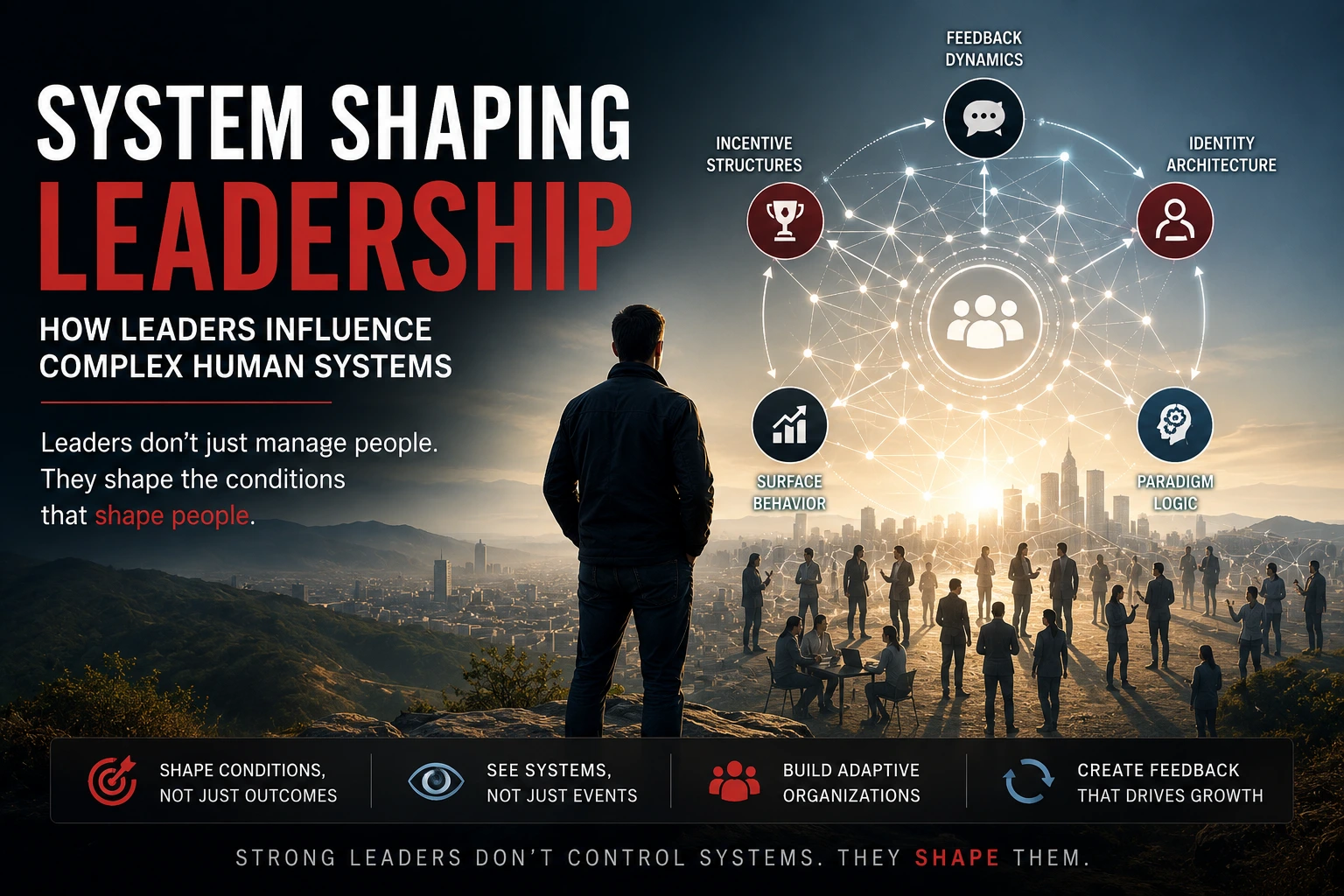
System Shaping Leadership: How Leaders Influence Complex Human Systems
System Shaping Leadership is the ability to influence the deeper conditions that shape behavior inside organizations, teams, cultures, and complex human systems. Most leadership models focus…
-
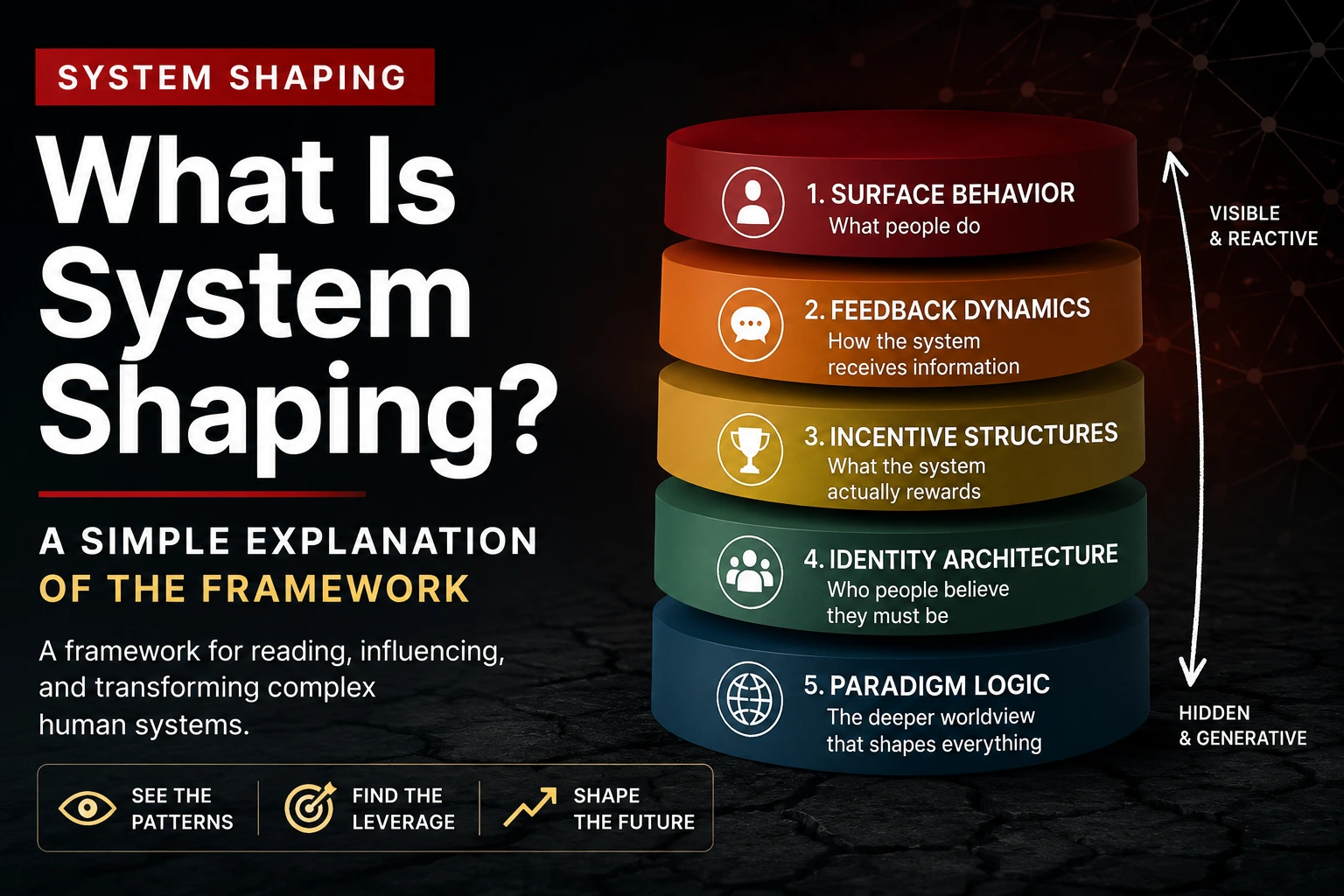
What Is System Shaping? A Simple Explanation of the Framework
System Shaping is a framework for understanding why people, teams, organizations, and cultures keep repeating the same patterns — even when everyone wants change. Most transformation…
-
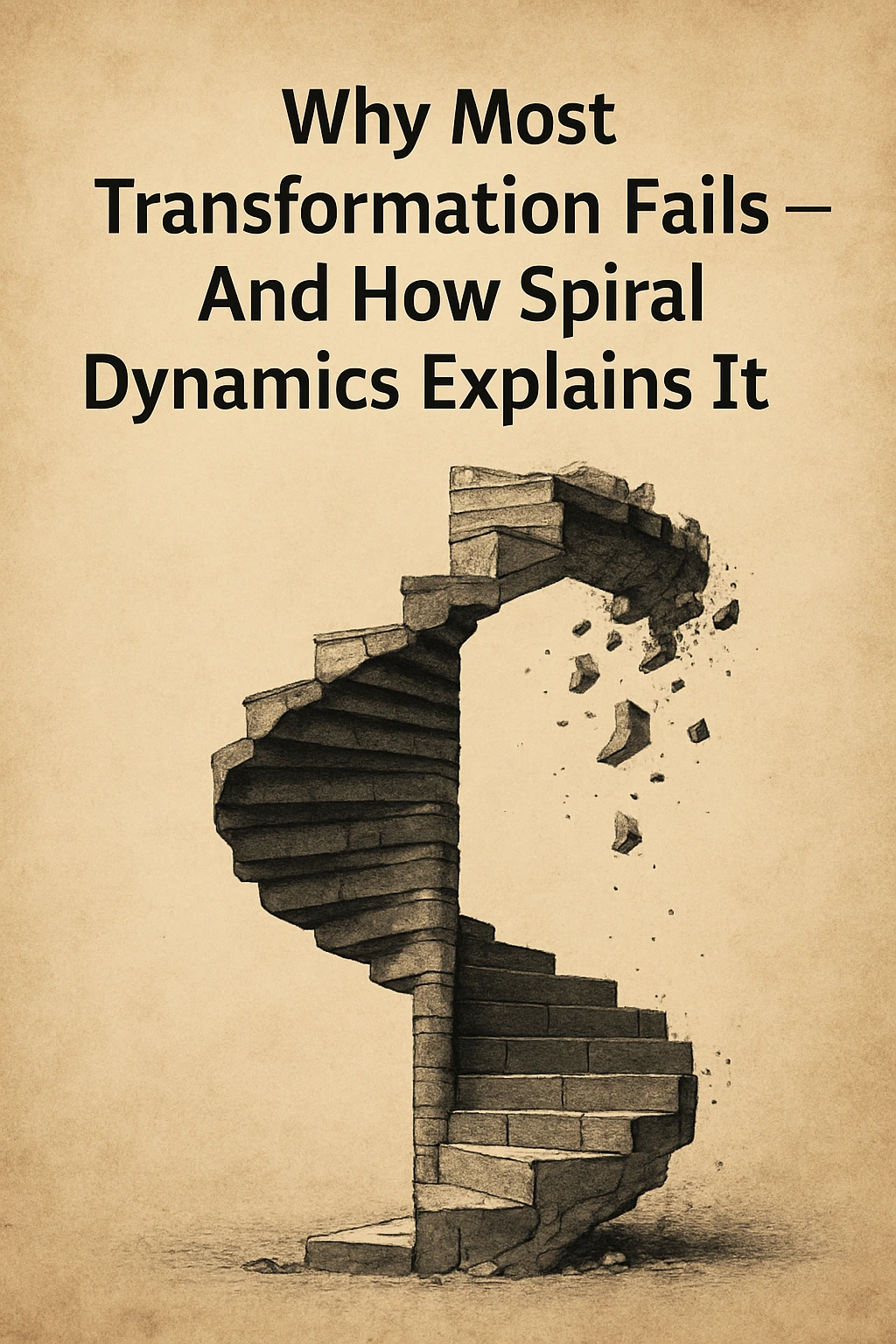
Why Most Transformation Fails — And How Spiral Dynamics Explains It
Every leader, consultant, or changemaker eventually runs into the same painful pattern: transformation is hard, and most of it fails. But what if the failure is…
-
Toxic Leadership Isn’t a Flaw — It’s a Feature of the Red Paradigm
Toxic leadership is often treated as a personal defect. A hiring mistake. A bad apple. A failure of character. But in many systems, toxic leadership is…
-
The Red Threshold: Why Some Systems Get Stuck—and What They Lose
The Red paradigm is one of the most misunderstood stages in Spiral Dynamics. It is often described as chaotic, aggressive, or dangerous. And in many cases,…
-

What Is Spiral Dynamics? The Hidden Architecture Behind Human Systems
Spiral Dynamics is not just a theory. It is a way of seeing the hidden structure behind human behavior, culture, and systems. Most conflicts that appear…
-
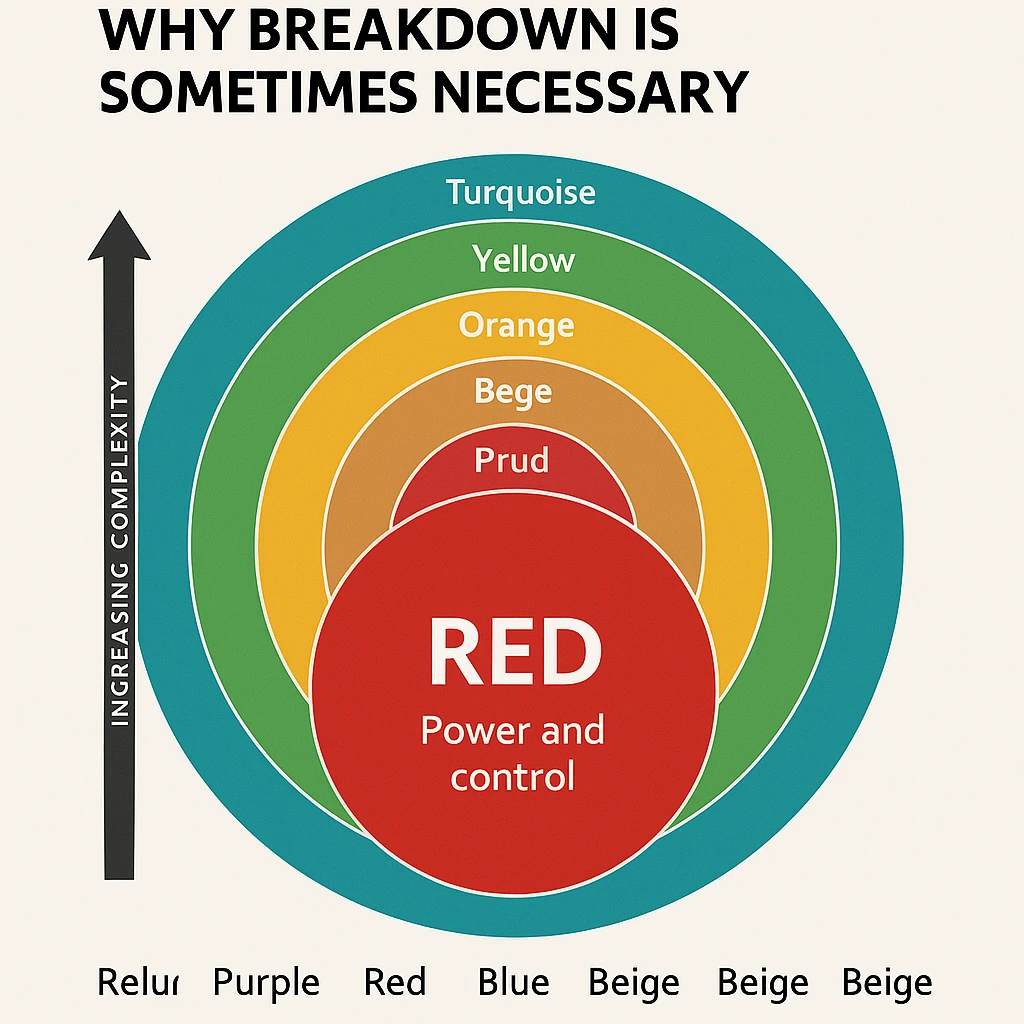
Why Breakdown Is Necessary: The Real Role of Red in Systemic Growth
Why do systems break down just before they grow? In Spiral Dynamics, this moment is not a failure. It is often the activation of Red —…
-

Mapping Organizations by Value Systems: Spiral Dynamics in Practice
Why Organizational Change Fails: A Spiral Dynamics Perspective Most organizational change does not fail because the strategy is wrong. Understanding value systems helps explain how organizations…