Tag: systems thinking
Systems thinking is an approach to understanding how elements within a system interact to produce outcomes over time. Instead of focusing on isolated parts, it examines relationships, patterns, and feedback loops that shape behavior in organizations and complex environments.
Traditional problem-solving often treats issues as separate and linear. Systemic thinking reveals that most problems are interconnected and emerge from underlying structures. This perspective helps explain why solutions that address symptoms frequently fail to create lasting change.
On Paradigm Red, it is used as a foundation for understanding transformation, leadership, and complexity. It provides tools for recognizing patterns, identifying leverage points, and making better decisions in uncertain environments.
Core principles
- Focus on relationships rather than isolated elements
- Understanding feedback loops and system dynamics
- Recognizing patterns over time instead of single events
- Seeing how structure drives behavior
Why it matters
- Explains why problems persist or repeat
- Supports more effective decision-making
- Reveals high-impact leverage points
- Enables sustainable transformation
Related articles
-

Premortem Analysis: How to Run One + Template and Example
Run a practical premortem analysis with a 60-minute agenda, a copy-and-fill worksheet, and a completed transformation example.
-

Why Ichak Adizes Misread russia: The Limits of Systems Thinking Without Power
Ichak Adizes denied that russia threatened the West weeks before the full-scale invasion of Ukraine. This evidence-led critique explains why his systems analysis failed—and how to…
-

What Is Collective Thinking? Meaning, Examples, and How Organizations Think Together
Collective thinking is how groups combine distributed knowledge and perspectives into shared understanding. Learn how the process works, how it differs from groupthink and collective intelligence,…
-

Systems Change Management: A Guide for Complex Organizations
Learn how systems change management works in complex organizations and use feedback, leverage, sequencing, and adaptive governance to improve change.
-
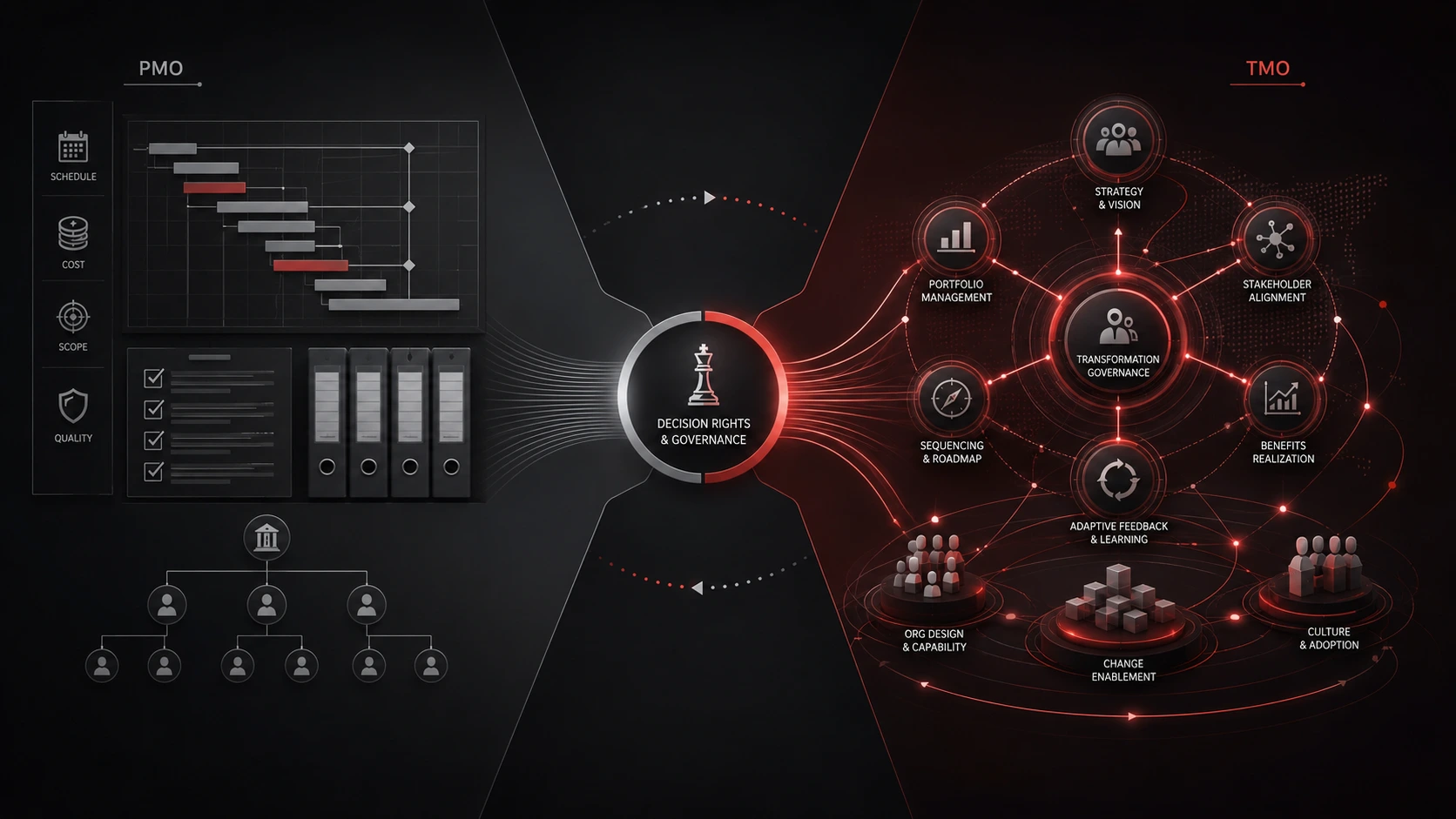
Transformation Management Office vs PMO: Key Differences, Roles, and When You Need Each
A PMO and TMO are not interchangeable. Compare their mandates, decision rights, governance, metrics and portfolio authority—and learn when an organization needs one or both.
-

What Is Organizational Learning? How Organizations Learn, Remember, and Adapt
Organizational learning is how organizations turn experience into shared knowledge, changed action, retained memory, and better adaptation. Explore the process, major frameworks, examples, failure points, and…
-
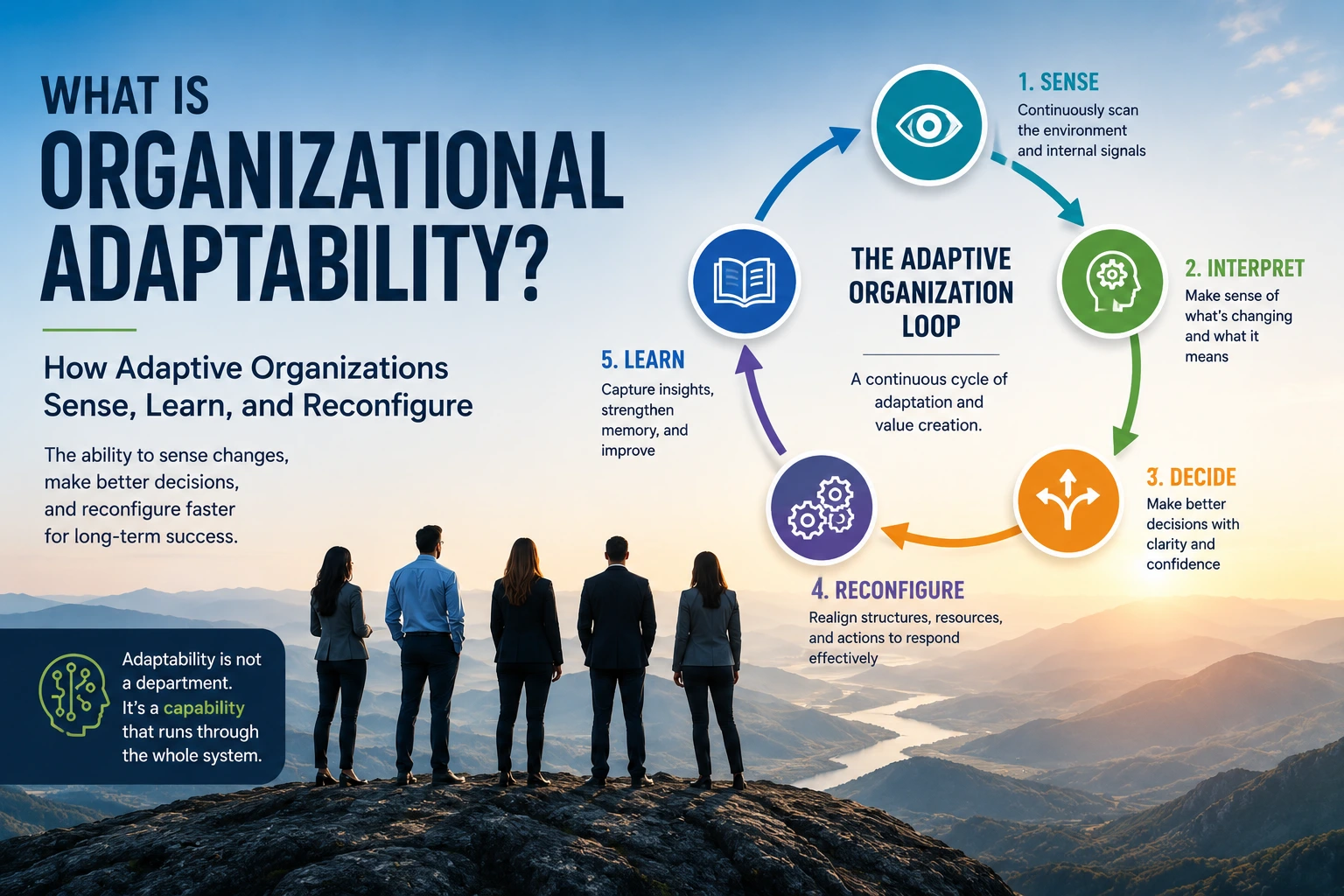
What Is Organizational Adaptability? How Adaptive Organizations Sense, Learn, and Reconfigure
Organizational adaptability is the systemic capacity to sense meaningful change, interpret it, make timely decisions, reconfigure the organization, and learn continuously.
-
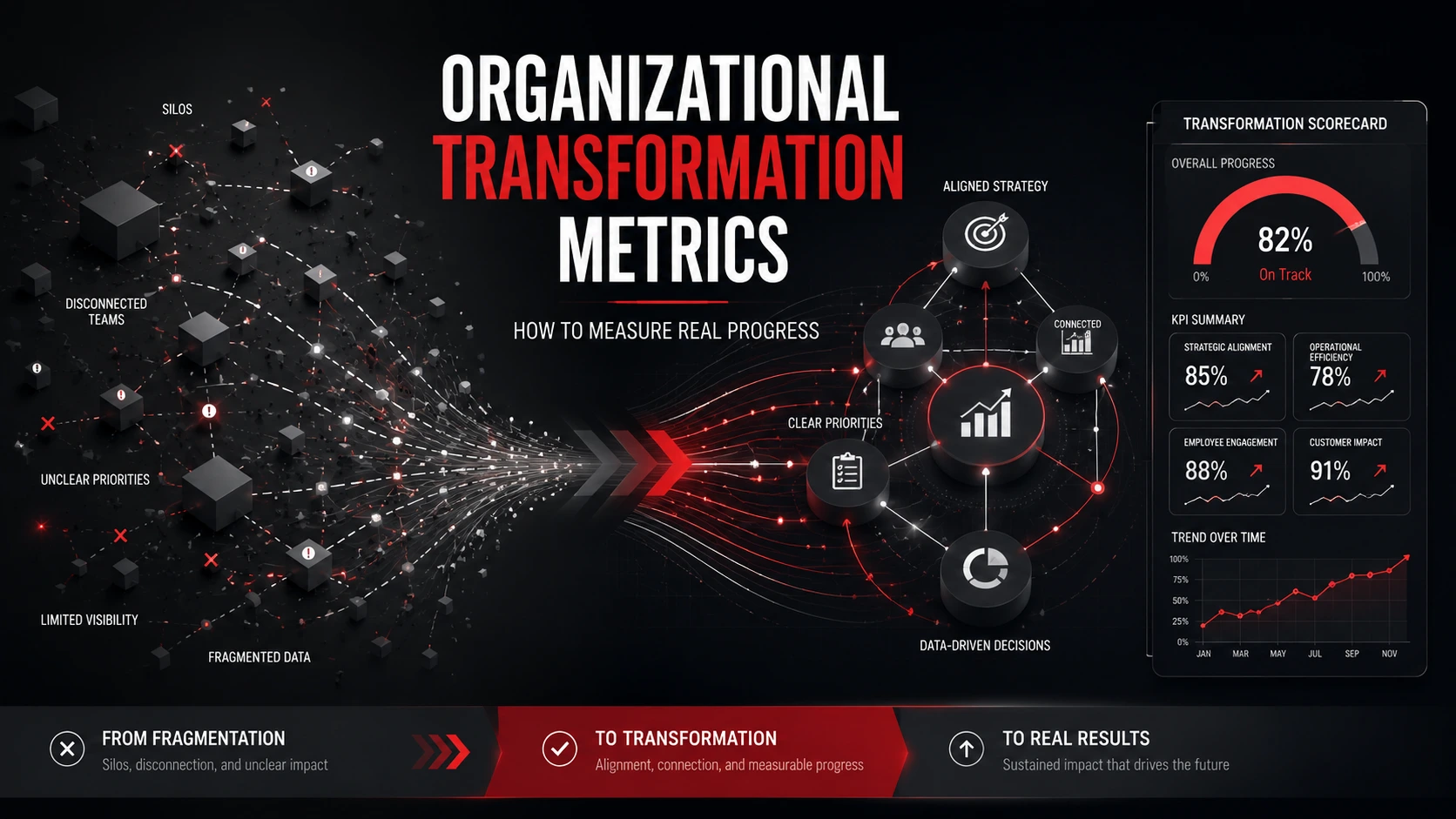
Organizational Transformation Metrics: How to Measure Real Progress
Organizational transformation metrics should show whether the organization is actually changing—not simply whether projects are being completed. This guide explains how to measure activity, adoption, capability,…
-
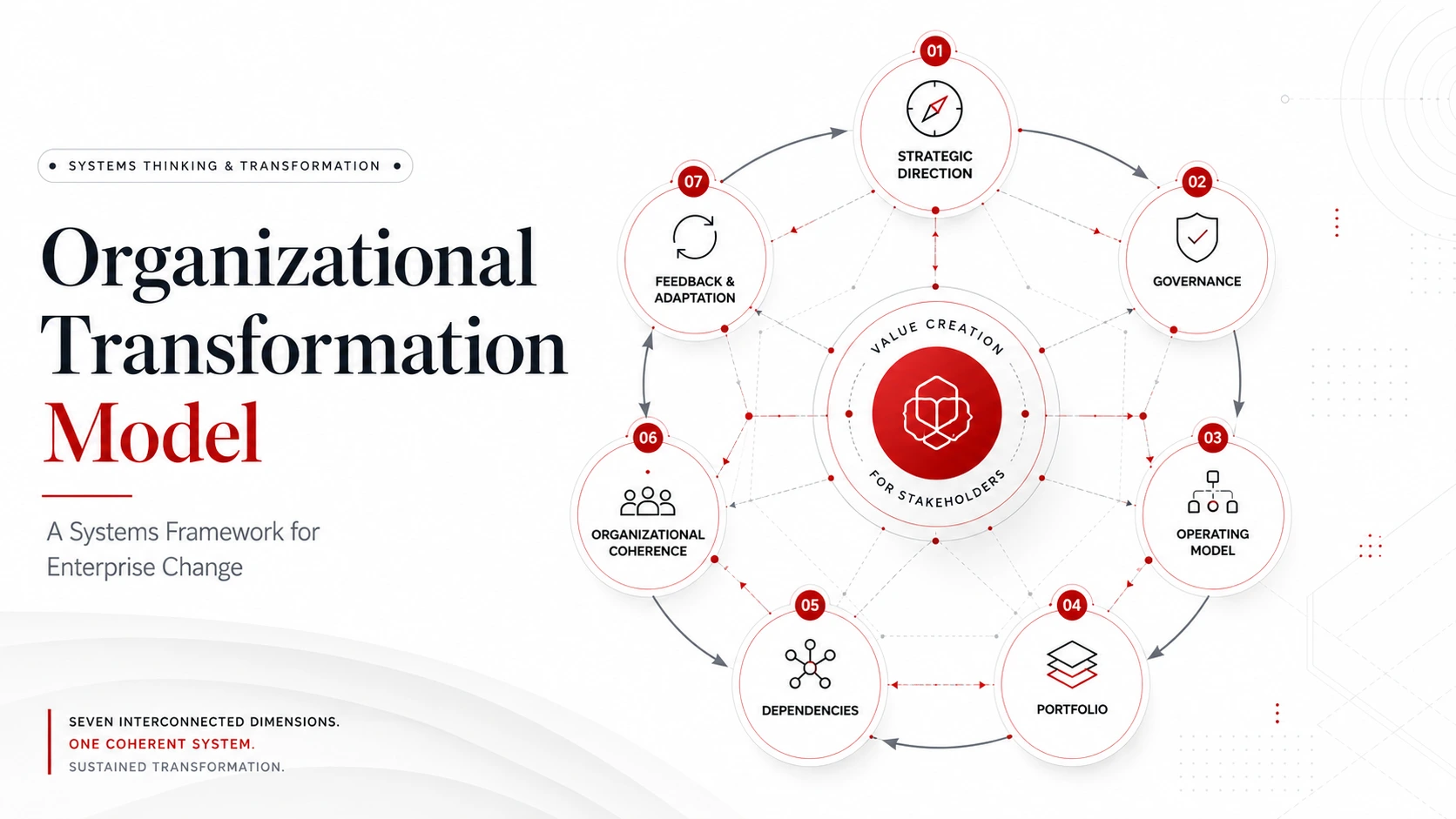
Organizational Transformation Model: A Systems Framework for Enterprise Change
A systems-based organizational transformation model connecting strategy, governance, operating model, portfolio choices, dependencies, coherence, feedback, and stakeholder value.
-
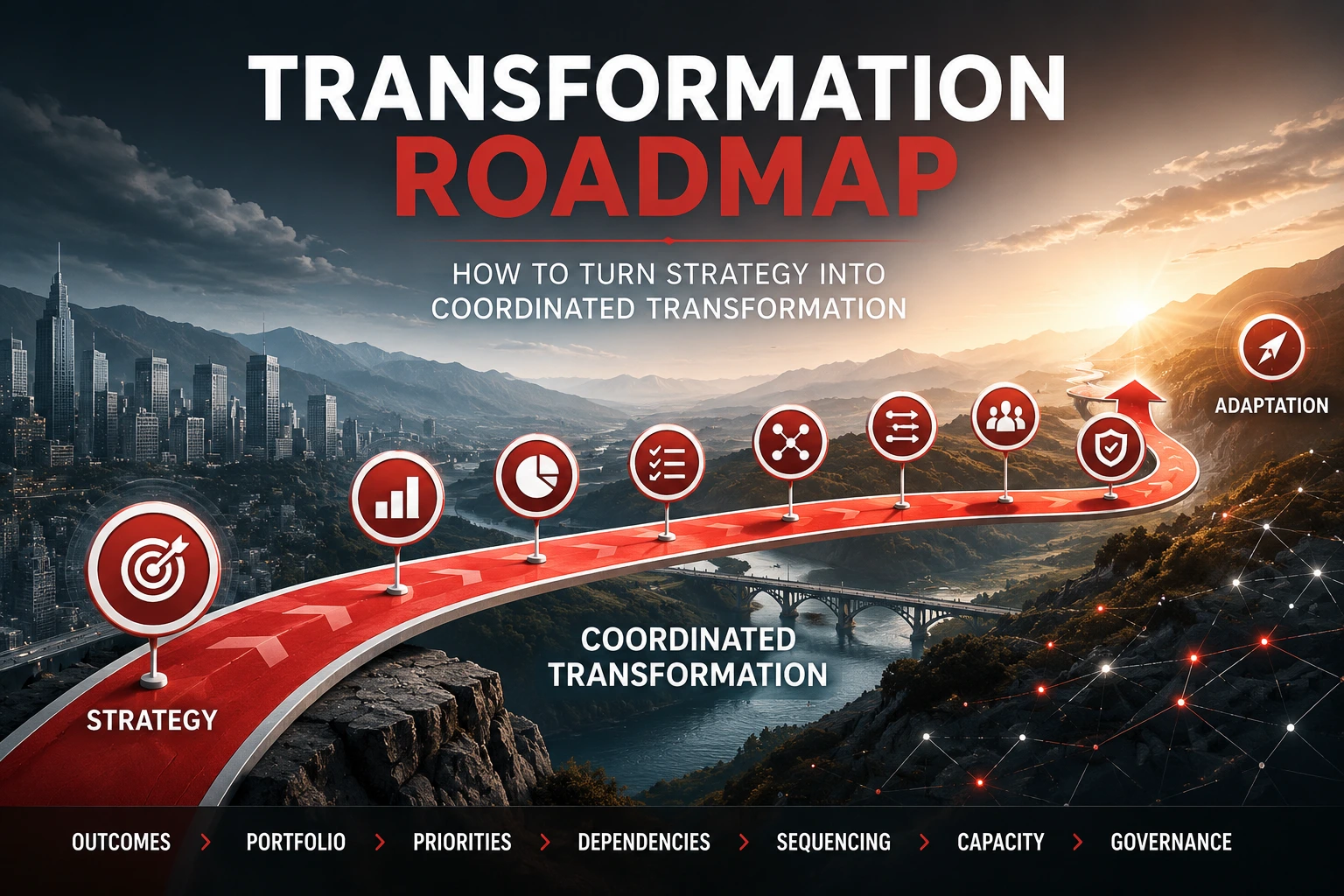
Transformation Roadmap: How to Turn Strategy Into Coordinated Transformation
A transformation roadmap connects strategy, outcomes, initiatives, dependencies, sequencing, organizational capacity, governance and adaptation into one coordinated system for enterprise transformation.