Tag: systems thinking
Systems thinking is an approach to understanding how elements within a system interact to produce outcomes over time. Instead of focusing on isolated parts, it examines relationships, patterns, and feedback loops that shape behavior in organizations and complex environments.
Traditional problem-solving often treats issues as separate and linear. Systemic thinking reveals that most problems are interconnected and emerge from underlying structures. This perspective helps explain why solutions that address symptoms frequently fail to create lasting change.
On Paradigm Red, it is used as a foundation for understanding transformation, leadership, and complexity. It provides tools for recognizing patterns, identifying leverage points, and making better decisions in uncertain environments.
Core principles
- Focus on relationships rather than isolated elements
- Understanding feedback loops and system dynamics
- Recognizing patterns over time instead of single events
- Seeing how structure drives behavior
Why it matters
- Explains why problems persist or repeat
- Supports more effective decision-making
- Reveals high-impact leverage points
- Enables sustainable transformation
Related articles
-
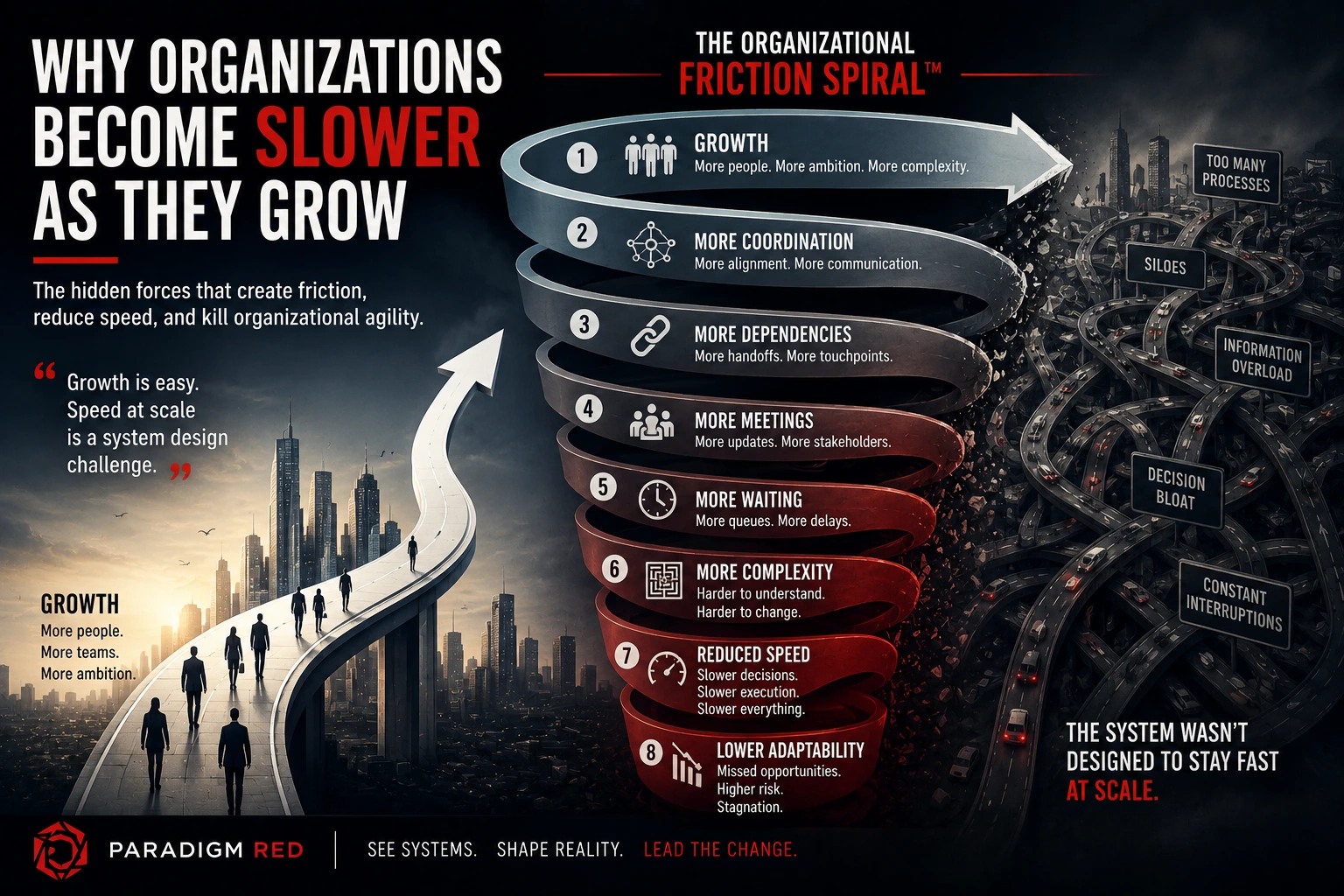
Why Organizations Become Slower: A Systems Thinking Perspective
Estimated reading time: 19–22 minutes Growth is usually celebrated as the ultimate indicator of organizational success. More customers. More employees. More products. More markets. More revenue.…
-
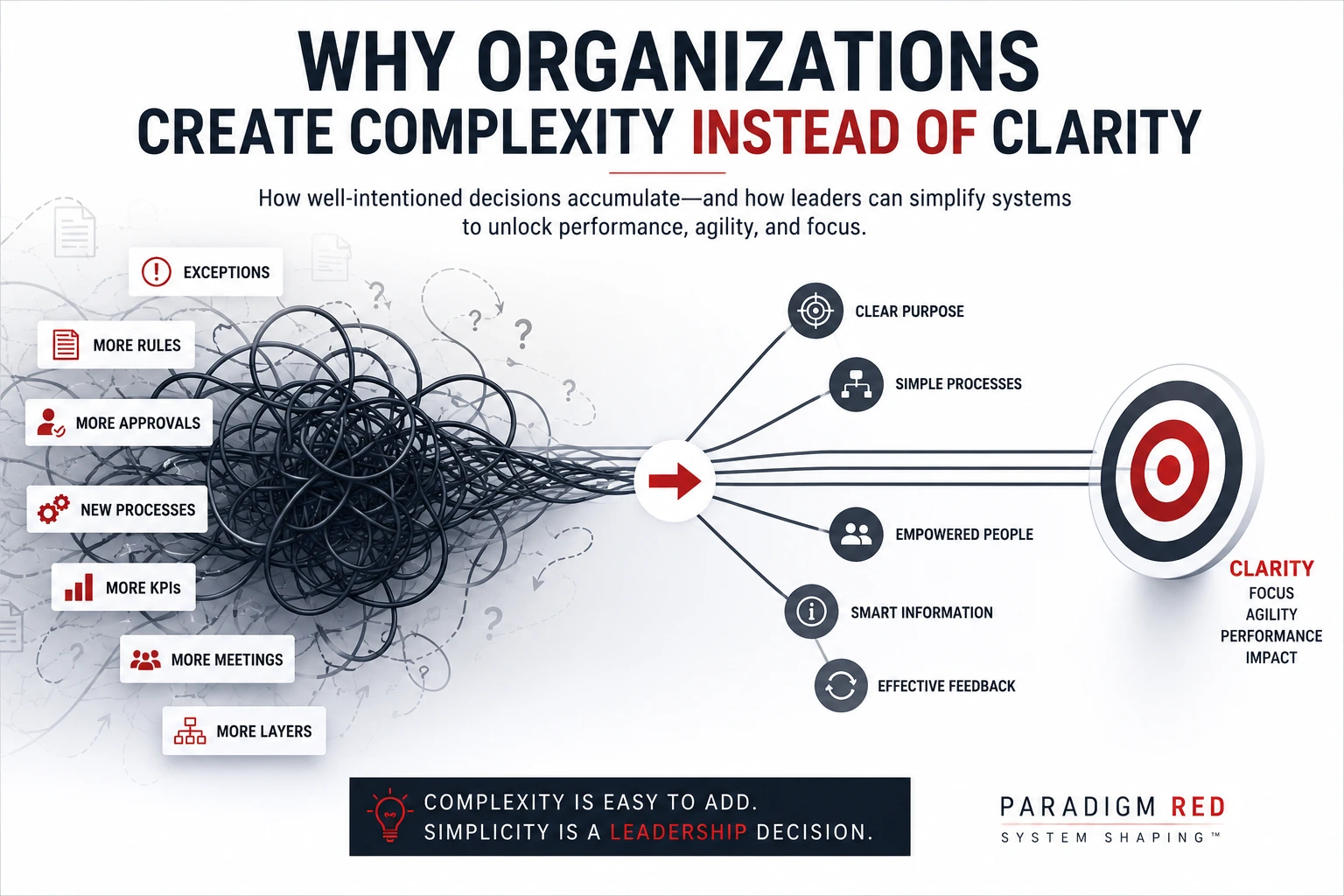
Why Organizations Create Complexity Instead of Clarity: A Systems Thinking Perspective
Estimated reading time: 18 minutes Very few organizations intentionally decide to become complicated. No executive announces a strategy to create more bureaucracy. No leadership team sets…
-
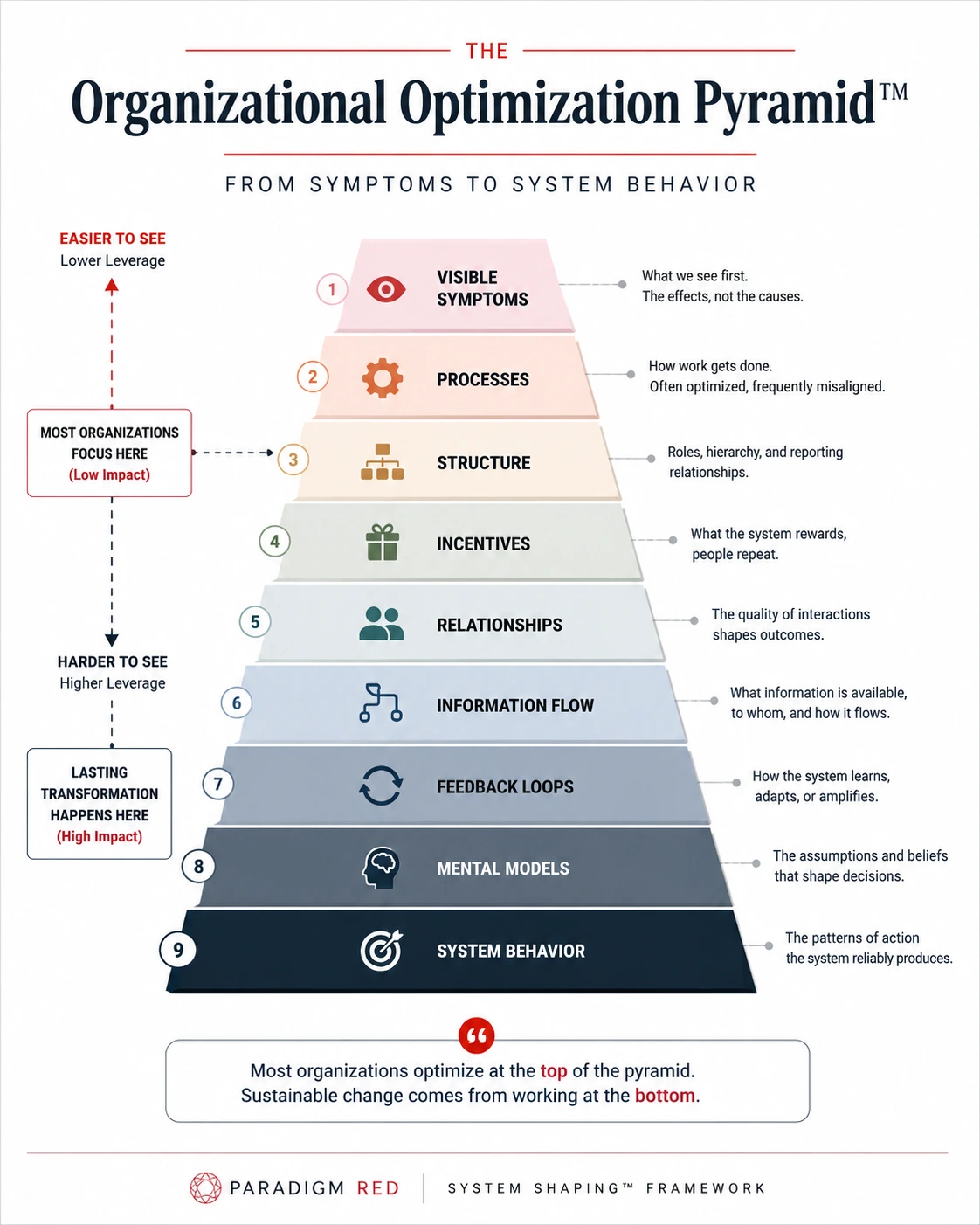
Why Organizations Optimize the Wrong Problems: A Systems Thinking Perspective
Estimated reading time: 17 minutes Every organization wants to improve. Leaders launch transformation initiatives. Processes are redesigned. New software is introduced. Dashboards become more sophisticated. Teams…
-

Why Organizations Create Too Many KPIs: When Measurement Becomes the Goal
Estimated reading time: 15 minutes Every successful organization measures performance. Revenue. Customer satisfaction. Employee engagement. Delivery speed. Quality. Measurement itself is not the problem. The problem…
-
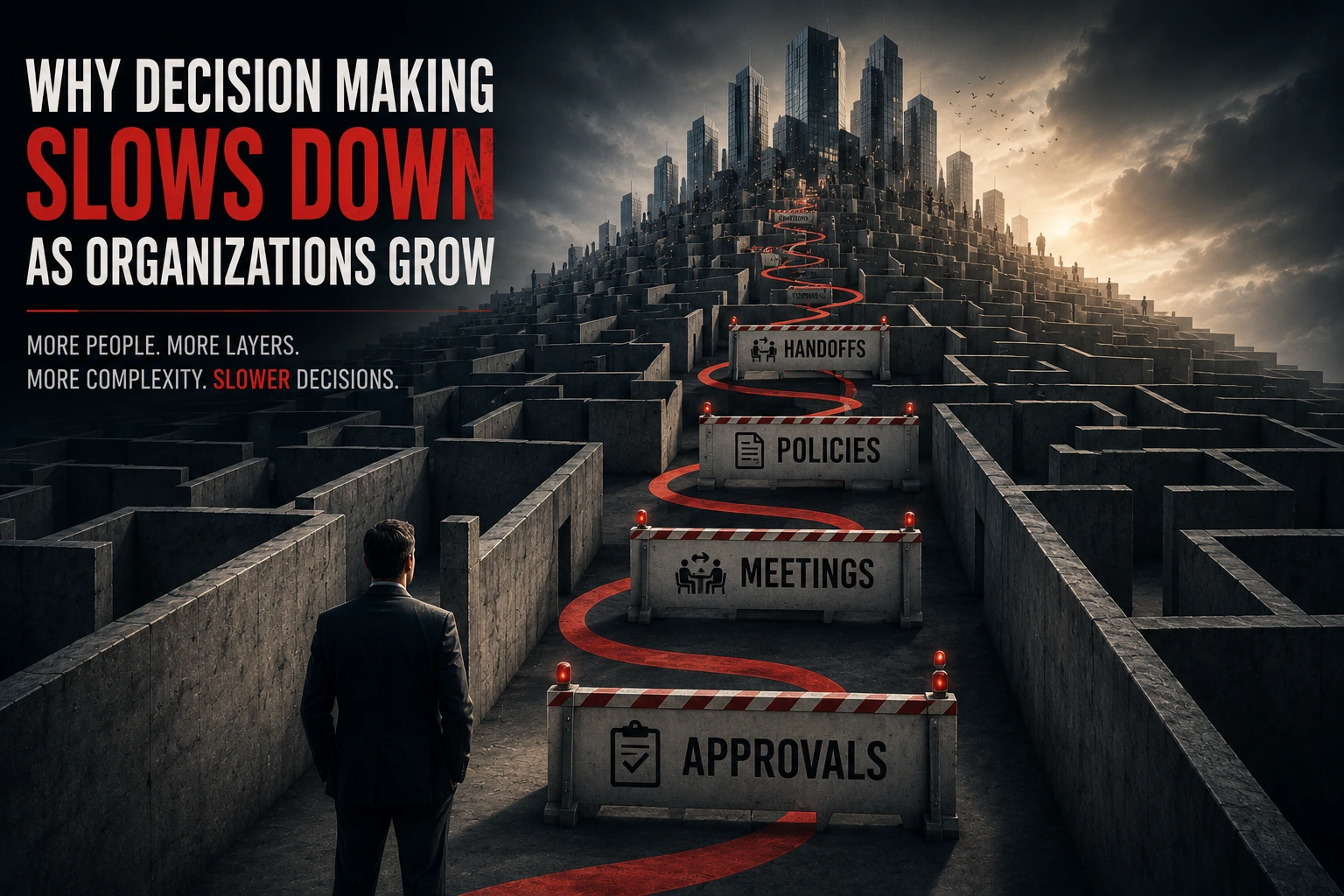
Why Decision Making Slows Down as Organizations Grow: A Systems View of Decision Speed
Estimated reading time: 15 minutes One of the most common complaints inside growing organizations is surprisingly simple. “Everything takes too long.” Decisions that once took an…
-
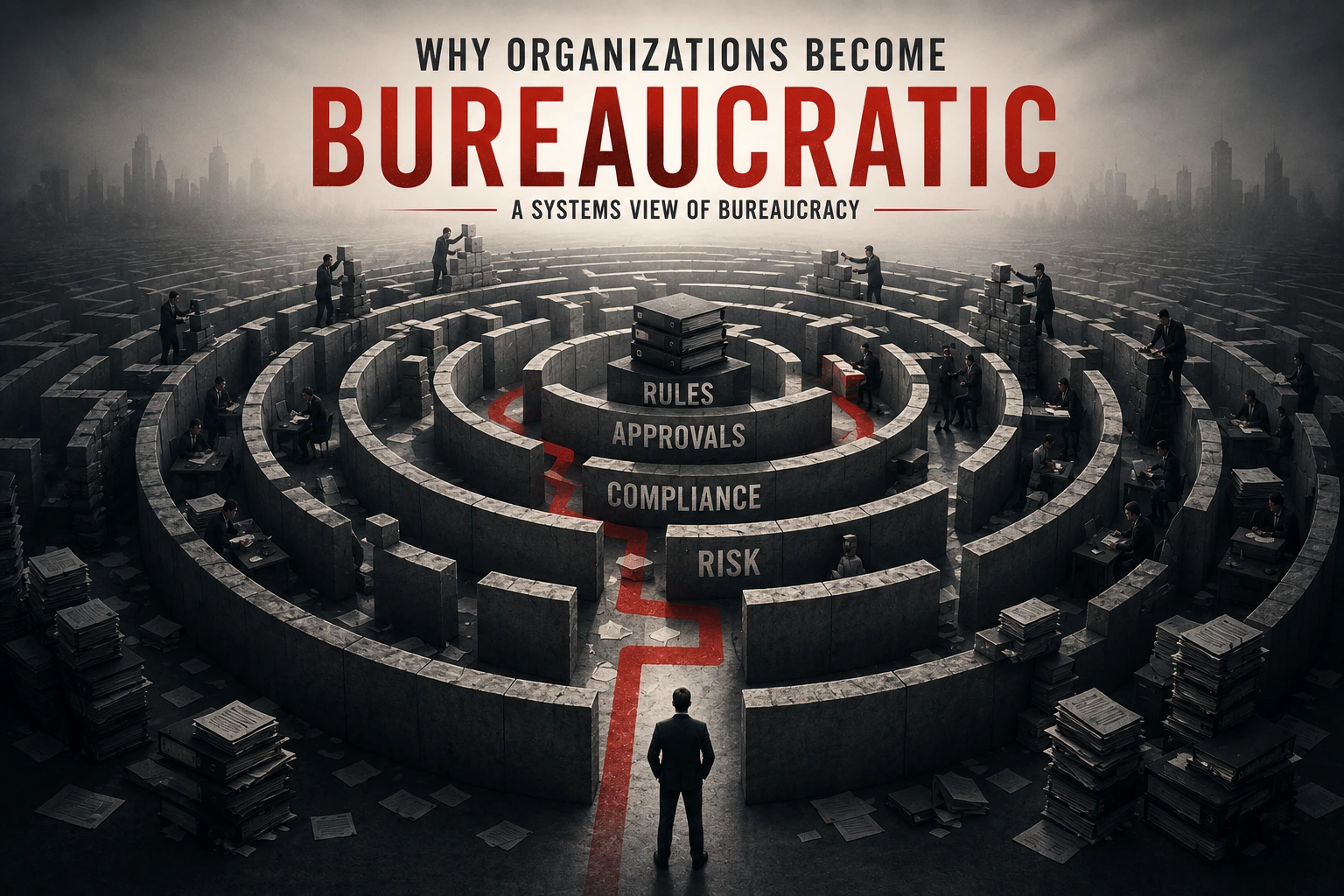
Why Organizations Become Bureaucratic: A Systems View of Bureaucracy
Estimated reading time: 14 minutes Nearly every successful organization begins with speed. Small teams make decisions quickly. Ideas move freely. Problems are solved without waiting for…
-
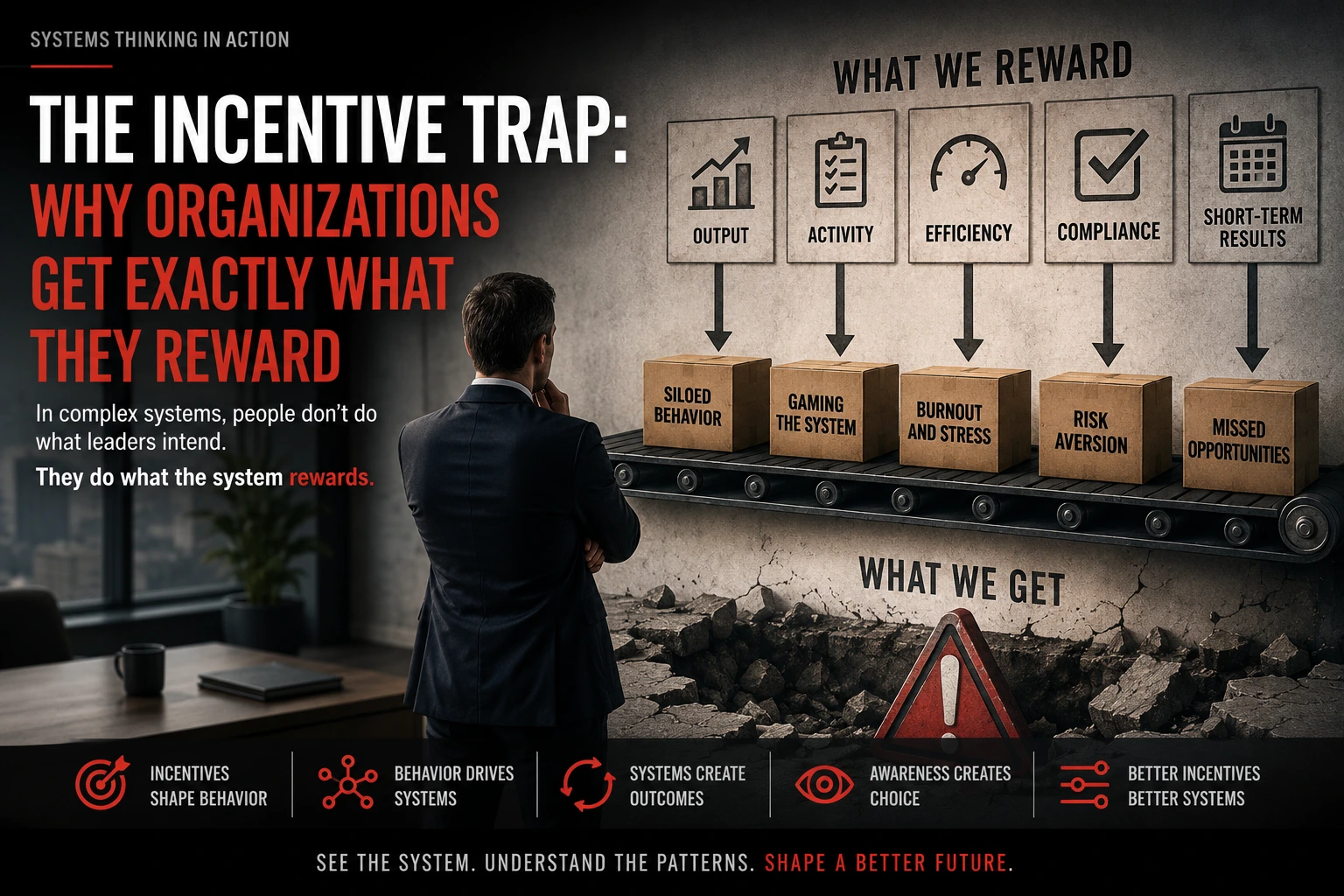
The Incentive Trap: Why Organizations Get Exactly What They Reward
Estimated reading time: 13 minutes Why do organizations reward collaboration but create silos? Why do leaders ask for innovation while punishing failure? Why do companies encourage…
-
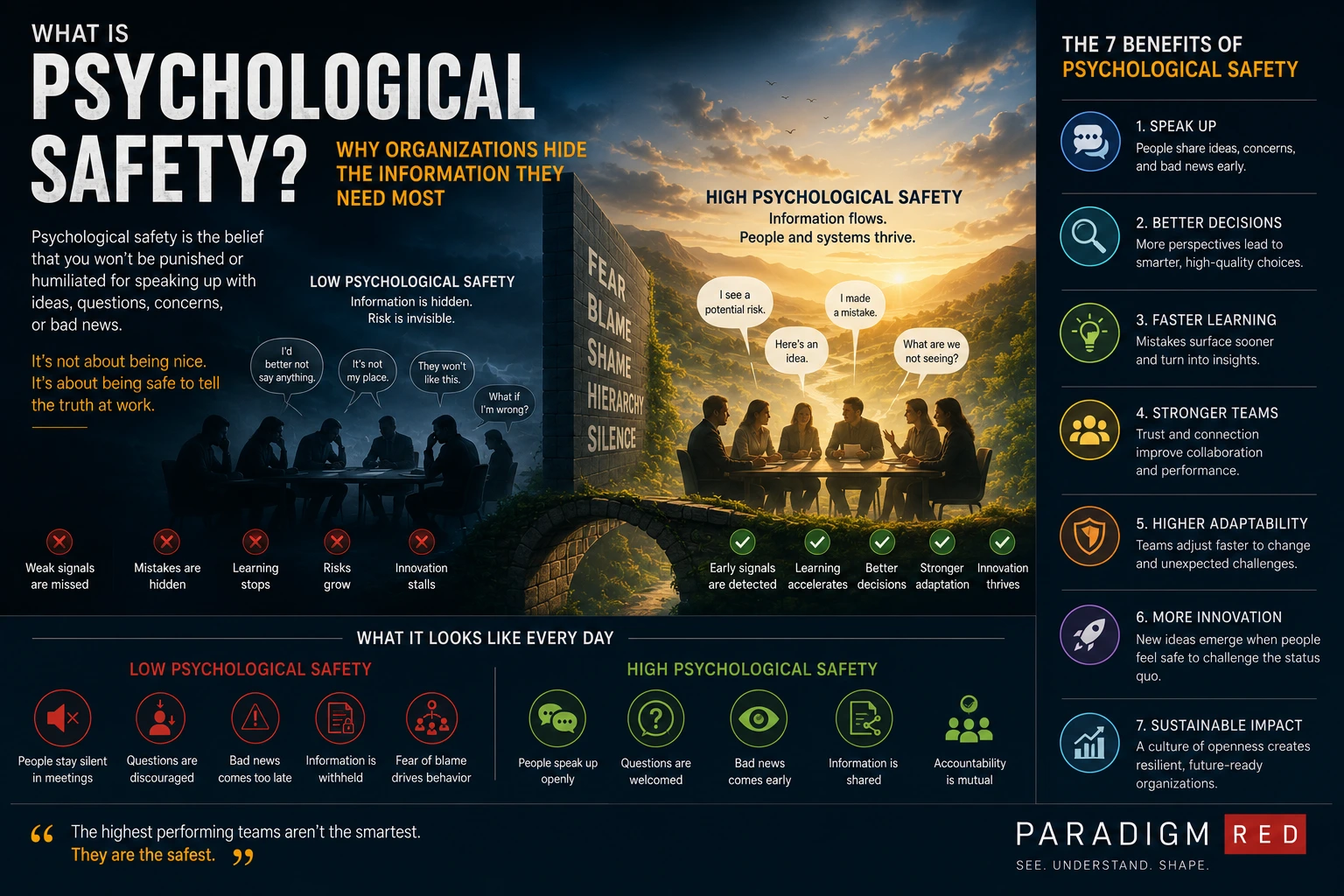
What Is Psychological Safety? Why Organizations Hide the Information They Need Most
Psychological safety explains why employees stay silent even when they see problems, risks, or mistakes developing around them. Estimated reading time: 12 minutes Why do employees…
-
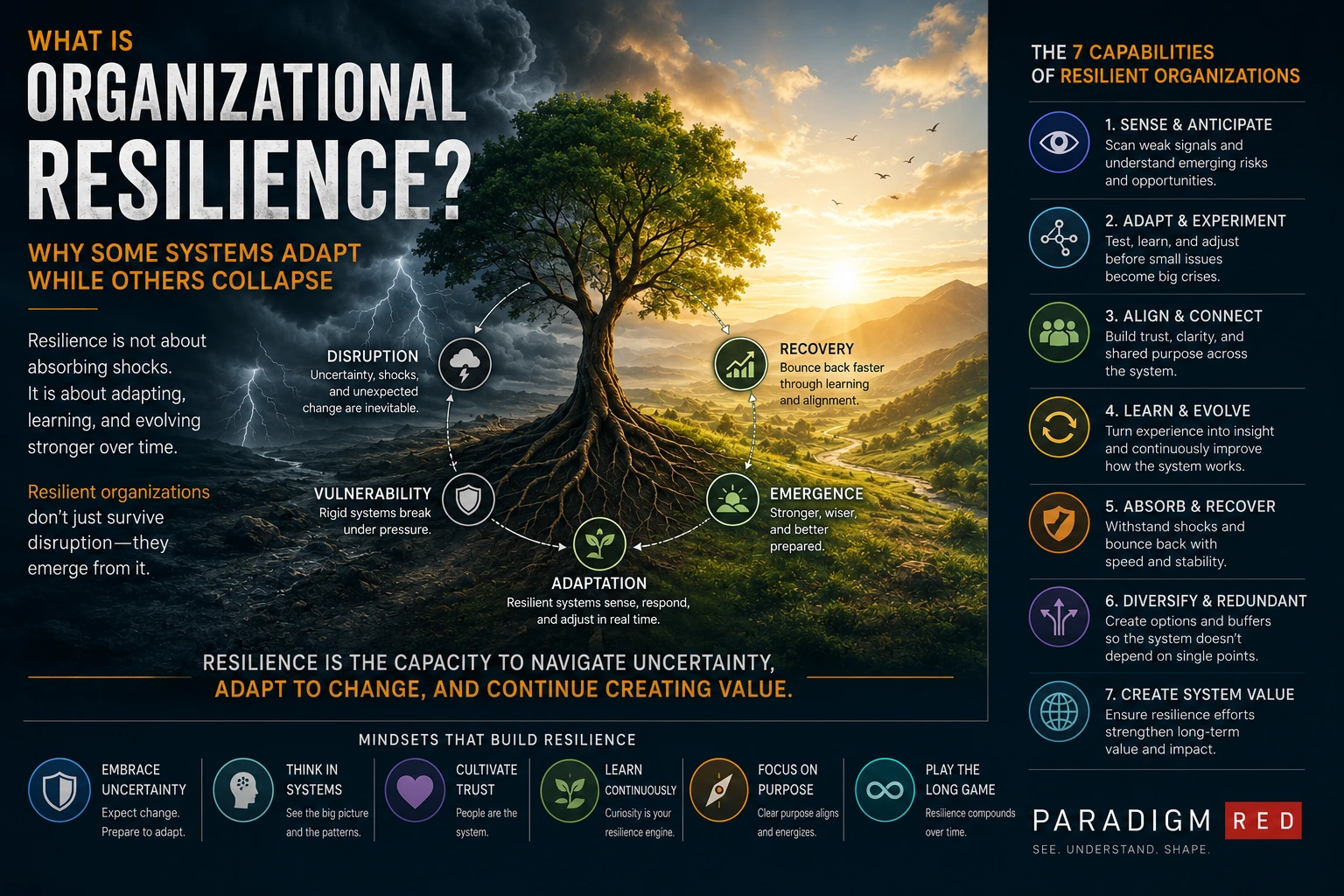
What Is Organizational Resilience? Why Some Systems Adapt While Others Collapse
Estimated reading time: 12 minutes Every organization eventually encounters disruption. Markets shift. Technologies emerge. Supply chains fail. Customer expectations change. Competitors appear unexpectedly. The question is…
-
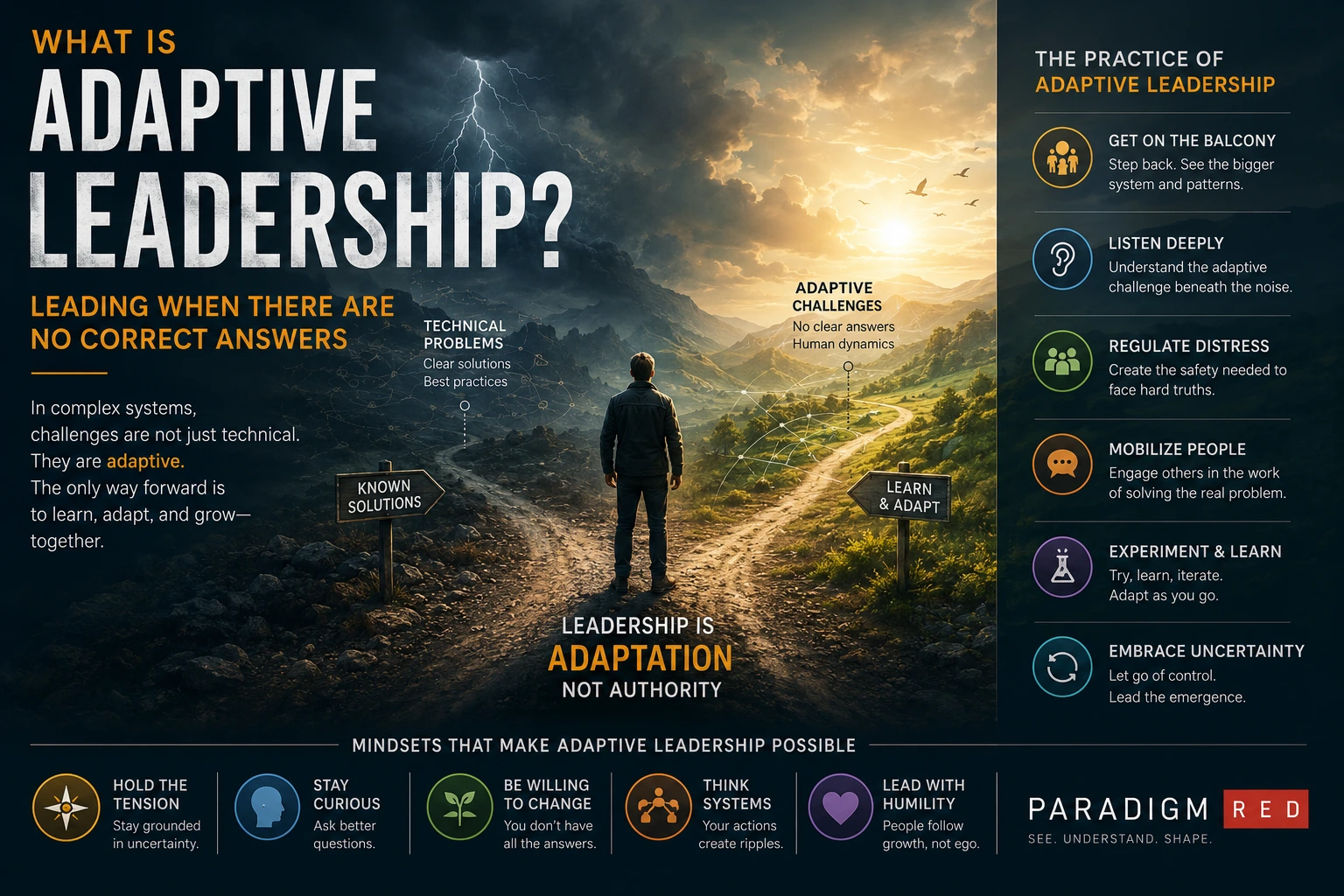
What Is Adaptive Leadership? Leading When There Are No Correct Answers
Most leadership models were built for a world that moved more slowly, not for adaptive leadership. The environment was relatively stable. Problems were largely technical. Experts…