Tag: systems thinking
Systems thinking is an approach to understanding how elements within a system interact to produce outcomes over time. Instead of focusing on isolated parts, it examines relationships, patterns, and feedback loops that shape behavior in organizations and complex environments.
Traditional problem-solving often treats issues as separate and linear. Systemic thinking reveals that most problems are interconnected and emerge from underlying structures. This perspective helps explain why solutions that address symptoms frequently fail to create lasting change.
On Paradigm Red, it is used as a foundation for understanding transformation, leadership, and complexity. It provides tools for recognizing patterns, identifying leverage points, and making better decisions in uncertain environments.
Core principles
- Focus on relationships rather than isolated elements
- Understanding feedback loops and system dynamics
- Recognizing patterns over time instead of single events
- Seeing how structure drives behavior
Why it matters
- Explains why problems persist or repeat
- Supports more effective decision-making
- Reveals high-impact leverage points
- Enables sustainable transformation
Related articles
-

What Is Sensemaking? Why Leaders Need Navigation More Than Prediction
For much of modern management history, leadership has been treated as the ability to predict the future accurately enough to control it. Not sensemaking. Create the…
-
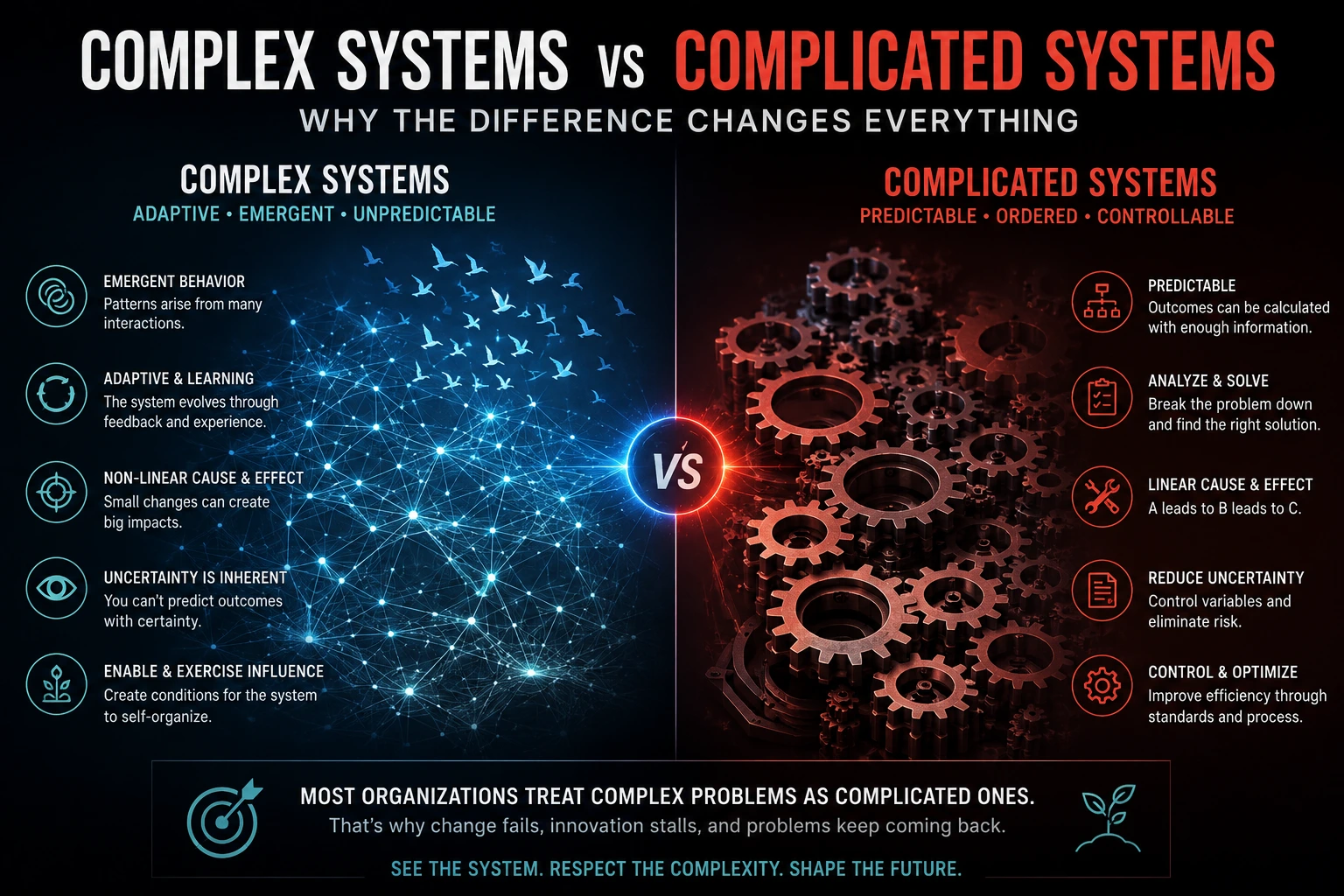
Complex Systems vs Complicated Systems: Why the Difference Changes Everything
One of the biggest mistakes in leadership, management, and organizational transformation is treating complex problems as if they were merely complicated. There is a difference between…
-
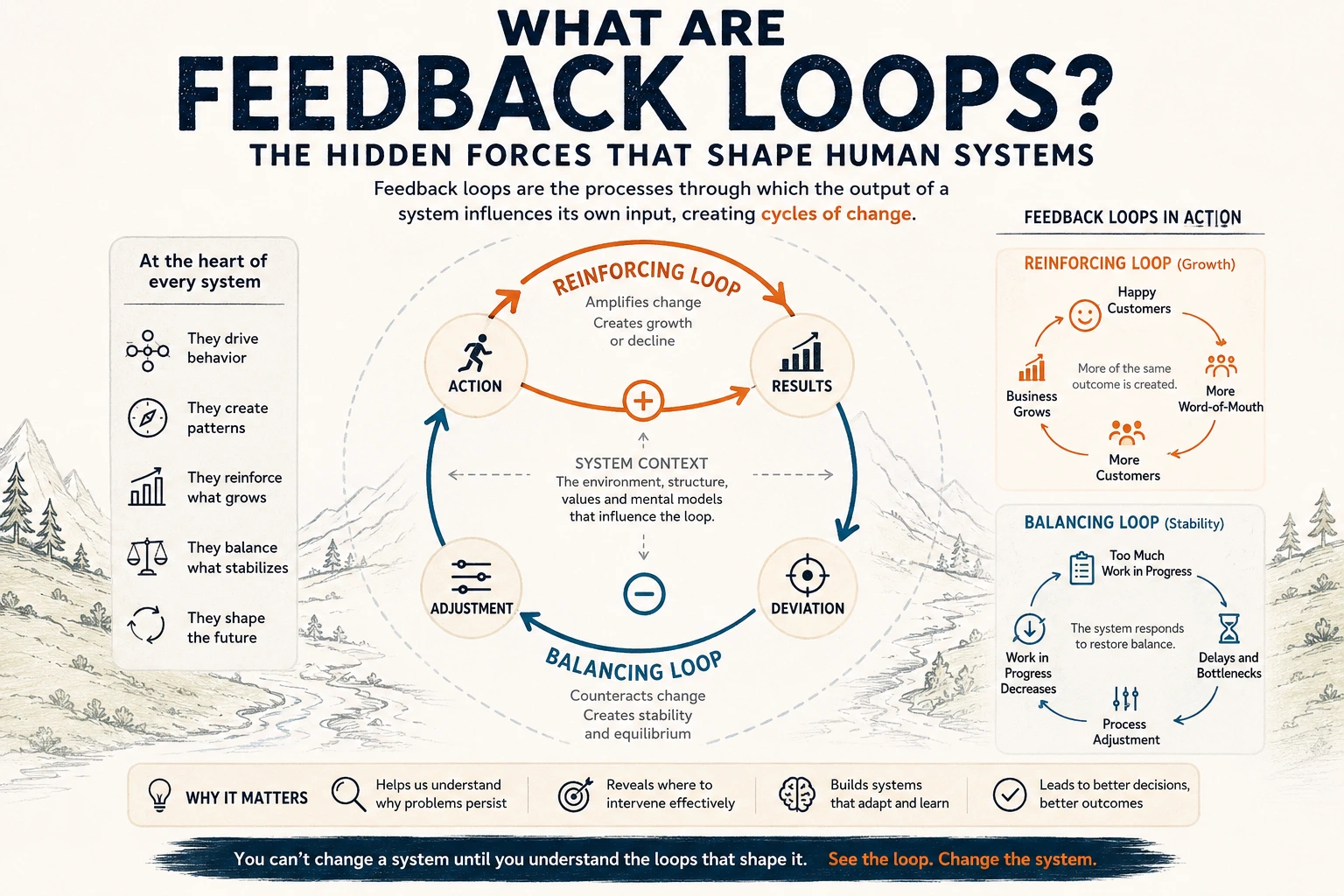
What Are Feedback Loops? The Hidden Forces That Shape Human Systems
How feedback loops analysis prevents problems keep returning no matter how often organizations try to fix them? Why do some behaviors become stronger over time while…
-
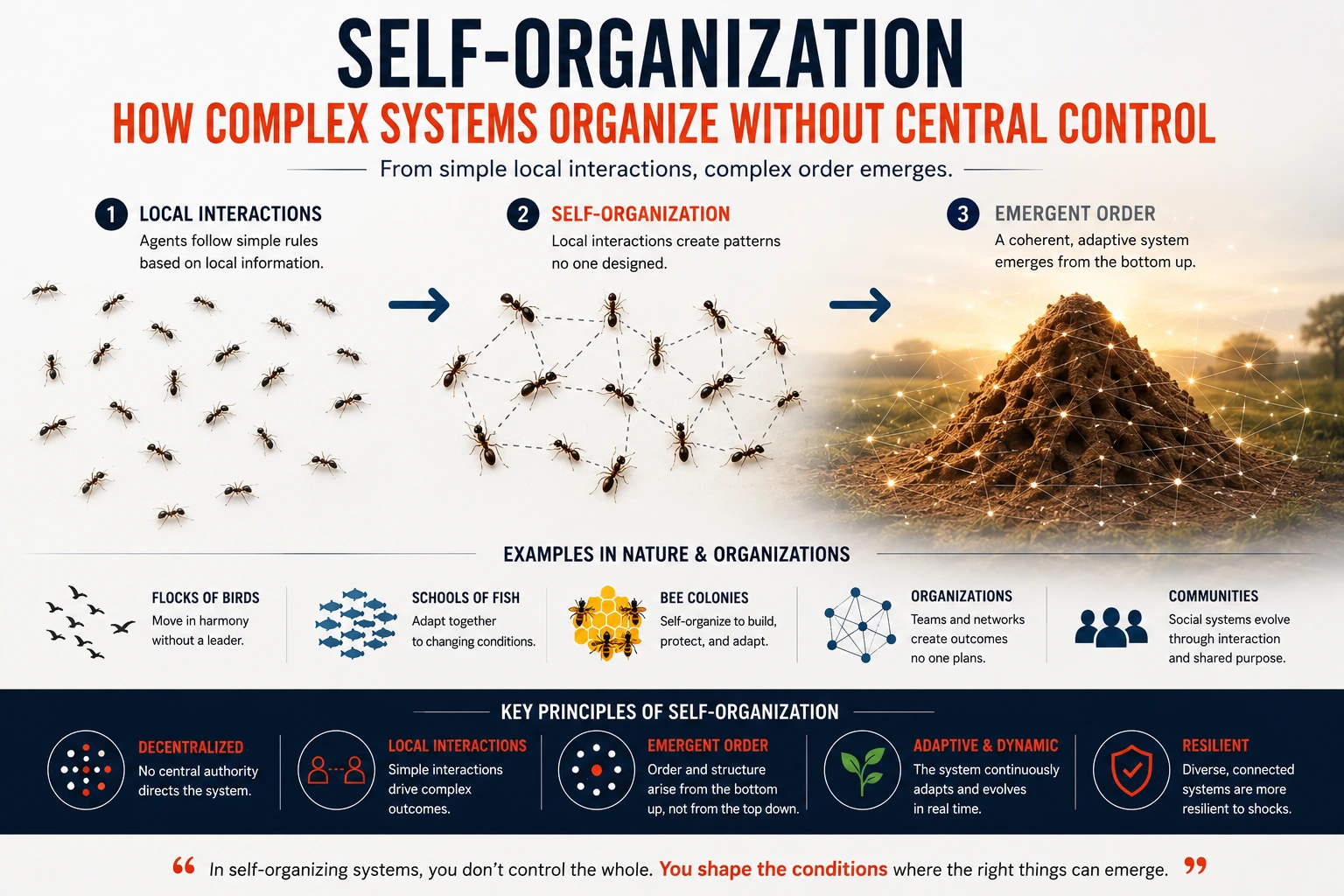
What Is Self-Organization? How Complex Systems Organize Without Central Control
Self-organization is one of the most important concepts in complexity science, systems thinking, organizational transformation, and System Shaping. It explains how order, structure, coordination, and collective…
-

What Are Leverage Points? How Small Changes Create Large System Effects
Leverage points are places within a system where a change can produce a disproportionately large effect. In organizations, they may involve information flows, feedback loops, rules,…
-
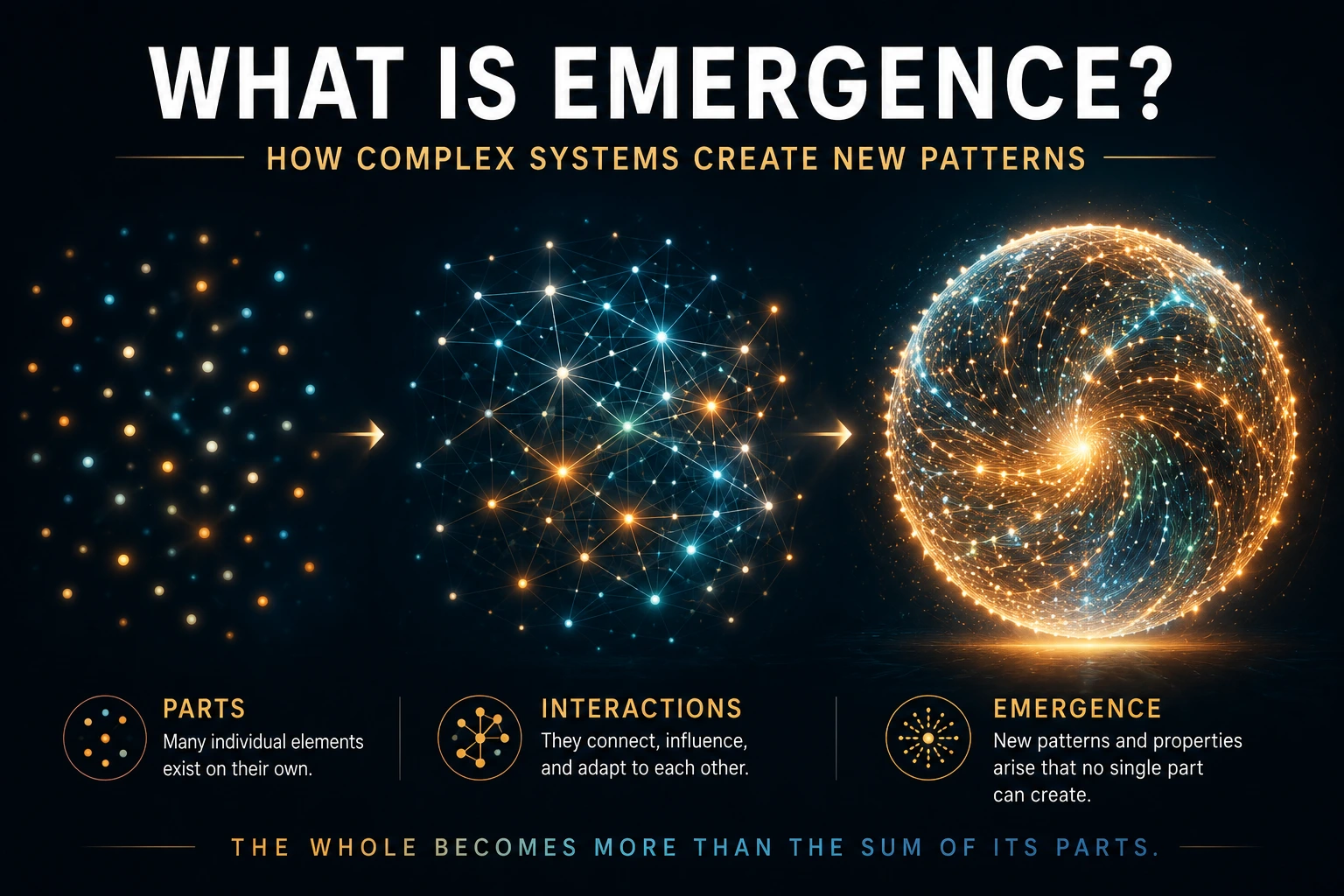
What Is Emergence? Definition and Examples in Systems Thinking
Emergence is the appearance of system-level patterns, properties, or behavior through interactions among the system’s parts. The key is the interaction: examining each part separately does…
-
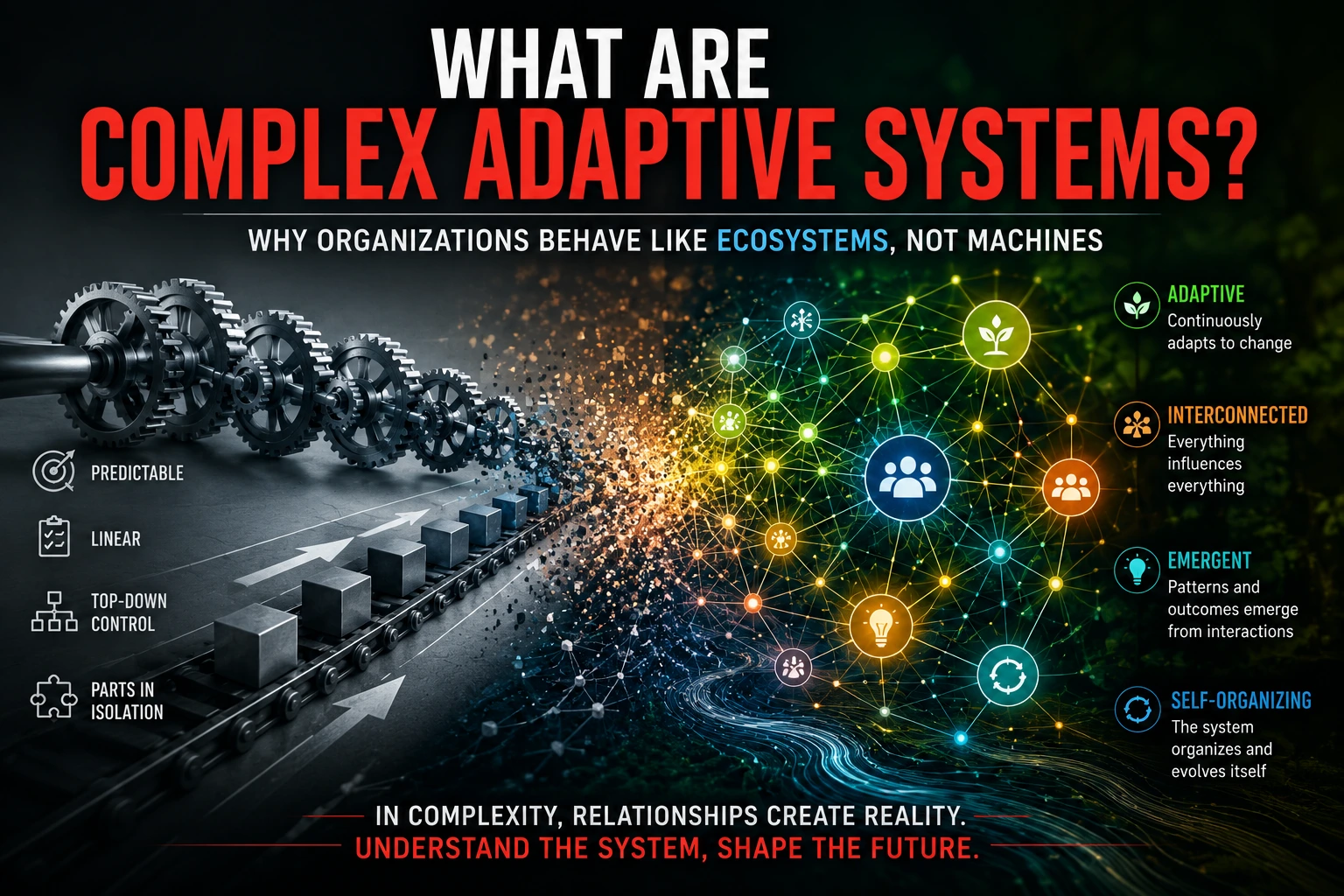
What Are Complex Adaptive Systems? A Guide to Emergence, Adaptation, and Complexity
Complex adaptive systems are one of the most important concepts for understanding organizations, leadership, transformation, culture, markets, societies, ecosystems, and human behavior. Many leaders still approach…
-
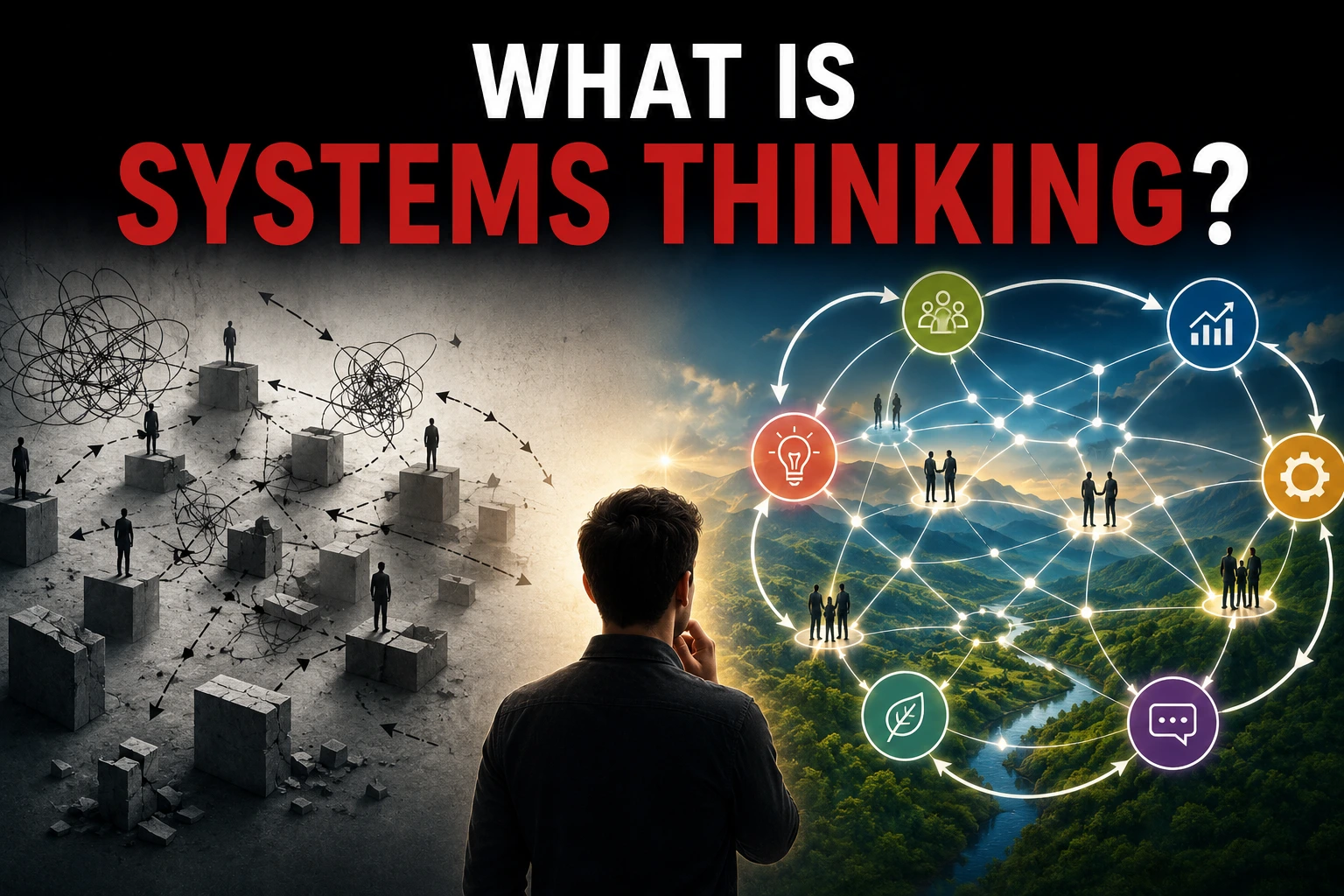
What Is Systems Thinking? A Guide to Understanding Complex Systems
Systems thinking is one of the most important intellectual frameworks for understanding complexity. Whether we are trying to understand organizations, societies, economies, cultures, ecosystems, or even…
-
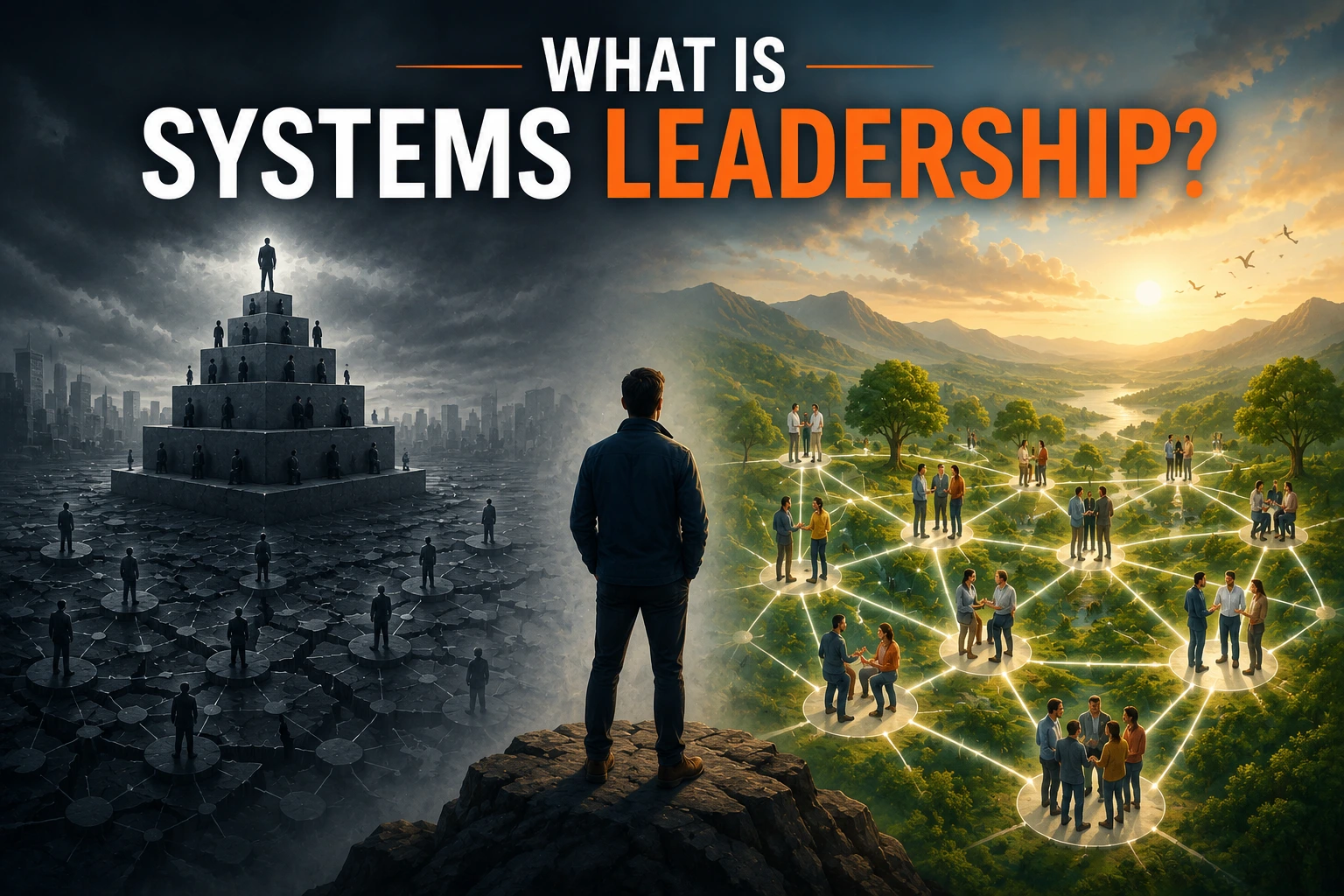
What Is Systems Leadership? A Guide to Leading Complex Adaptive Systems
Systems leadership has emerged as one of the most important leadership concepts of the 21st century. Organizations today operate in environments defined by uncertainty, complexity, rapid…
-
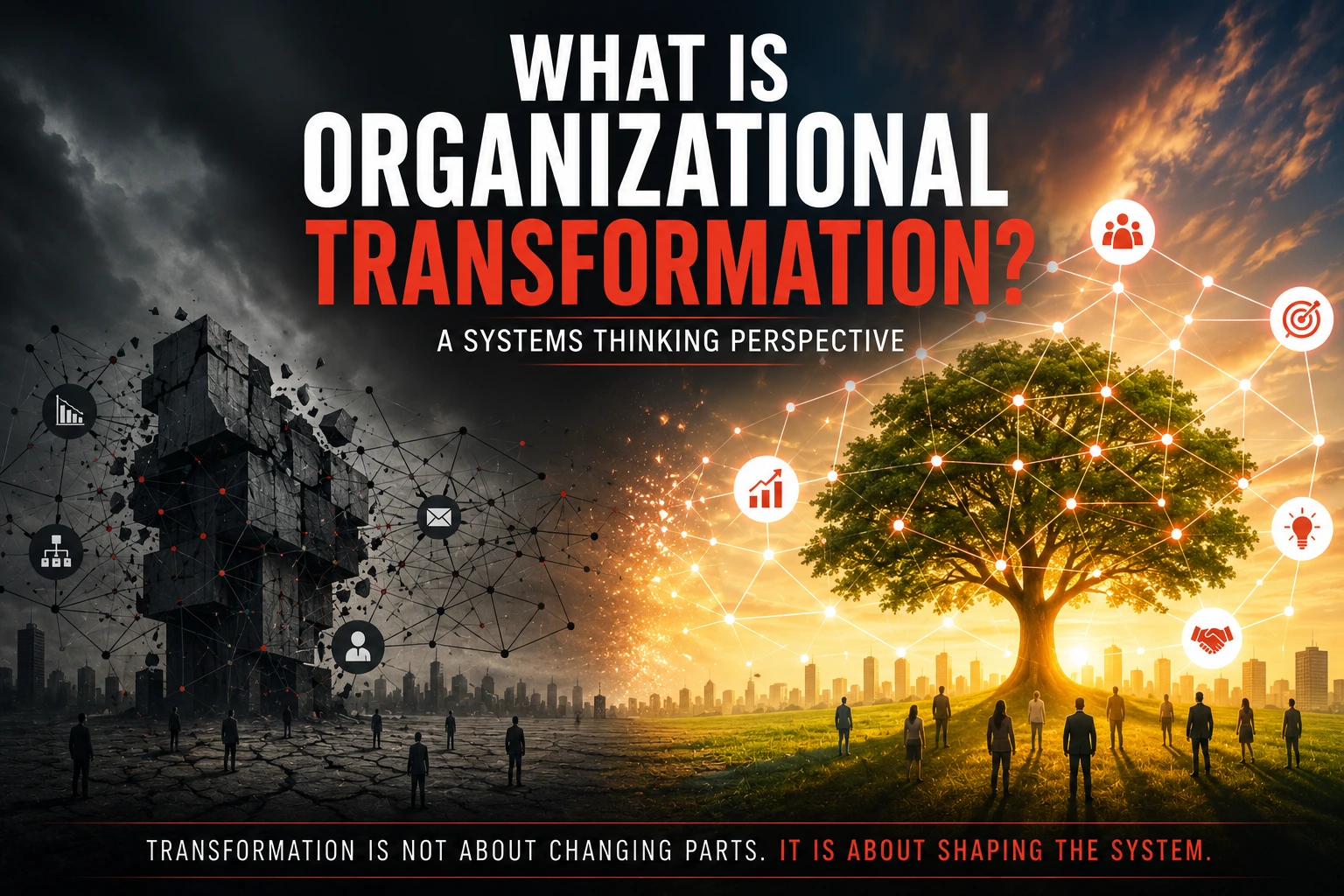
What Is Organizational Transformation? A Systems Thinking Perspective
Organizational transformation has become one of the most frequently used terms in leadership, strategy, and business management. Companies launch transformation programs, appoint transformation leaders, establish transformation…