Tag: systems thinking
Systems thinking is an approach to understanding how elements within a system interact to produce outcomes over time. Instead of focusing on isolated parts, it examines relationships, patterns, and feedback loops that shape behavior in organizations and complex environments.
Traditional problem-solving often treats issues as separate and linear. Systemic thinking reveals that most problems are interconnected and emerge from underlying structures. This perspective helps explain why solutions that address symptoms frequently fail to create lasting change.
On Paradigm Red, it is used as a foundation for understanding transformation, leadership, and complexity. It provides tools for recognizing patterns, identifying leverage points, and making better decisions in uncertain environments.
Core principles
- Focus on relationships rather than isolated elements
- Understanding feedback loops and system dynamics
- Recognizing patterns over time instead of single events
- Seeing how structure drives behavior
Why it matters
- Explains why problems persist or repeat
- Supports more effective decision-making
- Reveals high-impact leverage points
- Enables sustainable transformation
Related articles
-

What Is Complexity Leadership? A Guide to Leading in Complex Systems
Complexity leadership is an approach to leadership designed for complex systems, uncertain environments, and adaptive organizations. Instead of relying only on prediction, control, hierarchy, and linear…
-

What Is Systemic Coaching? A Practical Guide for Complex Organizations
Systemic coaching is an approach to coaching that helps leaders, teams, and organizations understand the relationships, patterns, feedback loops, and hidden dynamics shaping behavior inside complex…
-
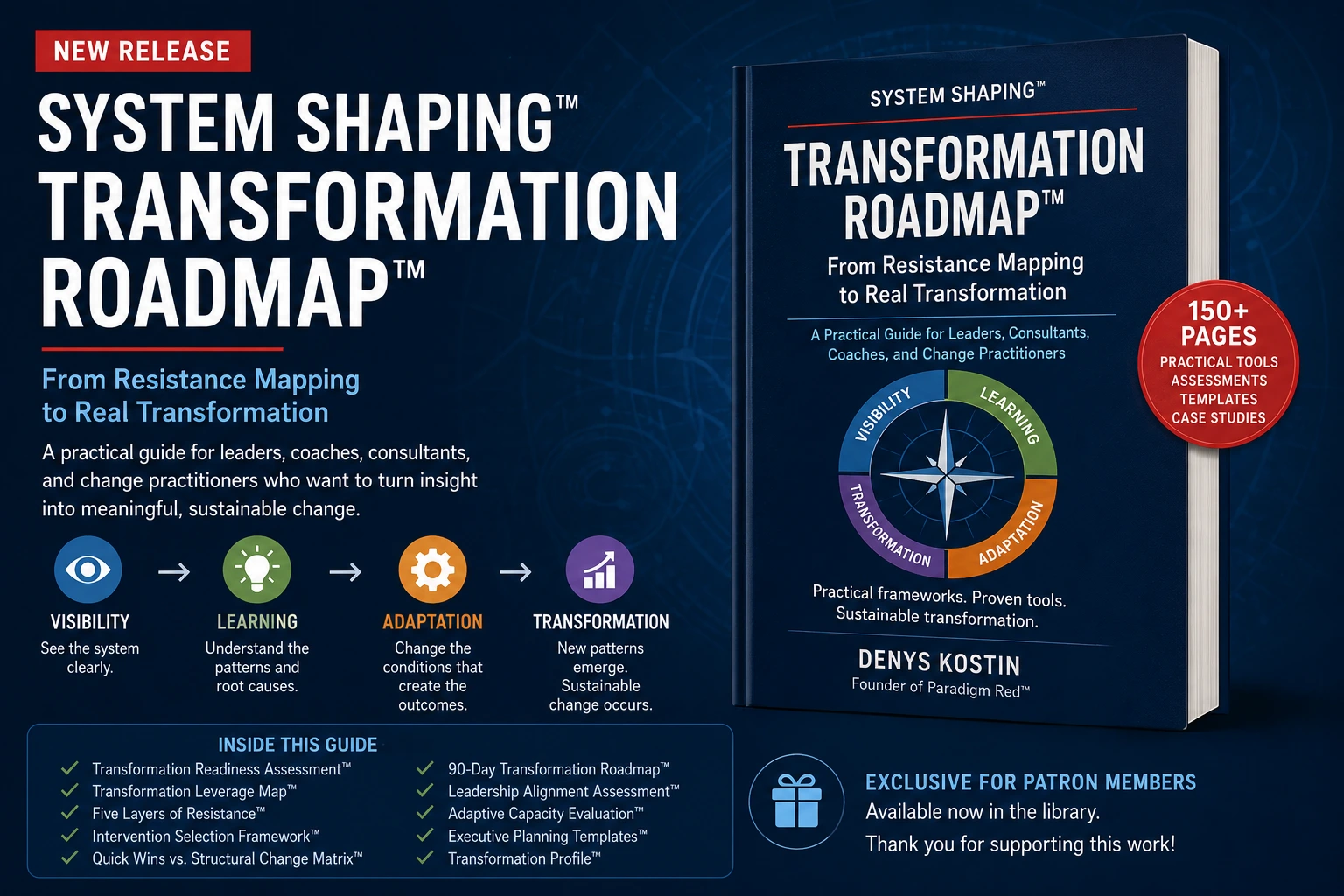
Why Change Initiatives Fail: The Hidden System Dynamics Most Leaders Miss
Why change initiatives fail is one of the most important questions in leadership, organizational development, systems thinking, change management, and systems transformation. Most organizations do not…
-
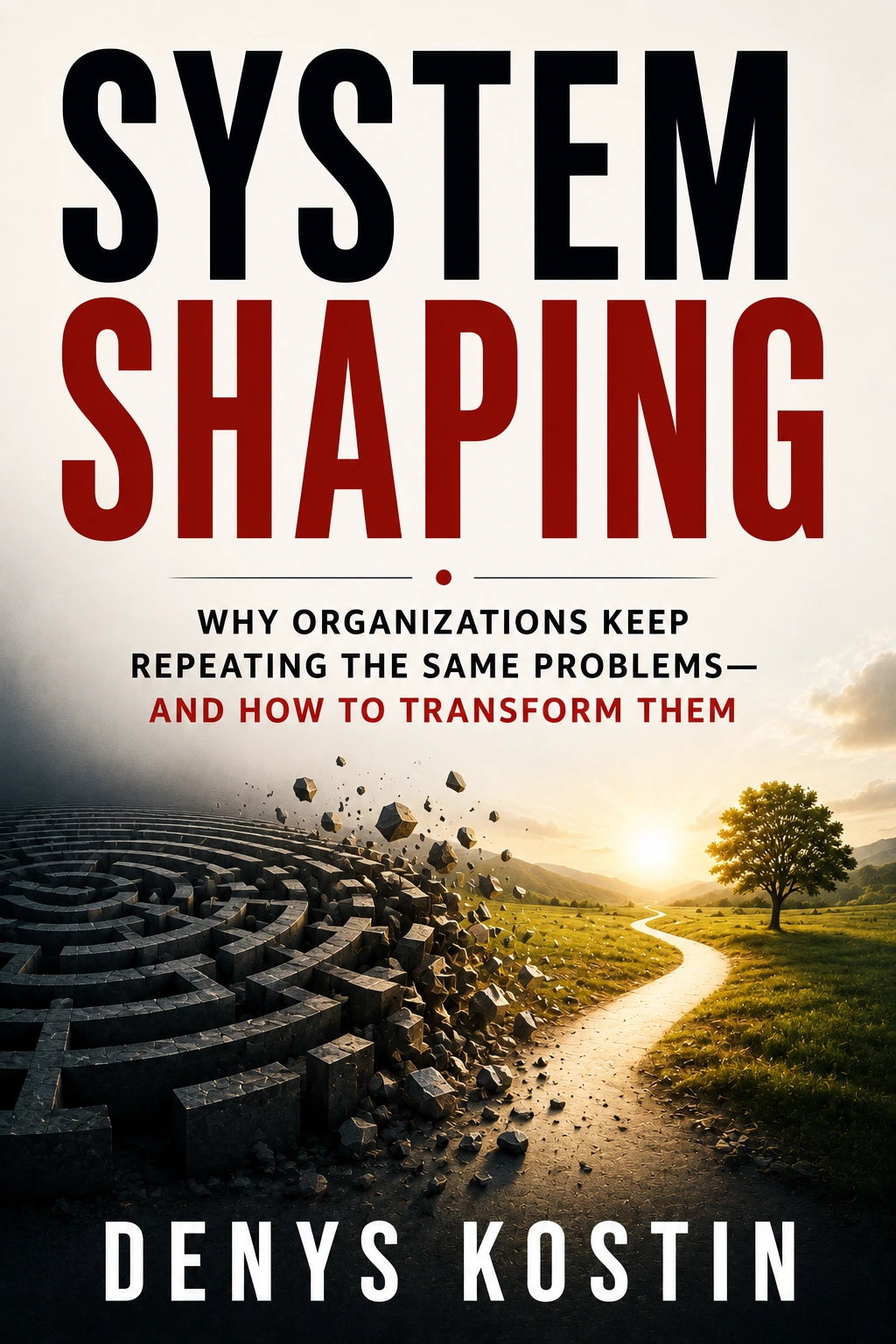
System Shaping: Why Organizations Keep Repeating the Same Problems
System Shaping is a new framework for organizational transformation, systems thinking, and systemic change that helps explain why organizations continue reproducing the same problems despite repeated…
-
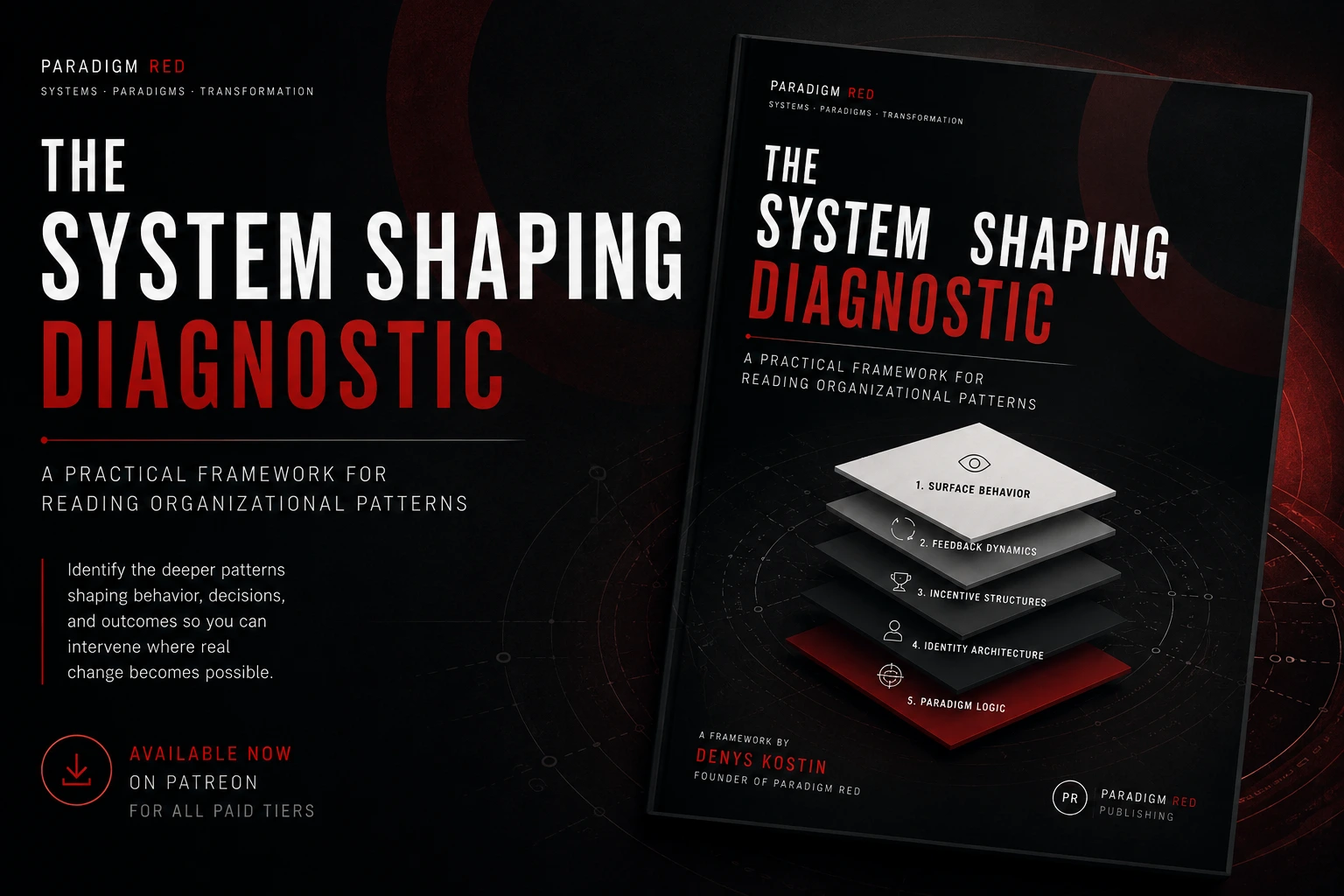
The System Shaping Diagnostic Is Now Available
System Shaping is an emerging framework for systems transformation, organizational change, and systemic leadership inside complex human systems. The new System Shaping Diagnostic explores why organizations…
-
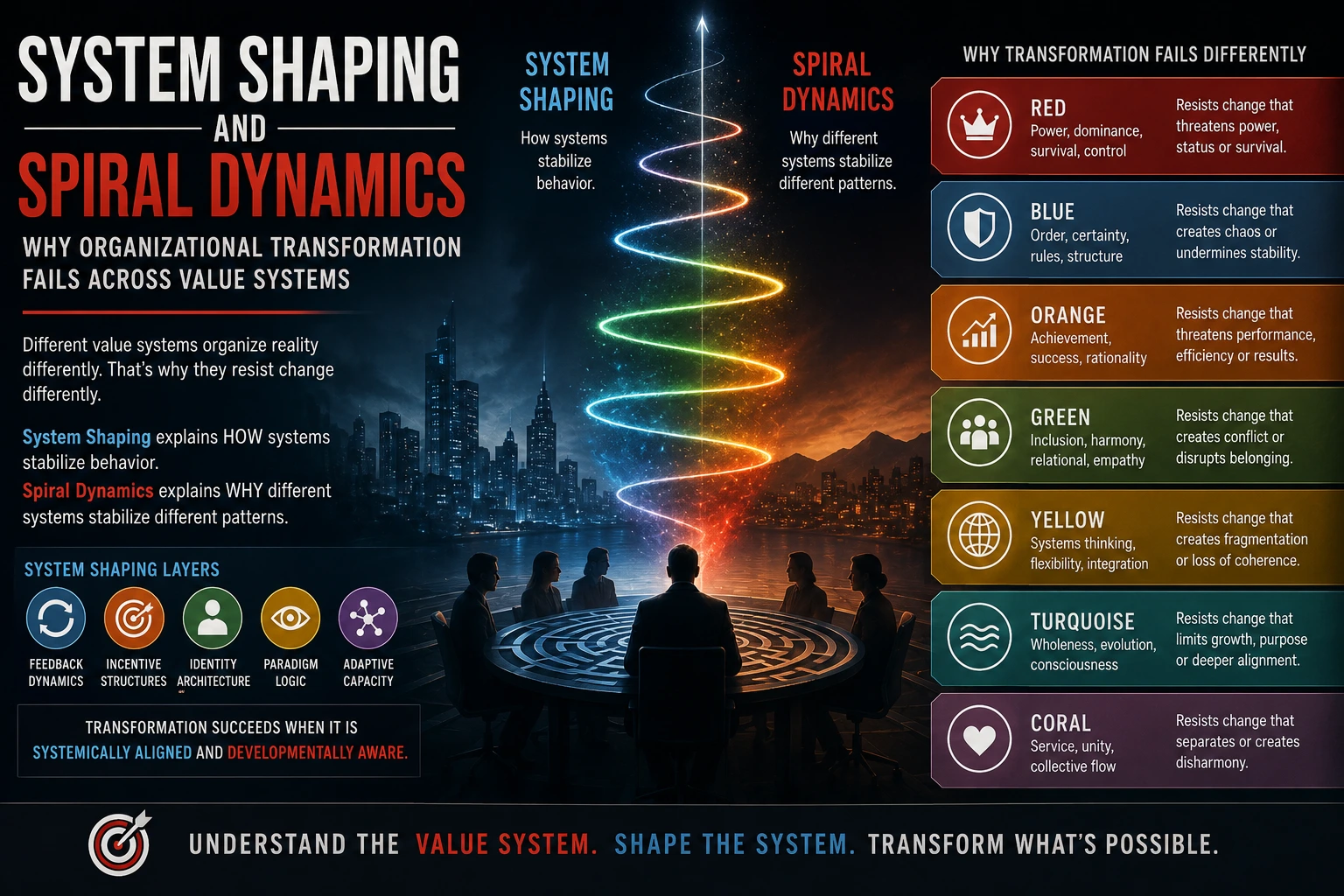
System Shaping and Spiral Dynamics: Why Organizational Transformation Fails Across Value Systems
System Shaping and Spiral Dynamics together explain why organizational transformation succeeds in some systems, fails in others, and produces radically different outcomes across cultures, leadership structures,…
-
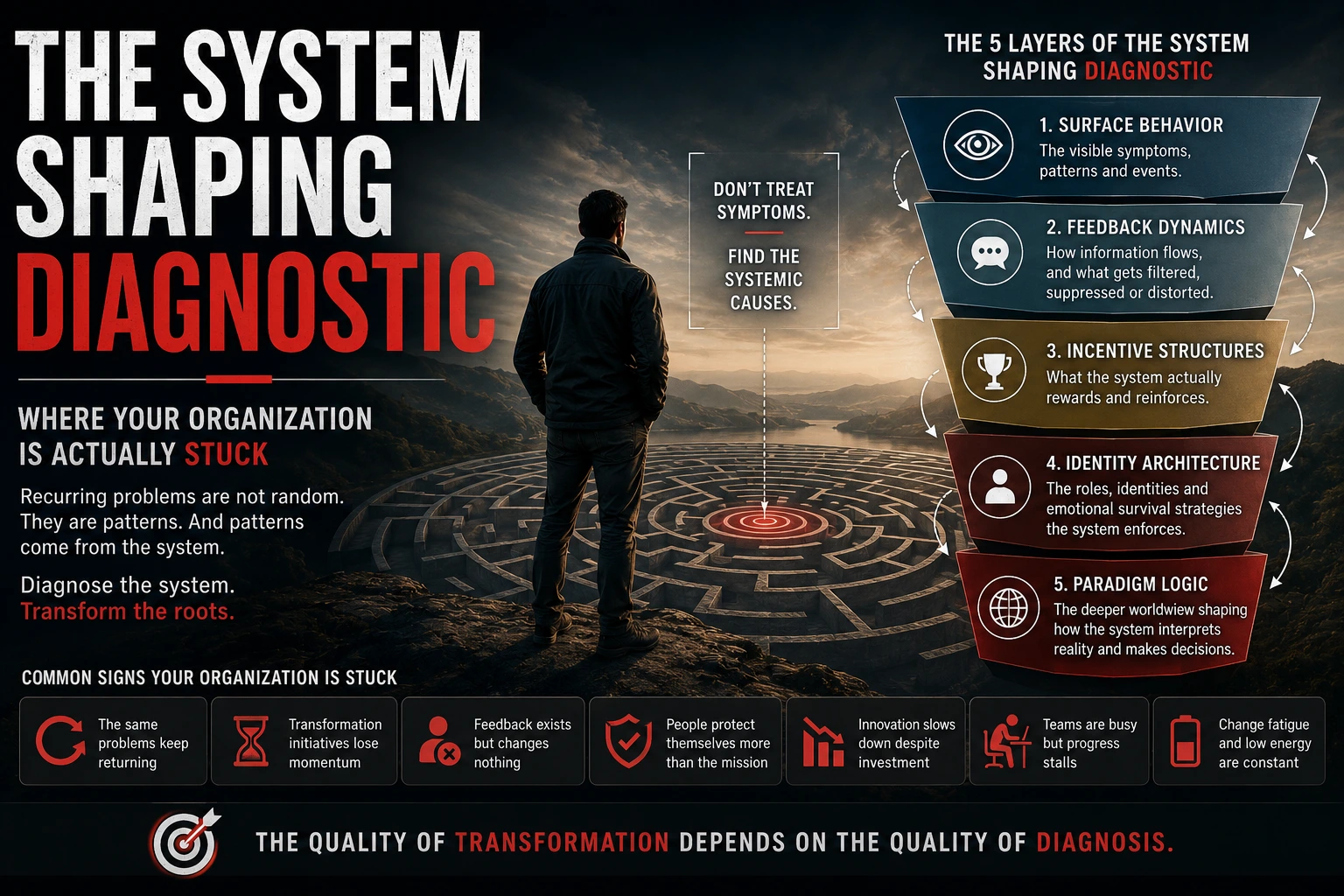
The System Shaping Diagnostic: Where Your Organization Is Actually Stuck
The System Shaping Diagnostic is a framework for identifying the deeper systemic patterns that keep organizations stuck, repeating the same problems, and resisting meaningful transformation. Most…
-
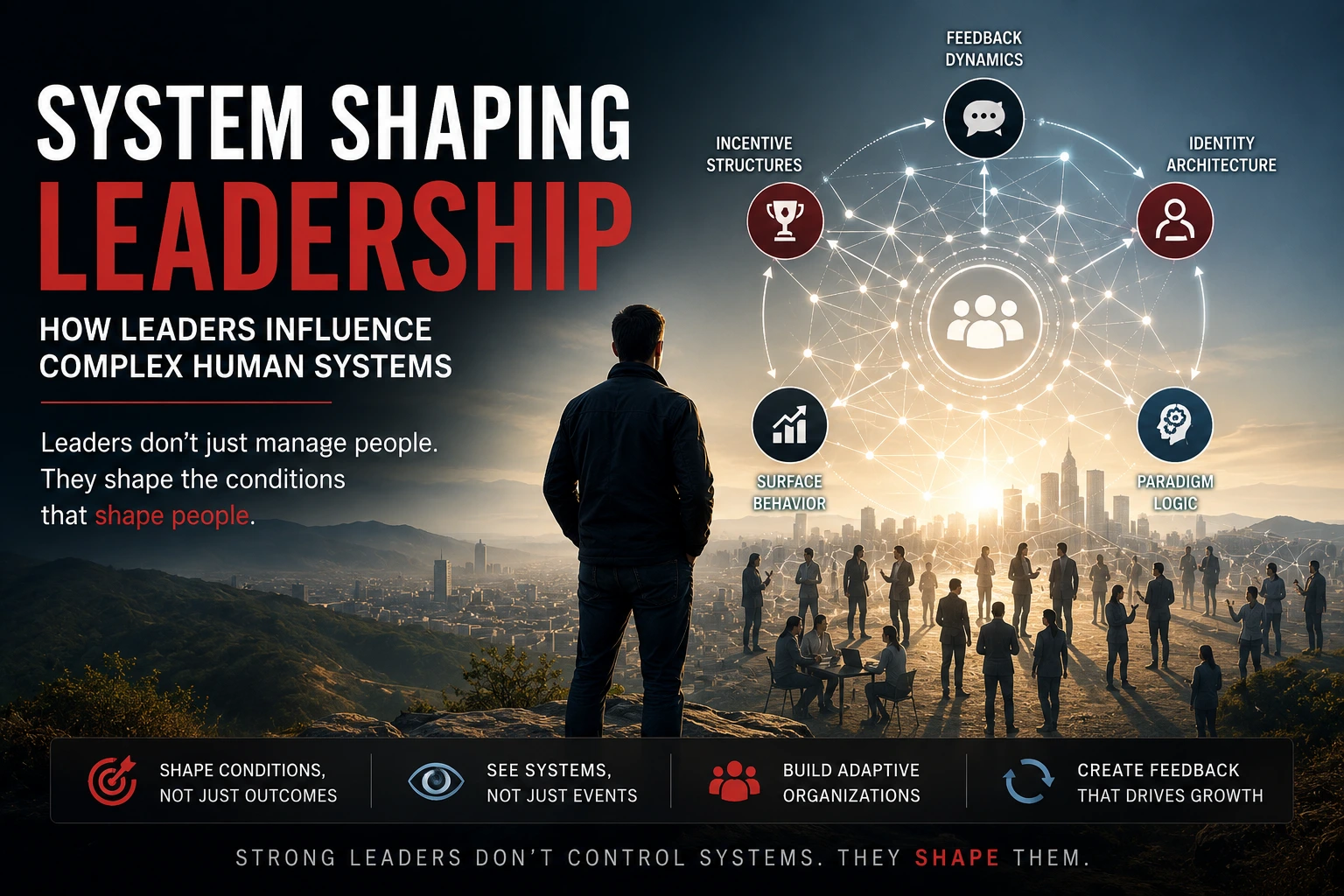
System Shaping Leadership: How Leaders Influence Complex Human Systems
System Shaping Leadership is the ability to influence the deeper conditions that shape behavior inside organizations, teams, cultures, and complex human systems. Most leadership models focus…
-
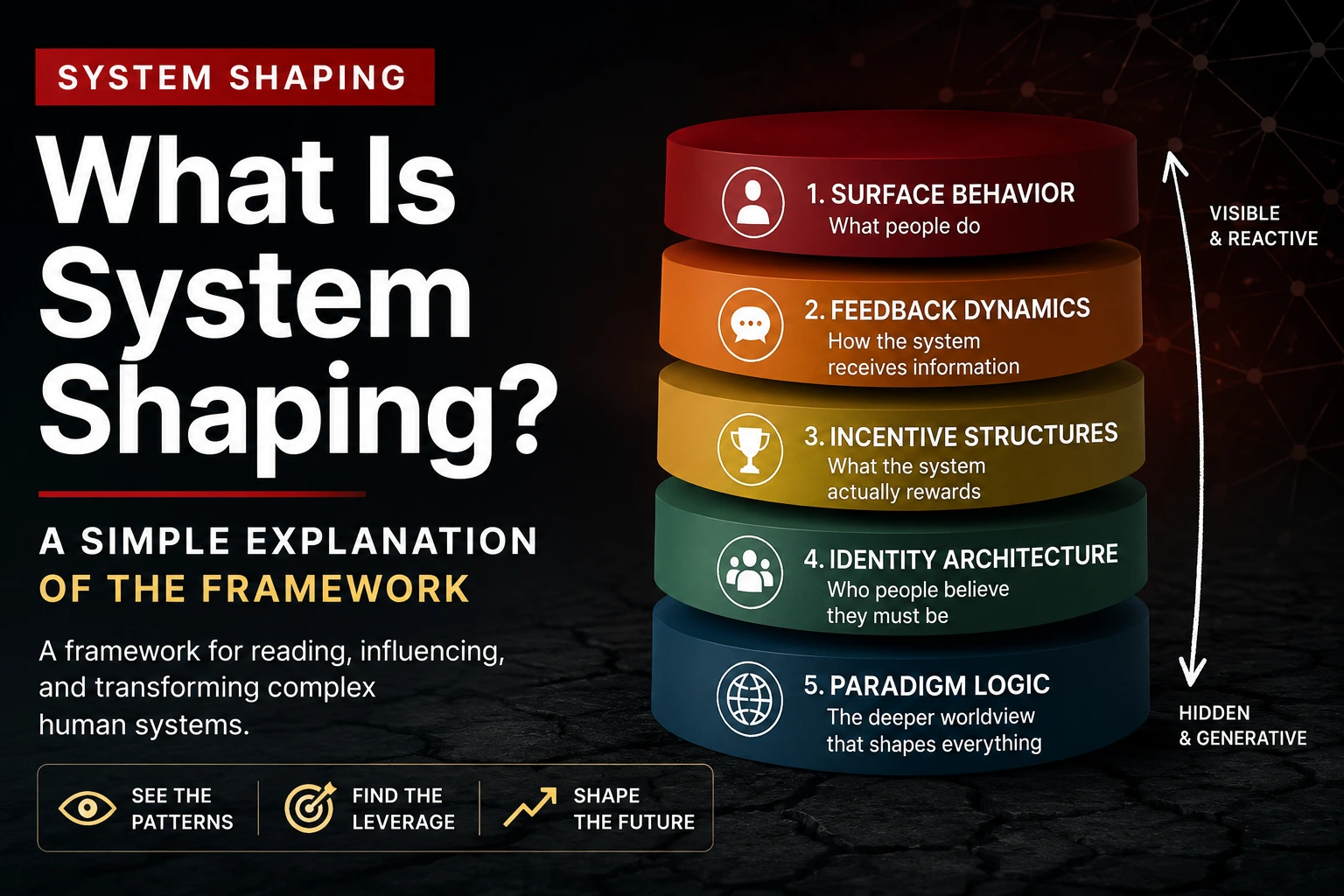
What Is System Shaping? A Simple Explanation of the Framework
System Shaping is a framework for understanding why people, teams, organizations, and cultures keep repeating the same patterns — even when everyone wants change. Most transformation…
-
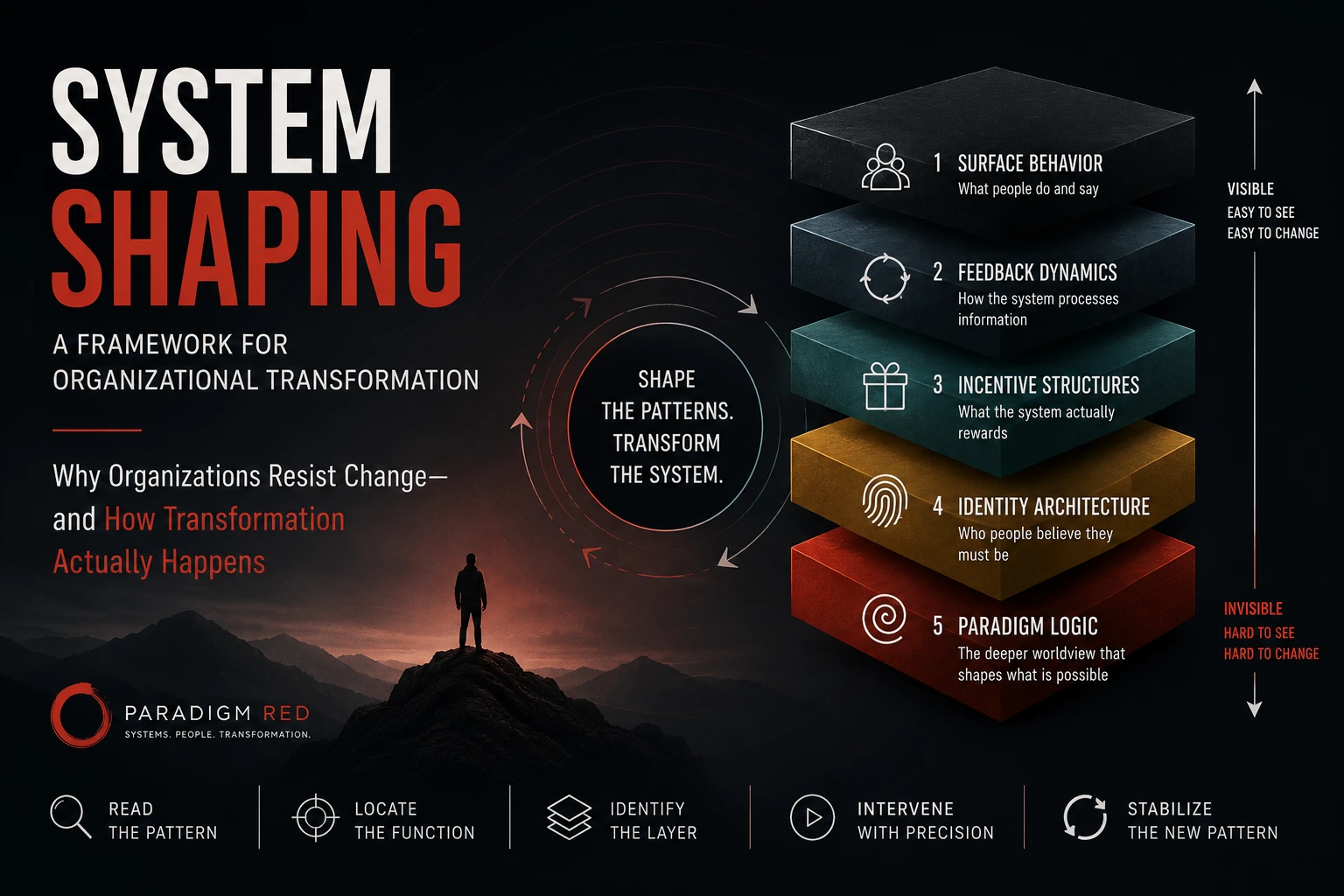
System Shaping: A New Framework for Organizational Transformation
System Shaping is a framework for understanding why organizations resist change, why transformation efforts often fail, and how real organizational transformation happens in complex human systems.…