Tag: systems transformation
Systems transformation is the process of changing how a system actually operates—its structure, incentives, decision patterns, and feedback loops—rather than improving surface-level performance. In organizations, this means shifting the conditions that drive behavior, not just the behavior itself.
Most change efforts focus on initiatives, frameworks, or communication. These can create temporary movement, but they rarely alter the system’s underlying dynamics. As a result, old patterns return, and transformation appears to “fail.” Systems transformation addresses this by working at the level where outcomes are generated.
On Paradigm Red, systems transformation is explored through systems thinking, leverage points, Spiral Dynamics, and systemic coaching. The goal is not to force change, but to design conditions where new patterns can emerge and stabilize over time.
What defines systems transformation
- Changing system structure rather than isolated actions
- Aligning incentives, decisions, and behavior
- Working with feedback loops and system dynamics
- Focusing on leverage points with disproportionate impact
Why transformation efforts fail
- Focusing on symptoms instead of underlying structure
- Misalignment between goals and system behavior
- Overreliance on effort instead of insight
- Attempting to control outcomes in complex systems
Where to start
-
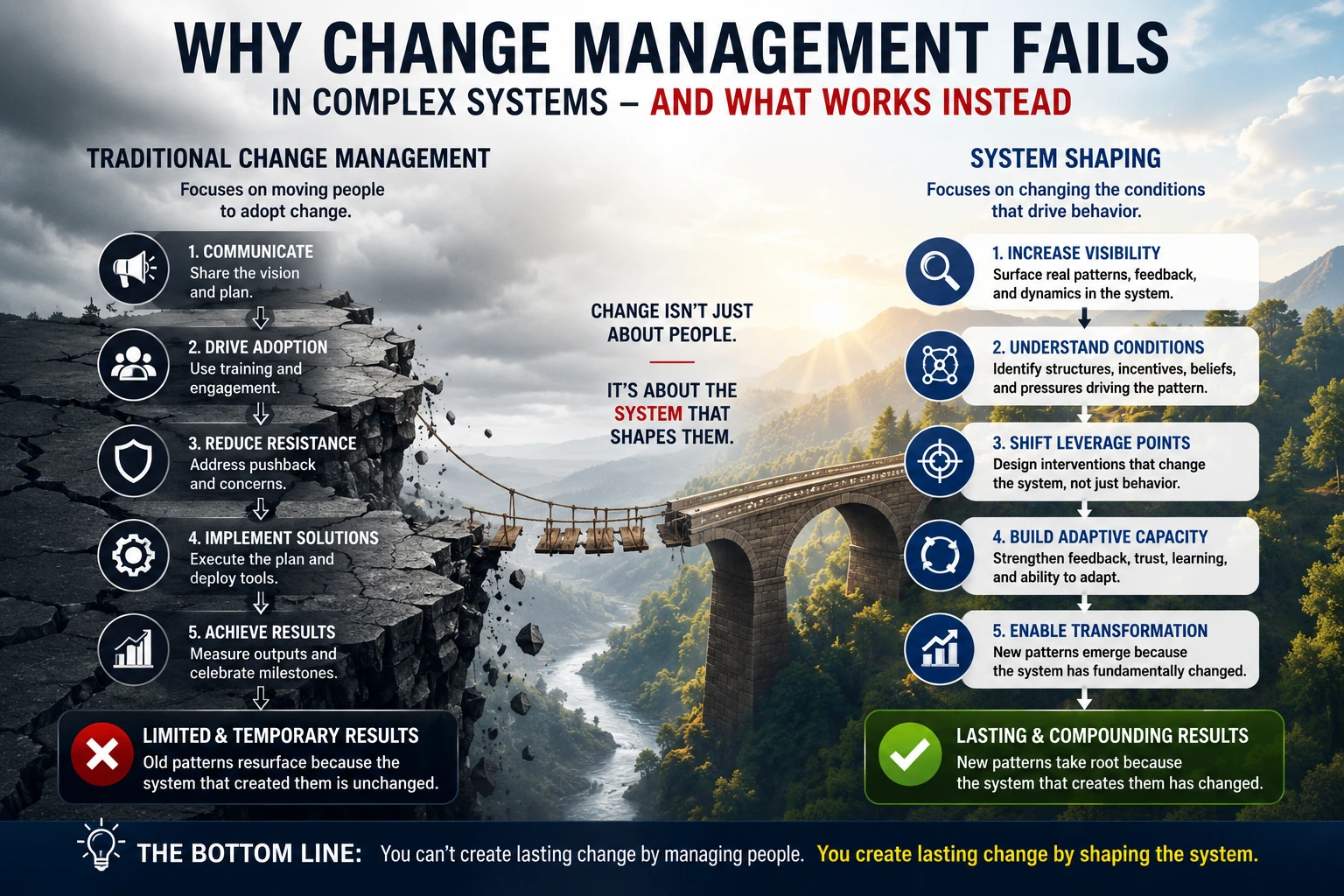
Why Change Management Fails in Complex Systems — and What Works Instead
Why does change management fail so often, even when the strategy looks clear, the communication is professional, and everyone says they want transformation? Many leaders search…
-
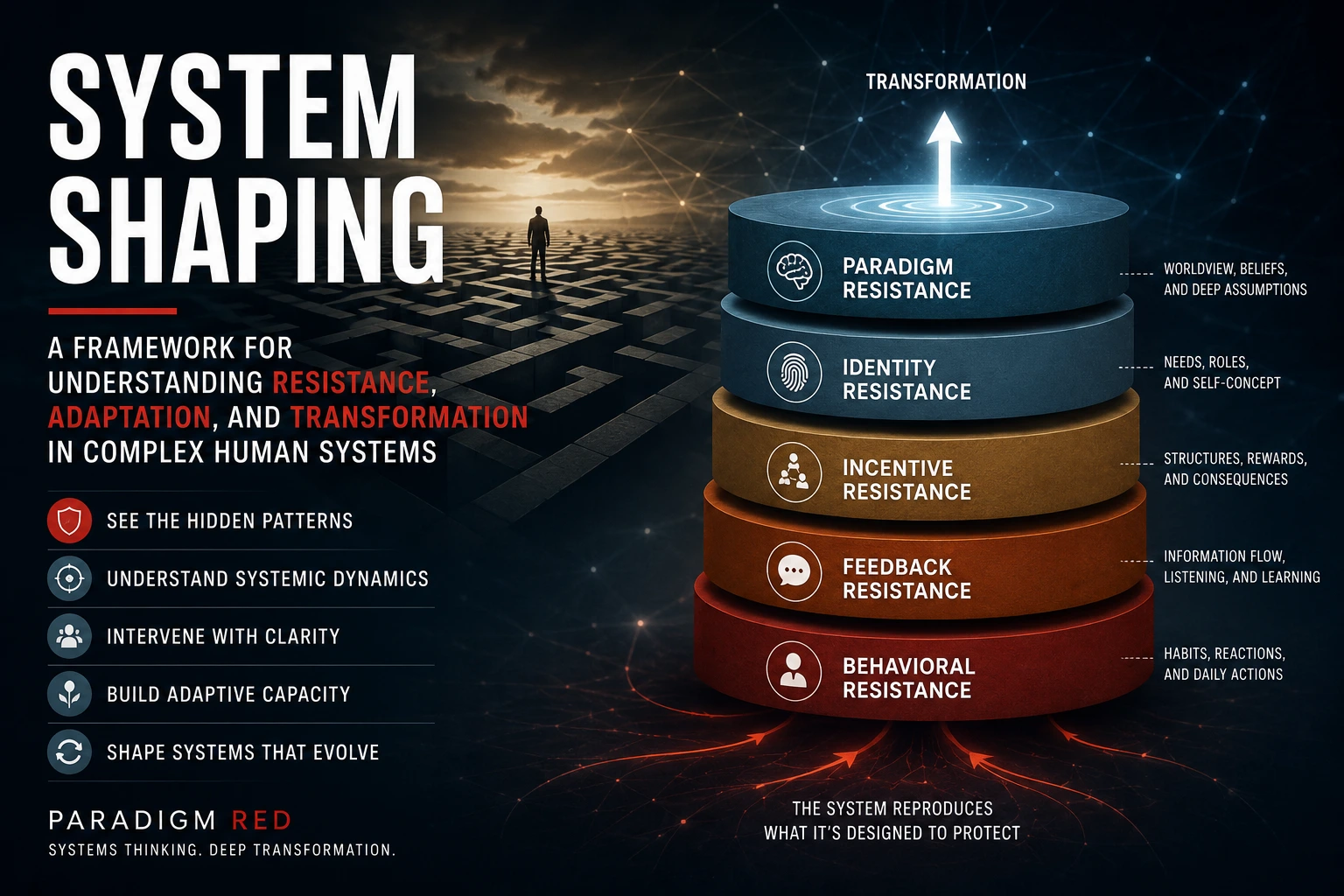
Introducing System Shaping: A Framework for Organizational Transformation, Systems Thinking, and Adaptive Change
Why does organizational change fail so often — even when people inside the system genuinely want transformation? Why do organizations keep repeating the same patterns, the…
-
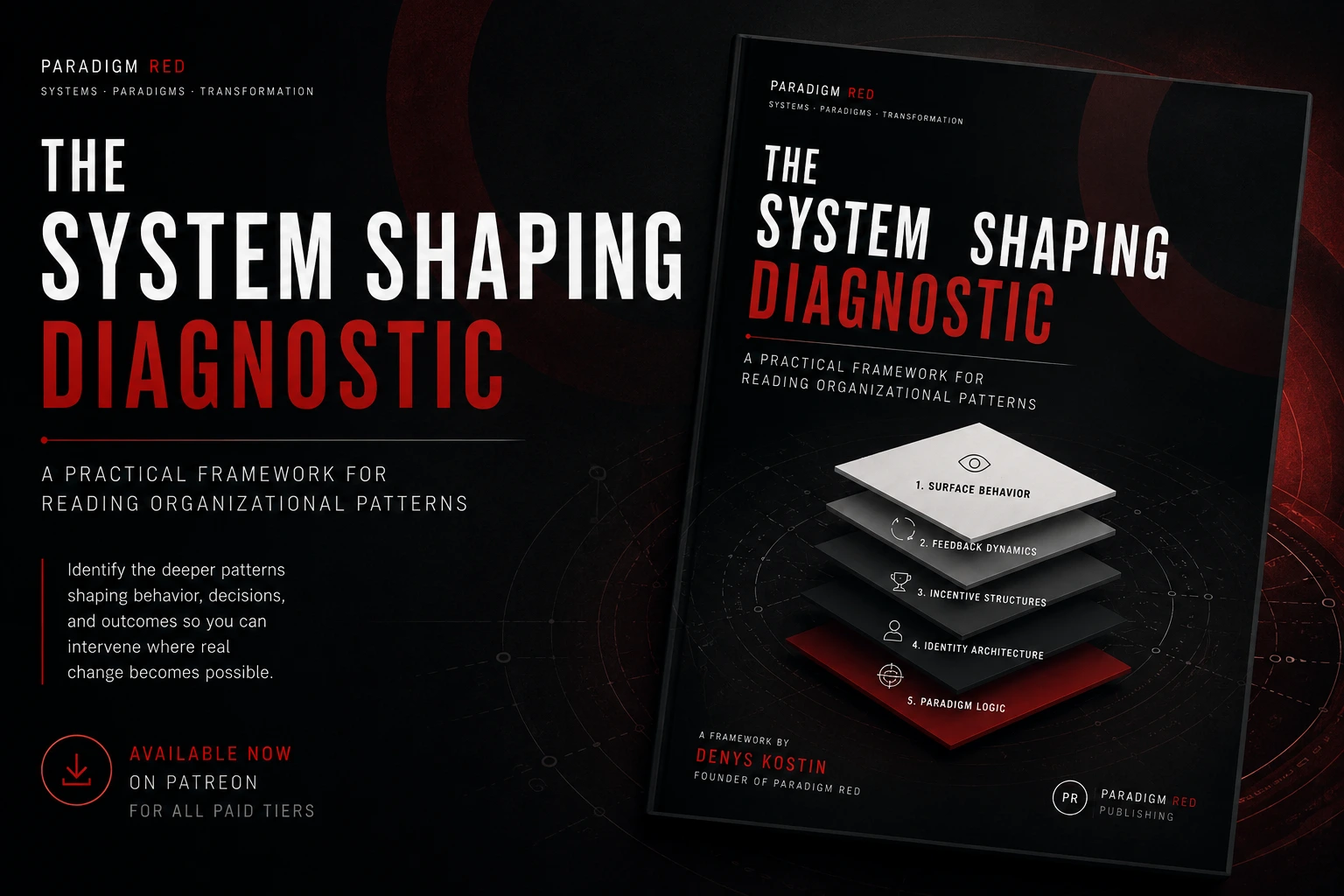
The System Shaping Diagnostic Is Now Available
System Shaping is an emerging framework for systems transformation, organizational change, and systemic leadership inside complex human systems. The new System Shaping Diagnostic explores why organizations…
-
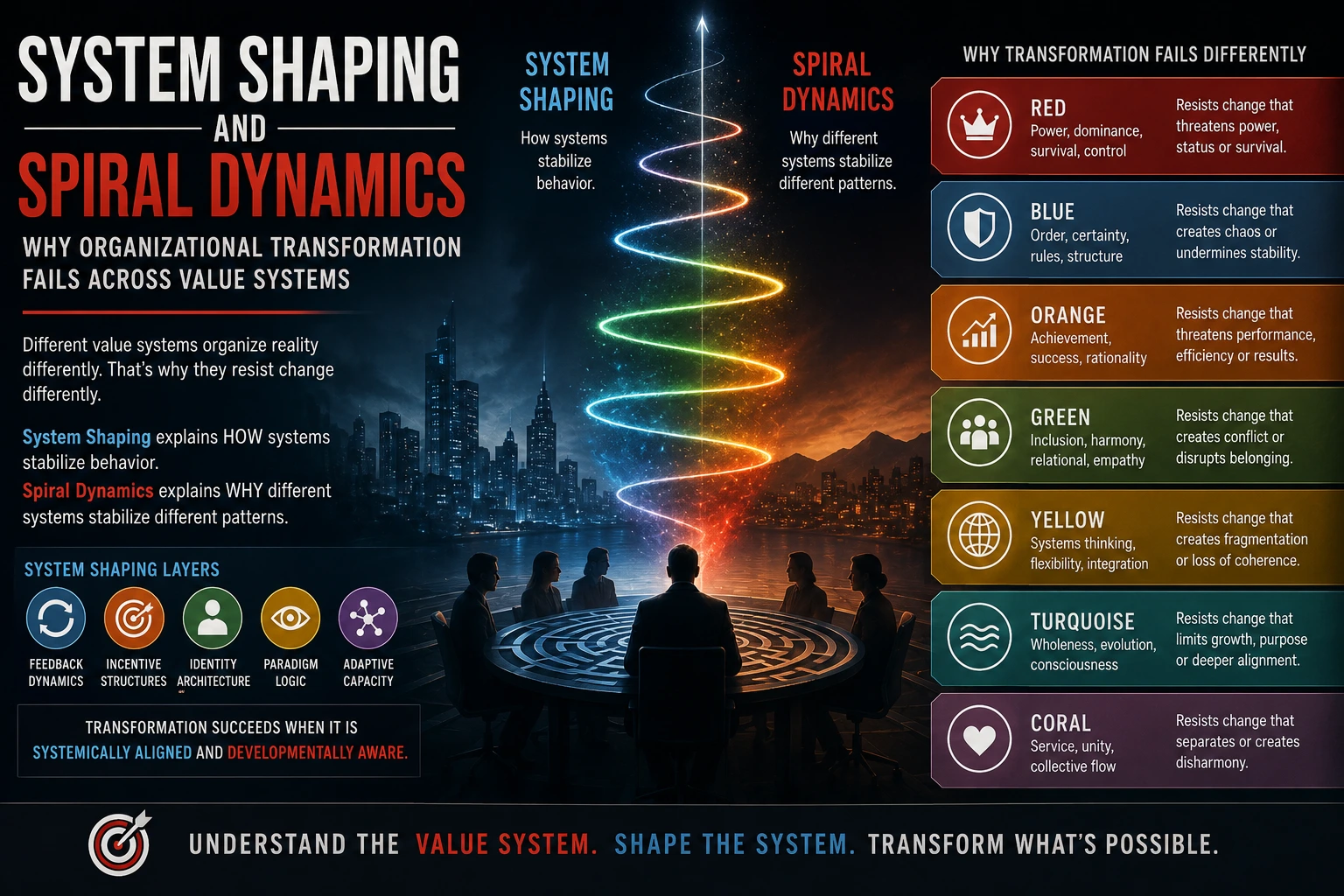
System Shaping and Spiral Dynamics: Why Organizational Transformation Fails Across Value Systems
System Shaping and Spiral Dynamics together explain why organizational transformation succeeds in some systems, fails in others, and produces radically different outcomes across cultures, leadership structures,…
-
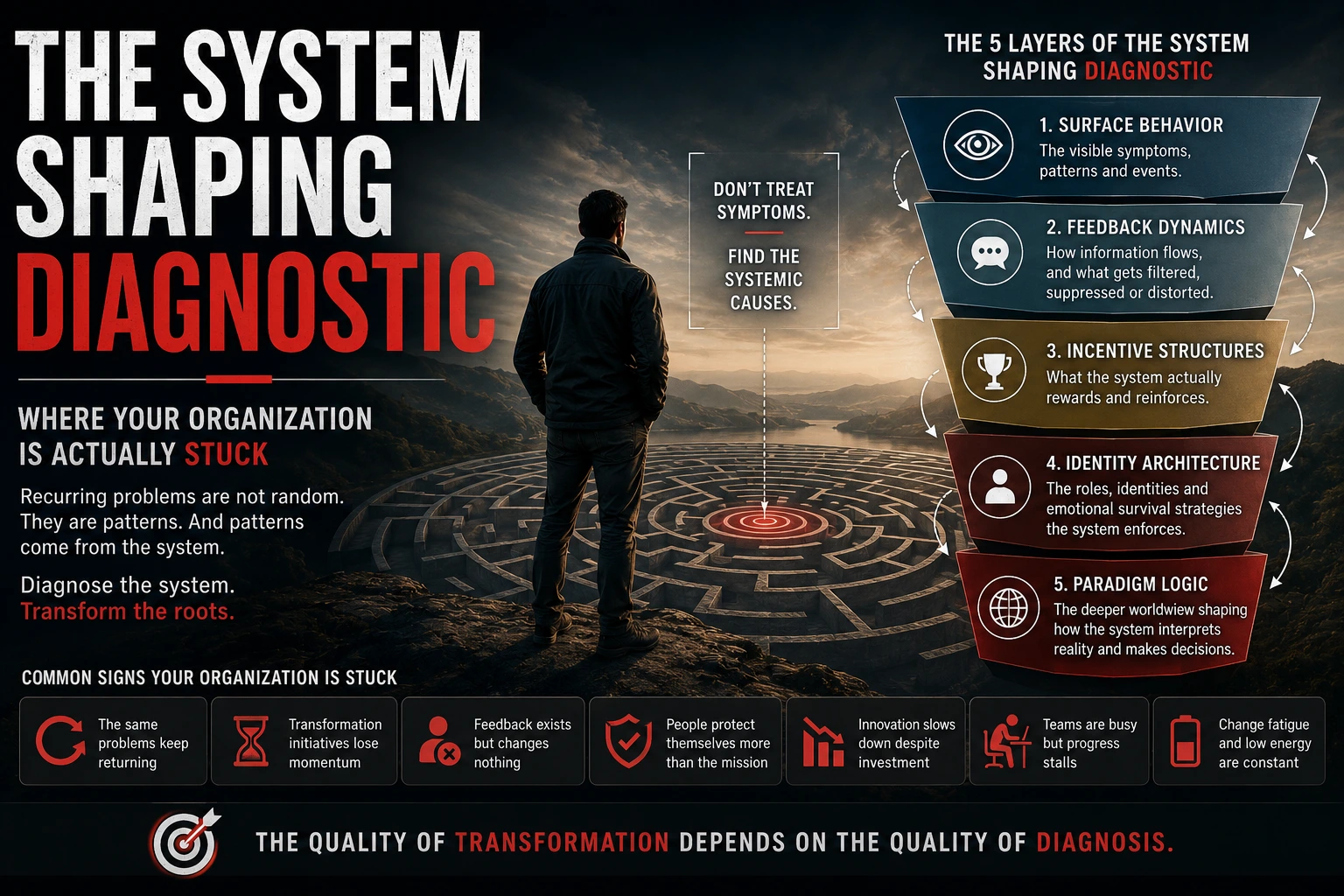
The System Shaping Diagnostic: Where Your Organization Is Actually Stuck
The System Shaping Diagnostic is a framework for identifying the deeper systemic patterns that keep organizations stuck, repeating the same problems, and resisting meaningful transformation. Most…
-
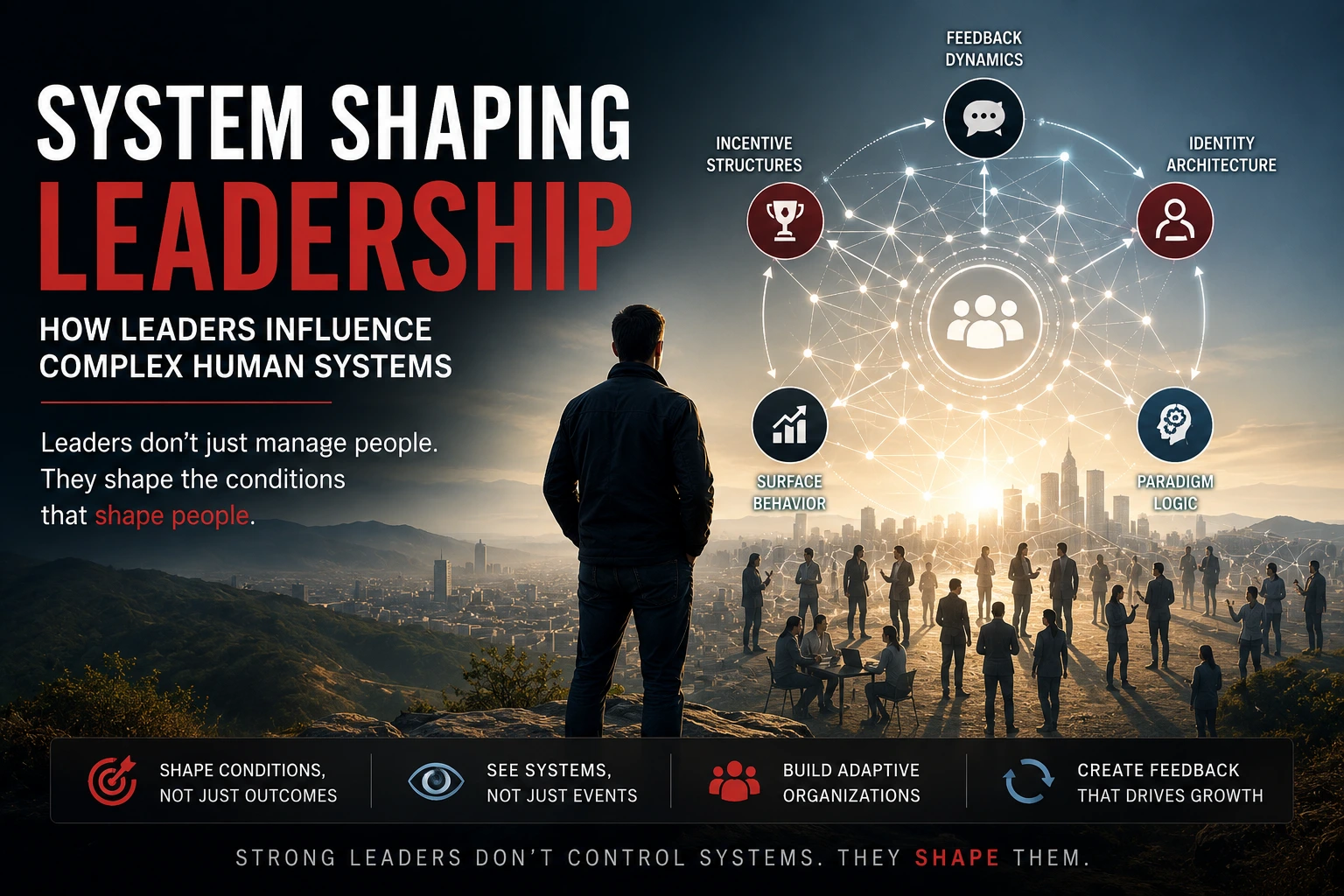
System Shaping Leadership: How Leaders Influence Complex Human Systems
System Shaping Leadership is the ability to influence the deeper conditions that shape behavior inside organizations, teams, cultures, and complex human systems. Most leadership models focus…
-
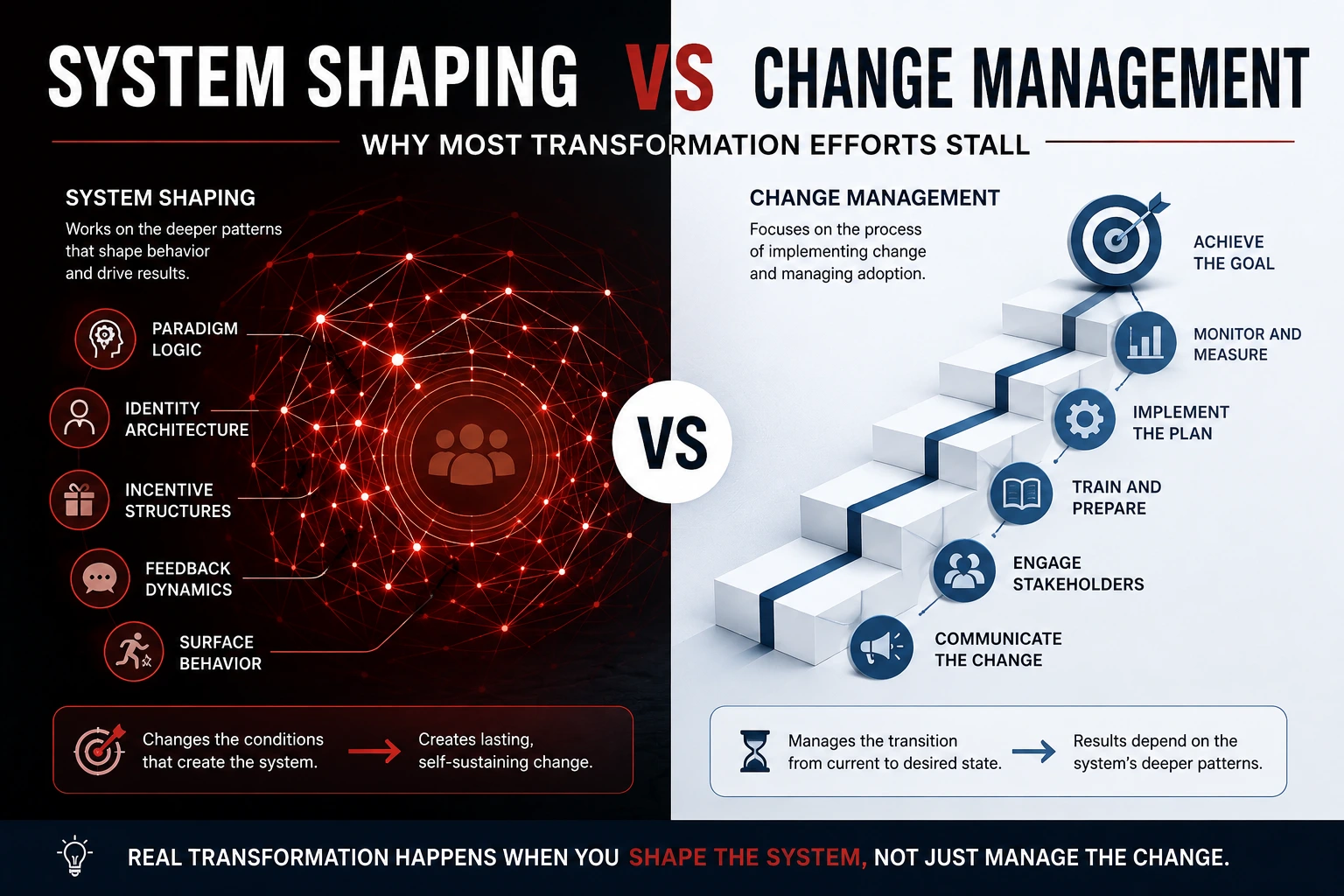
System Shaping vs Change Management: Why Most Transformation Efforts Stall
System Shaping vs change management is not a debate between old and new methods. It is a question of depth: are you managing the visible change…
-
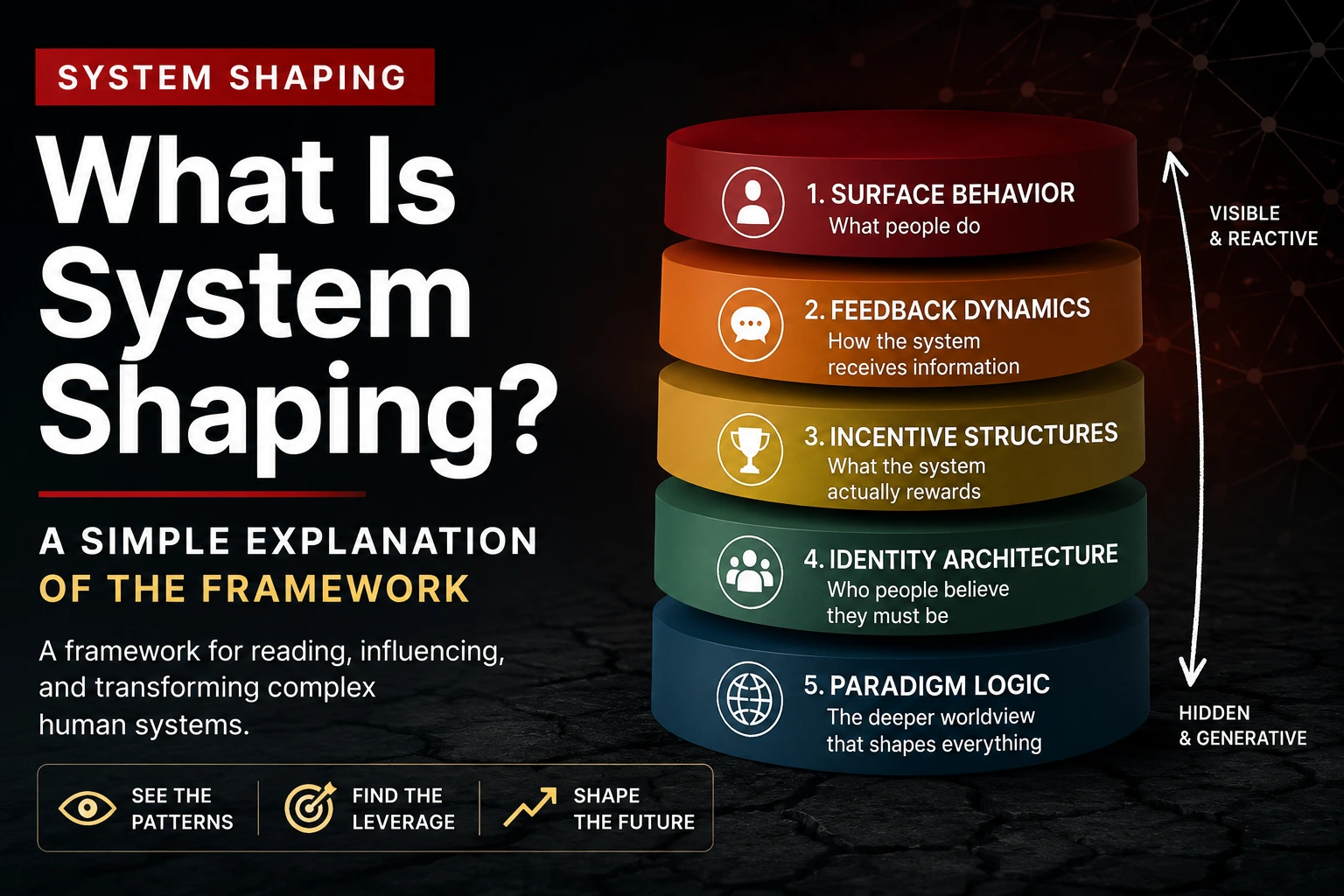
What Is System Shaping? A Simple Explanation of the Framework
System Shaping is a framework for understanding why people, teams, organizations, and cultures keep repeating the same patterns — even when everyone wants change. Most transformation…
-
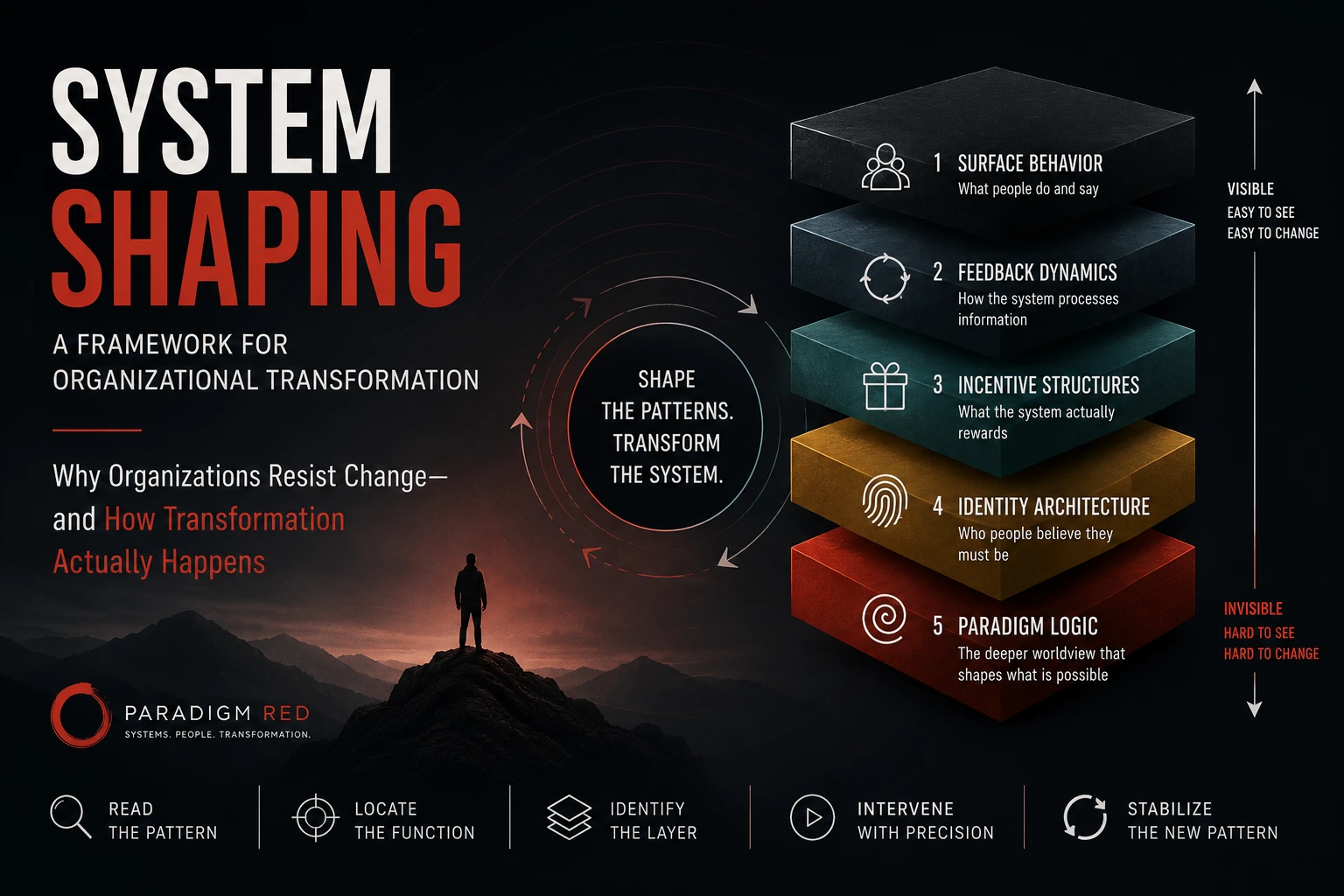
System Shaping: A New Framework for Organizational Transformation
System Shaping is a framework for understanding why organizations resist change, why transformation efforts often fail, and how real organizational transformation happens in complex human systems.…
-

Systems Transformation: A Practical Guide to Changing Complex Organizations
Most transformation efforts fail not because organizations resist change emotionally, but because systems continuously preserve equilibrium structurally. New leadership arrives.Transformation initiatives launch.Communication improves temporarily.Strategic language evolves.…