Tag: systemic change
Systemic change refers to transformation that affects the underlying structure of a system rather than its visible symptoms. In organizations, this means changing how decisions are made, how incentives are aligned, and how patterns of behavior are reinforced over time.
Most change efforts focus on surface-level improvements—processes, tools, or communication. While these may produce temporary results, they rarely lead to lasting transformation. Systemic change requires addressing the deeper dynamics that shape how the system actually operates.
On Paradigm Red, systemic change is explored through systems thinking, leverage points, and systemic coaching. The focus is on identifying where change can have the greatest impact and how to shift system behavior in a sustainable way.
What defines systemic change
- Shifting underlying structures rather than symptoms
- Changing patterns of behavior over time
- Aligning incentives, decisions, and direction
- Working with feedback loops and system dynamics
Why systemic change is difficult
- Invisible structures that reinforce existing patterns
- Short-term pressure overriding long-term change
- Misalignment between goals and system behavior
- Attempts to fix problems without changing conditions
Related articles
-

Systems Transformation: Why Change Fails — and What Actually Works
Most organizations don’t fail to change because they lack effort. They fail because they try to change outcomes without changing the system that produces them. Systems…
-

What It Feels Like When a System Starts Working: The Early Signs of Real Change
Most leaders expect change to show up in results. Better performance. Higher output. Faster delivery. Cleaner execution. And eventually, it does. But not first. In systems…
-
Not Everything Needs to Change: How Stable Patterns Make Transformation Possible
There is a quiet exhaustion spreading through organizations. Not burnout in the classic sense. Something subtler. It sounds like this: “We’re always transforming — and yet…
-
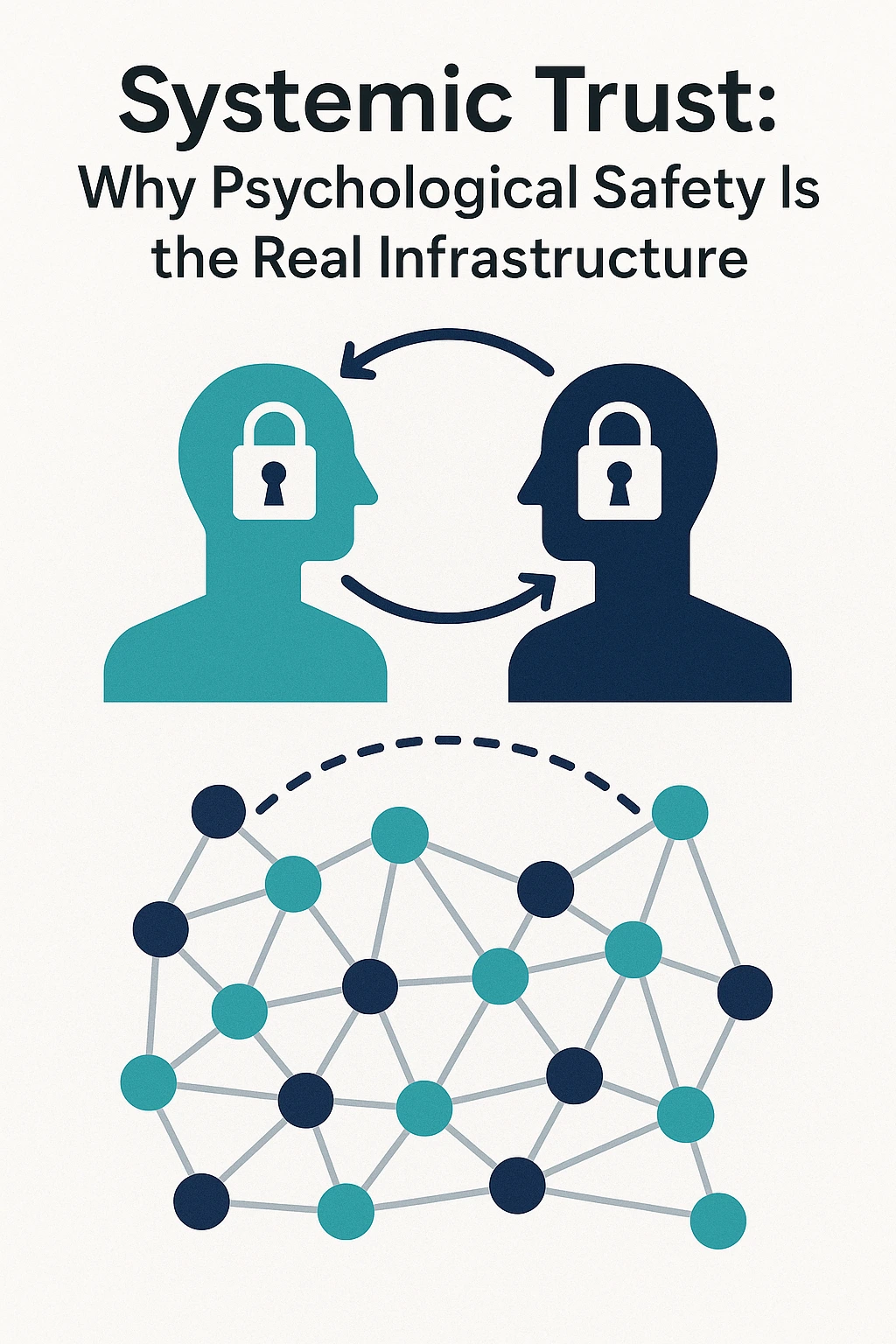
Systemic Trust: Why Psychological Safety Is the Real Infrastructure
Most organizations treat trust as a personal variable: Do I trust my manager? Do I trust my peers? But in systems thinking, trust is not a…