Tag: paradigm evolution
Paradigm evolution describes the process through which underlying ways of thinking, perceiving, and organizing reality shift over time. In organizations and societies, paradigms shape how problems are understood, how decisions are made, and what is considered possible.
These shifts do not happen through gradual improvement alone. Paradigms tend to remain stable until they can no longer handle emerging complexity. At that point, tension builds, existing approaches begin to fail, and a new way of thinking starts to emerge.
On Paradigm Red, paradigm evolution is explored through systems thinking, Spiral Dynamics, and systemic transformation. The focus is on understanding how paradigms form, why they collapse, and how systems transition between different levels of complexity and capability.
What drives paradigm evolution
- Increasing complexity that existing models cannot manage
- Breakdown of established patterns and assumptions
- Emergence of new perspectives and value systems
- Systemic pressure that forces adaptation
Why paradigm shifts are difficult
- Attachment to existing ways of thinking
- Inability to recognize limits of current models
- Misinterpreting systemic breakdown as isolated failure
- Attempting to solve new problems with old frameworks
Related articles
-
How Collapsing Worldviews Reshape Society, Identity, and Innovation
A paradigm crisis begins when the worldview that once organized reality stops making sense. The institutions may still exist, leaders may still speak with confidence, and…
-
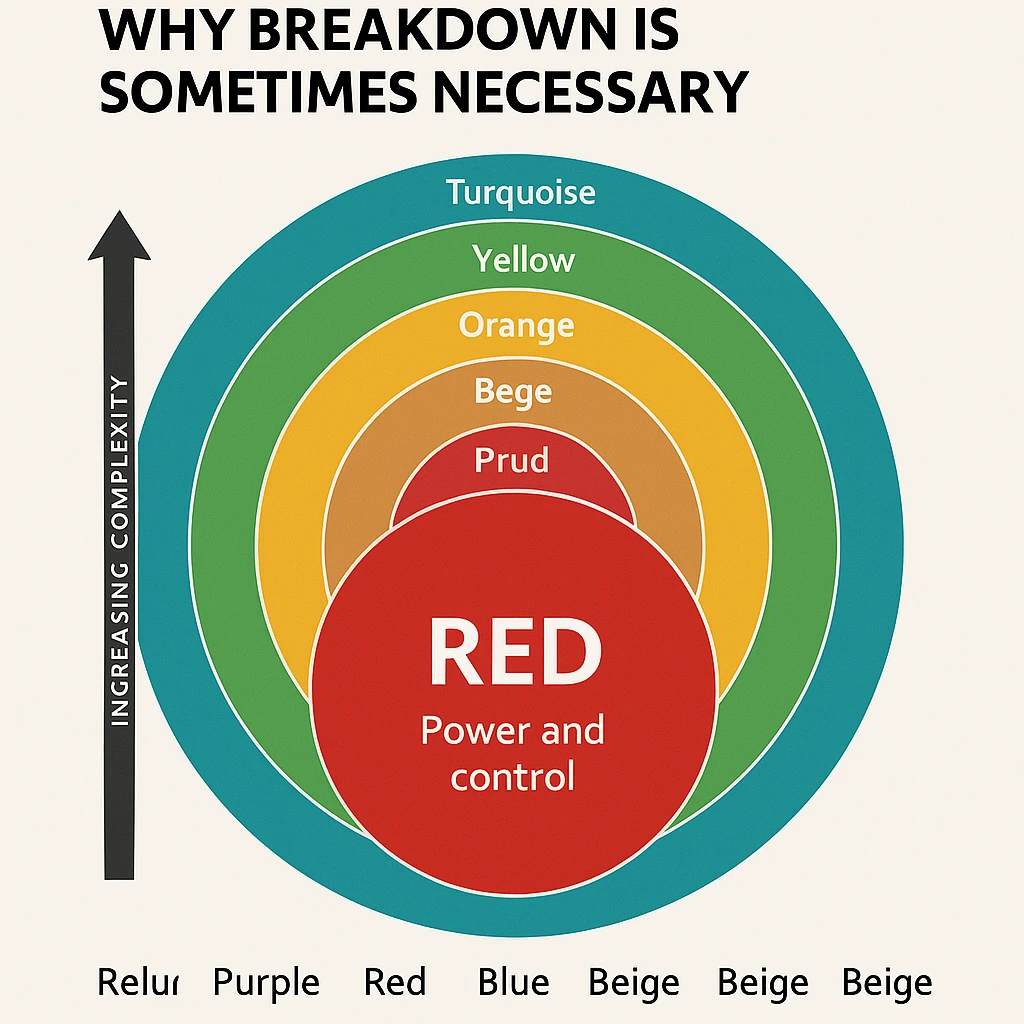
Why Breakdown Is Necessary: The Real Role of Red in Systemic Growth
Why do systems break down just before they grow? In Spiral Dynamics, this moment is not a failure. It is often the activation of Red —…
-
How Paradigms Collapse: A Systemic View of Social Crisis
When Reality Stops Making Sense There is a moment in every collapsing system when things stop adding up. System collapse is often the beginning of real…
-
The Spiral Isn’t a Ladder: The Most Common Spiral Dynamics Mistakes
The Most Dangerous Mistake People Make with Spiral Dynamics Most people who misuse Spiral Dynamics do not make an intellectual mistake first. They make an ego…