Tag: decision making
Decision making in organizations is not just a cognitive process—it is a systemic outcome shaped by structure, incentives, information flows, and context. What looks like an individual choice is often the result of patterns already present in the system.
Traditional approaches treat decisions as isolated events that can be improved through logic, analysis, or better data. In reality, decision quality depends on how clearly a system signals what matters, how feedback loops operate, and how uncertainty is handled.
On Paradigm Red, decision making is explored through systems thinking, complexity, and leadership under uncertainty. The focus is on recognizing patterns, reducing distortion, and creating conditions where better decisions emerge naturally.
What shapes decision making in systems
- Incentives and constraints that guide behavior
- Information quality and signal-to-noise ratio
- Feedback loops that reinforce or correct actions
- Clarity of direction versus ambiguity in goals
Why decisions often fail
- Overreliance on analysis in complex environments
- Ignoring systemic patterns and interdependencies
- Confusing certainty with clarity
- Making decisions in isolation from real system signals
Related articles
-

Collective Decision-Making: Methods, Examples, and a Practical Framework
Compare collective decision-making methods, clarify decision rights, and use a seven-step process with organizational examples and a copyable decision record.
-
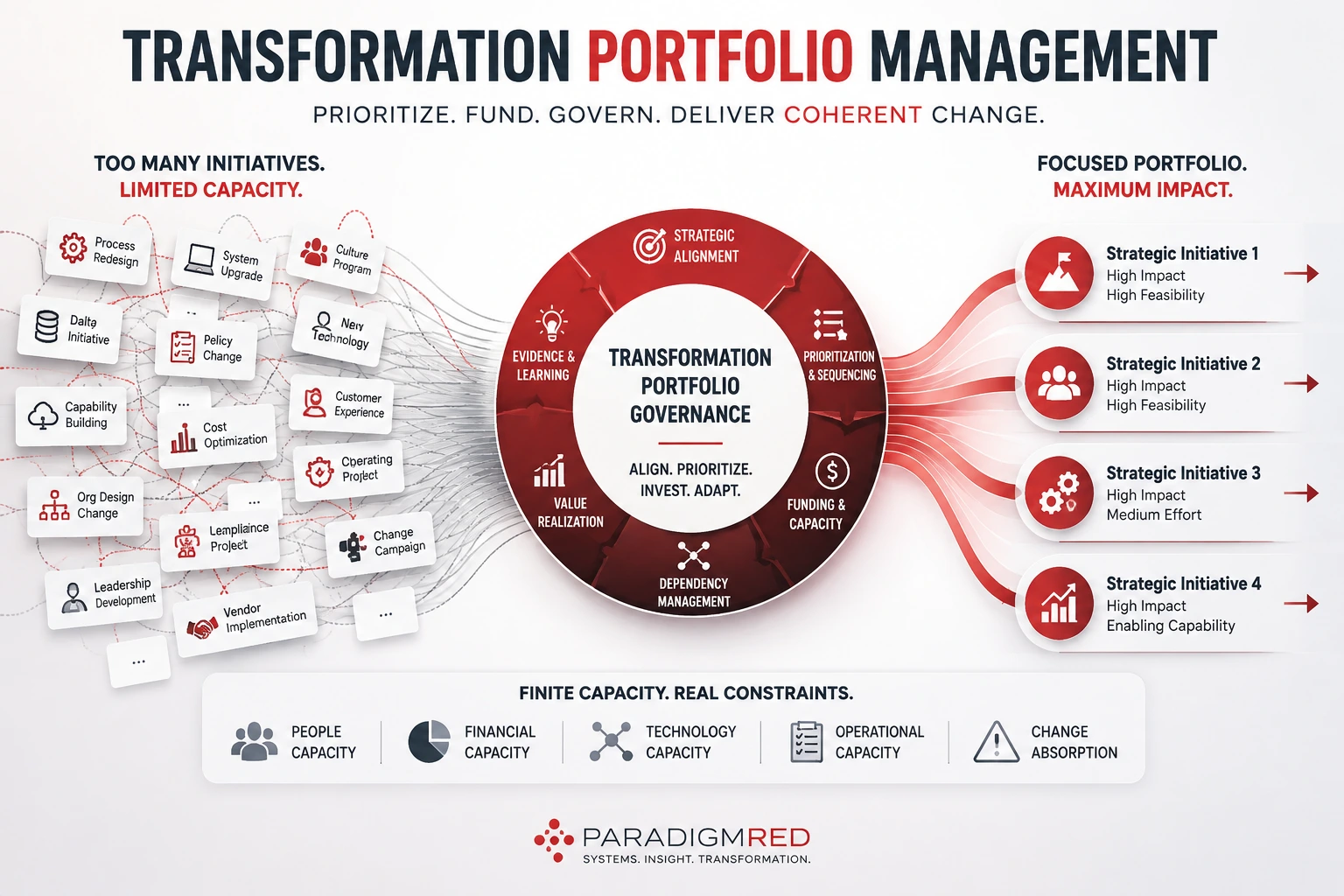
Transformation Portfolio Management: How to Prioritize, Fund, and Govern Enterprise Change
Transformation portfolio management helps organizations prioritize, sequence, fund, and govern interconnected initiatives within real capacity constraints.
-
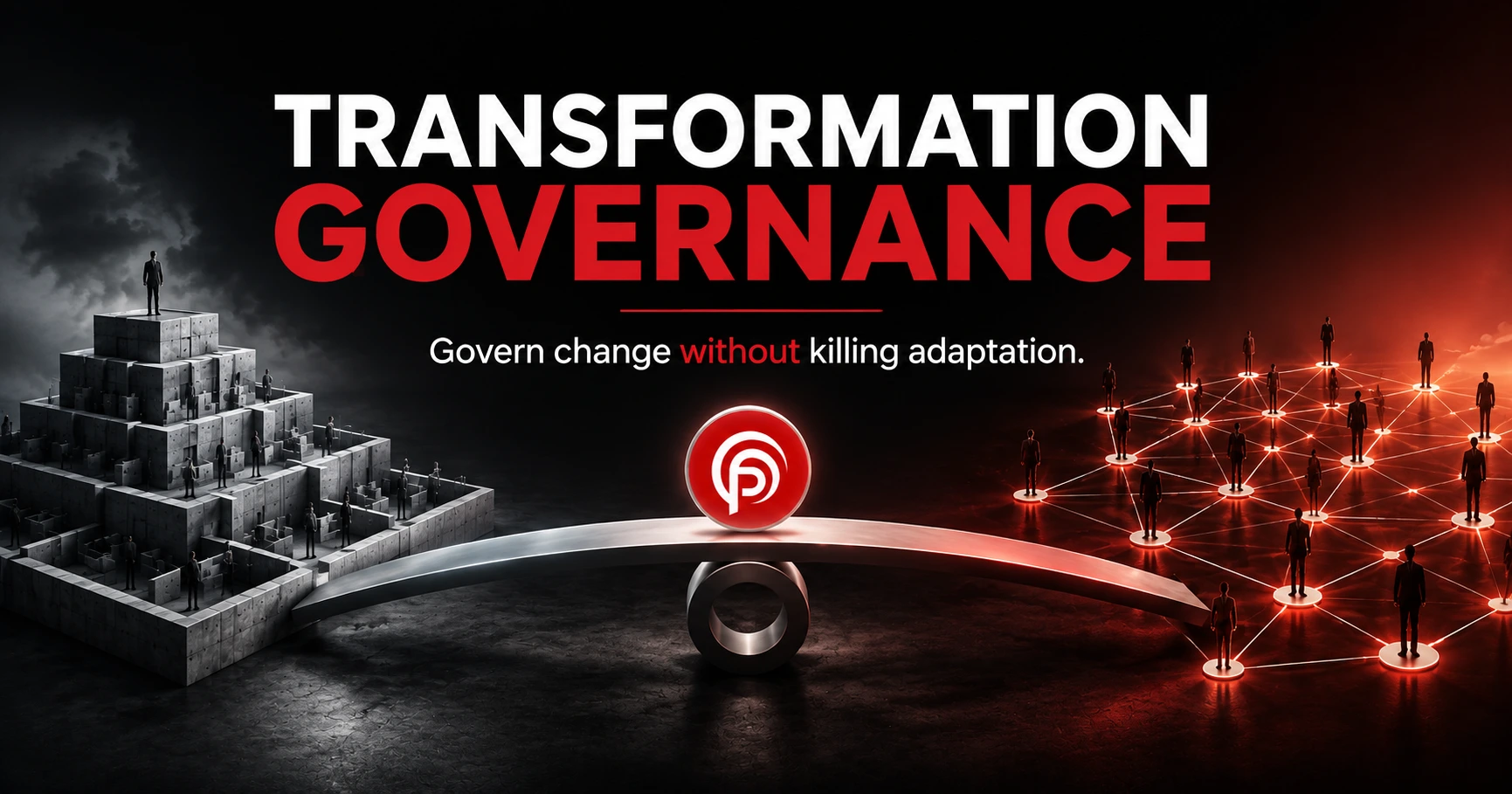
What Is Transformation Governance? How to Govern Change Without Killing Adaptation
Transformation governance should not add another layer of meetings and reporting. It should create a decision system that aligns complex change, distributes authority intelligently and turns…
-

Why Strategy Execution Fails: Fix the Execution System
Learn why strategy execution fails, how the execution gap forms, and how leaders can redesign the organizational system that turns strategy into results.
-

Why Organizations Stop Seeing Reality
Organizations rarely fail because reality changes without warning. They fail when signals are filtered, narratives harden and leaders act on an internal story that no longer…
-

What Is Organizational Intelligence? A Complete Framework
A complete executive guide to organizational intelligence: its definition, architecture, operating cycle, emergence, collapse, assessment, development, and relationship to System Shaping™.
-

Why Organizations Drift Away from Their Strategy
Organizations rarely abandon strategy deliberately. They drift as everyday decisions reshape governance, incentives, information flows, and behaviour. System Shaping™ shows leaders how to diagnose and reverse…
-
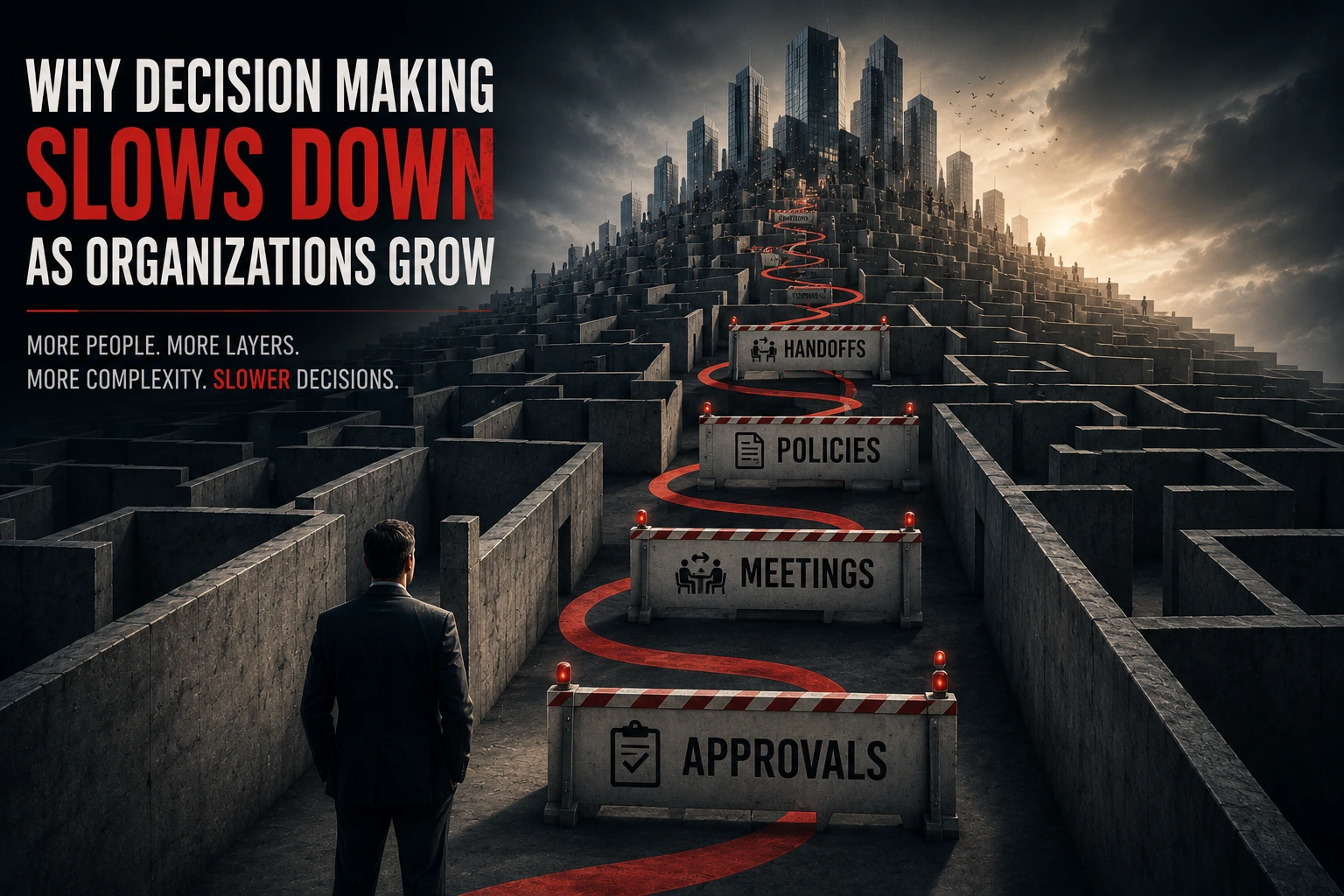
Why Decision Making Slows Down as Organizations Grow: A Systems View of Decision Speed
Estimated reading time: 15 minutes One of the most common complaints inside growing organizations is surprisingly simple. “Everything takes too long.” Decisions that once took an…
-

How to Know What Decision Is Right
You’re not overthinking because you don’t know what to do. You’re overthinking because something in you already chose — and something else is resisting it. If…
-

Why You Feel Stuck — And Why It’s Not You
If you feel stuck, it does not automatically mean something is wrong with you. It often means you are inside a pattern that keeps recreating the…