Tag: complexity leadership
Complexity leadership is the practice of leading within systems that cannot be controlled through prediction, hierarchy, or linear planning. In complex environments, outcomes emerge from interactions, and leadership shifts from directing actions to shaping conditions.
Traditional leadership models assume stability and predictability. Complexity leadership recognizes uncertainty as a permanent condition. Instead of optimizing for efficiency alone, leaders focus on enabling adaptation, learning, and coherent movement across the system.
On Paradigm Red, complexity leadership is explored through systems thinking, adaptive systems, and systemic coaching. It emphasizes the ability to read patterns, respond to feedback, and influence system behavior without forcing outcomes.
What defines complexity leadership
- Working with emergence rather than controlling outcomes
- Shaping conditions instead of issuing directives
- Responding to feedback loops and system signals
- Balancing clarity of direction with flexibility of execution
Why traditional leadership fails in complexity
- Overreliance on planning and prediction
- Attempting control in non-linear environments
- Ignoring systemic patterns and interdependencies
- Confusing authority with influence
Related articles
-

Why Organizations Become Siloed (And Why Reorganizations Usually Fail to Fix It)
Organizational silos rarely appear overnight. They emerge gradually when growing systems become better at optimizing individual parts than integrating the whole. Estimated reading time: 30–35 minutes…
-
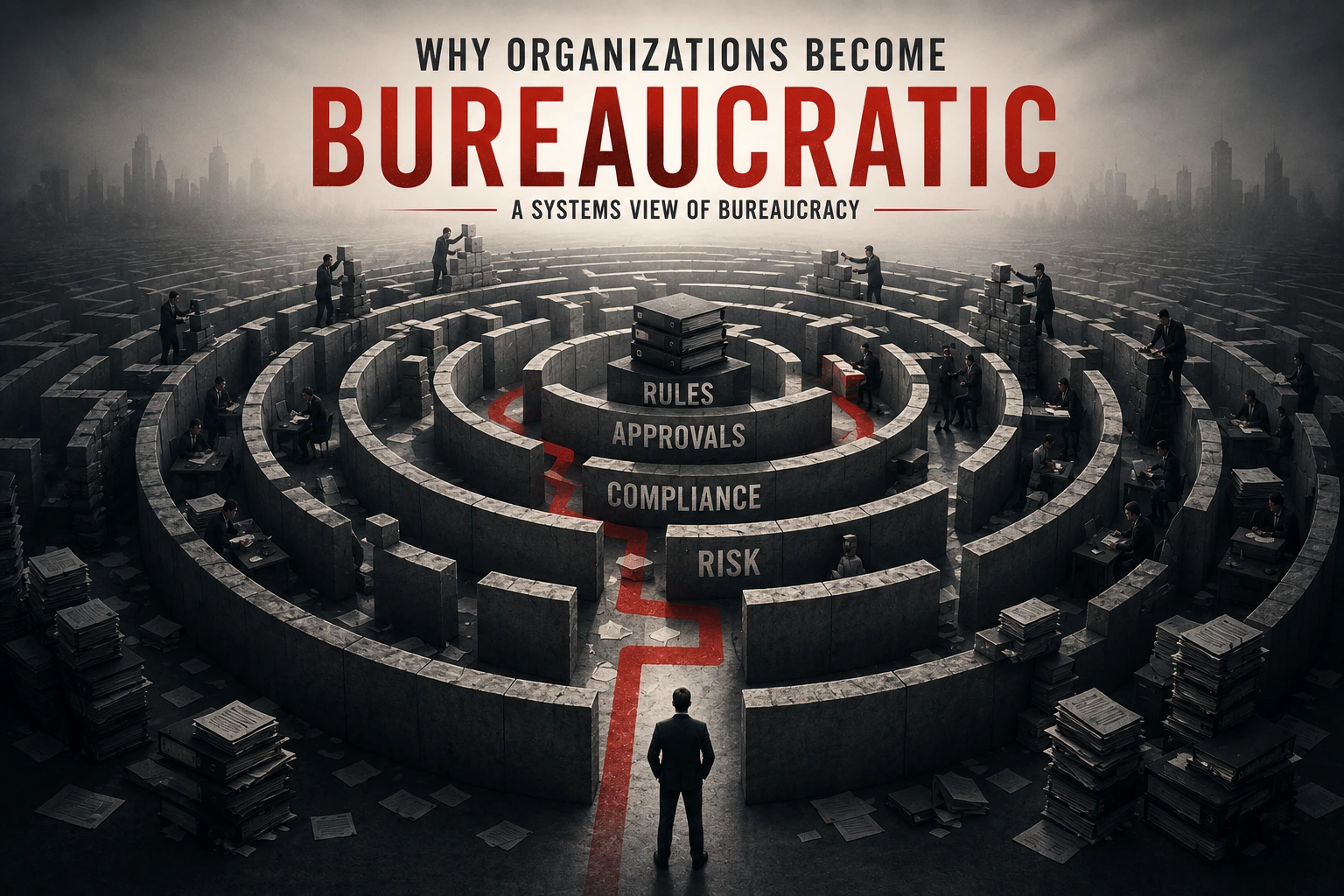
Why Organizations Become Bureaucratic: A Systems View of Bureaucracy
Estimated reading time: 14 minutes Nearly every successful organization begins with speed. Small teams make decisions quickly. Ideas move freely. Problems are solved without waiting for…
-
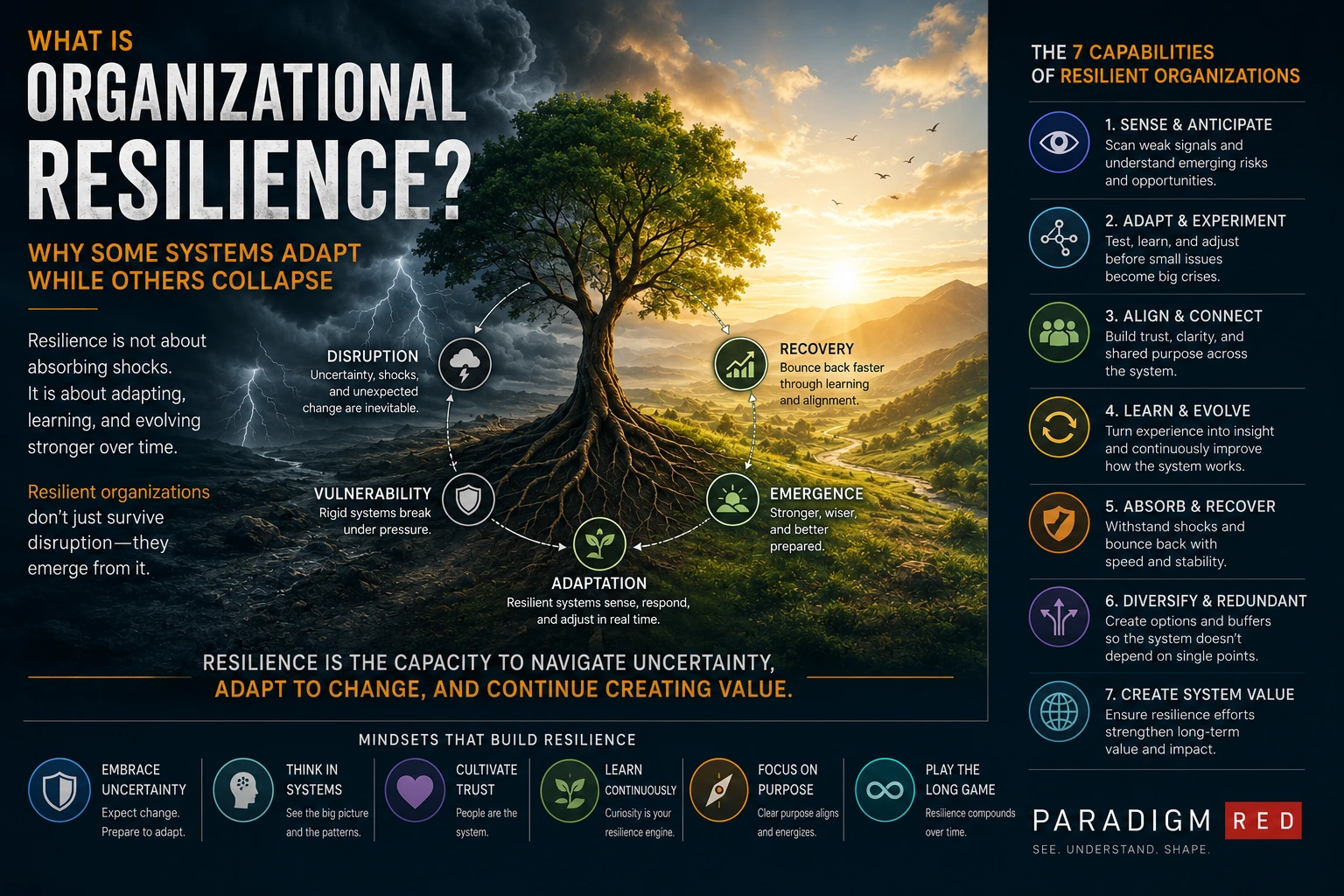
What Is Organizational Resilience? Why Some Systems Adapt While Others Collapse
Estimated reading time: 12 minutes Every organization eventually encounters disruption. Markets shift. Technologies emerge. Supply chains fail. Customer expectations change. Competitors appear unexpectedly. The question is…
-
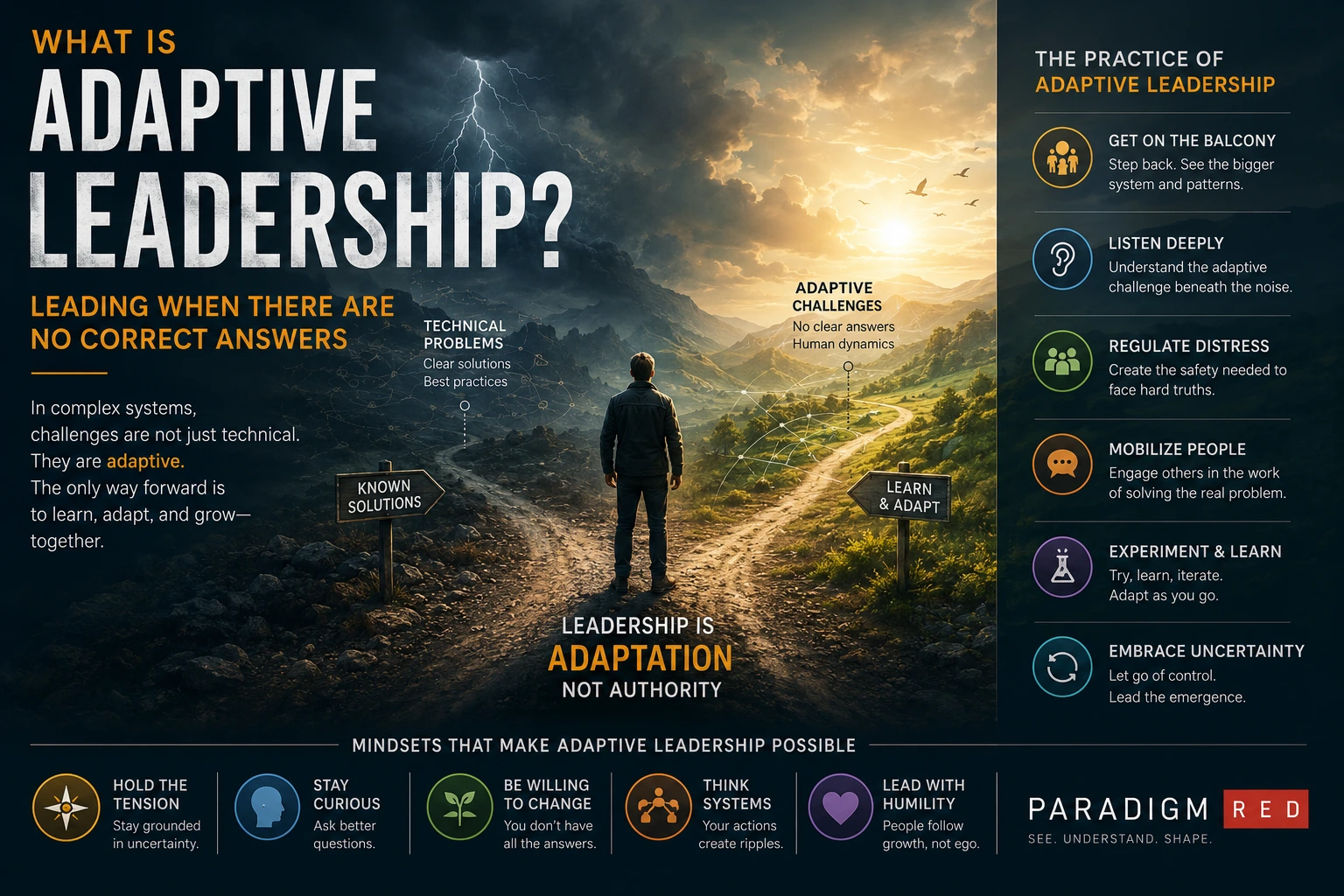
What Is Adaptive Leadership? Leading When There Are No Correct Answers
Most leadership models were built for a world that moved more slowly, not for adaptive leadership. The environment was relatively stable. Problems were largely technical. Experts…
-
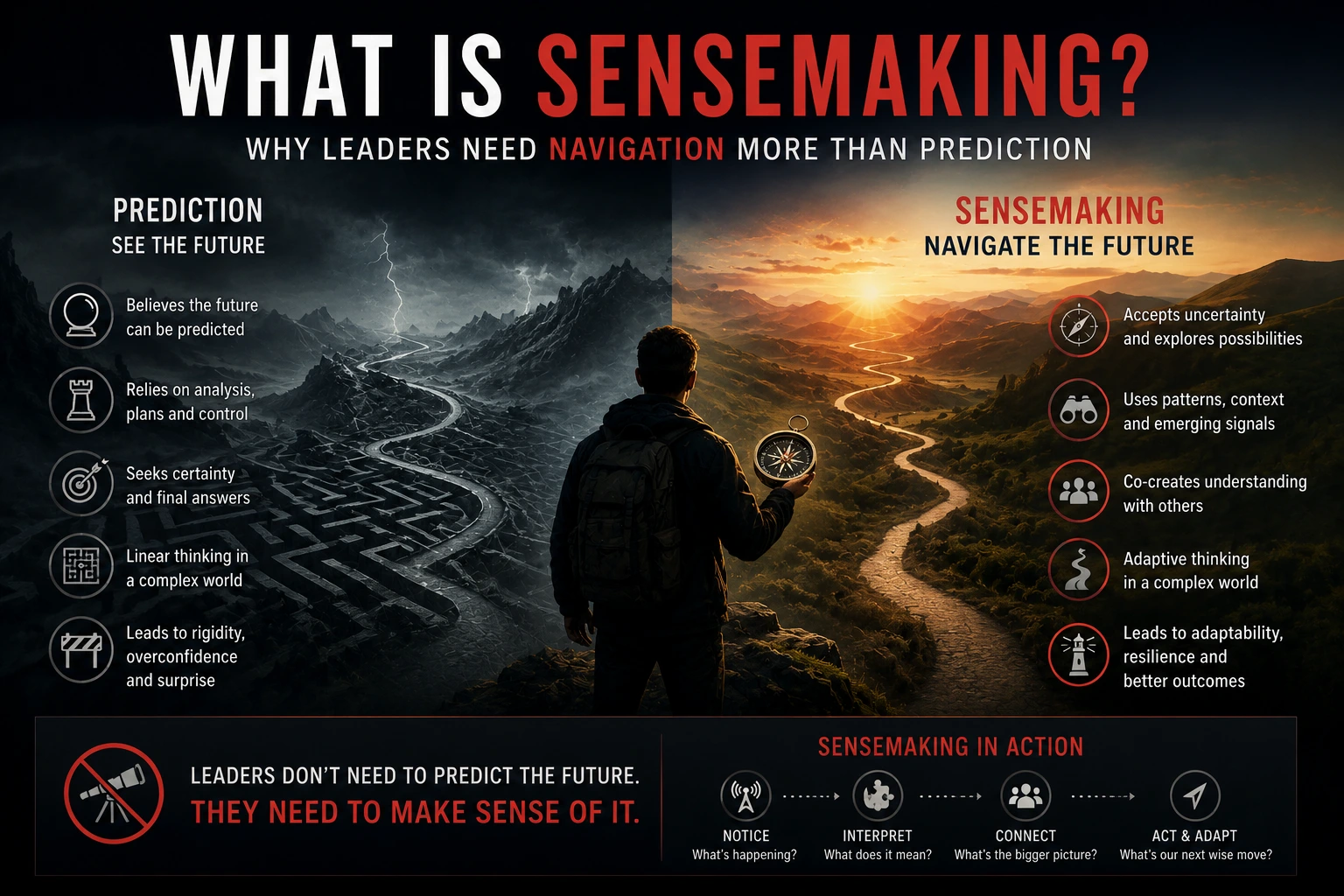
What Is Sensemaking? Why Leaders Need Navigation More Than Prediction
For much of modern management history, leadership has been treated as the ability to predict the future accurately enough to control it. Not sensemaking. Create the…
-
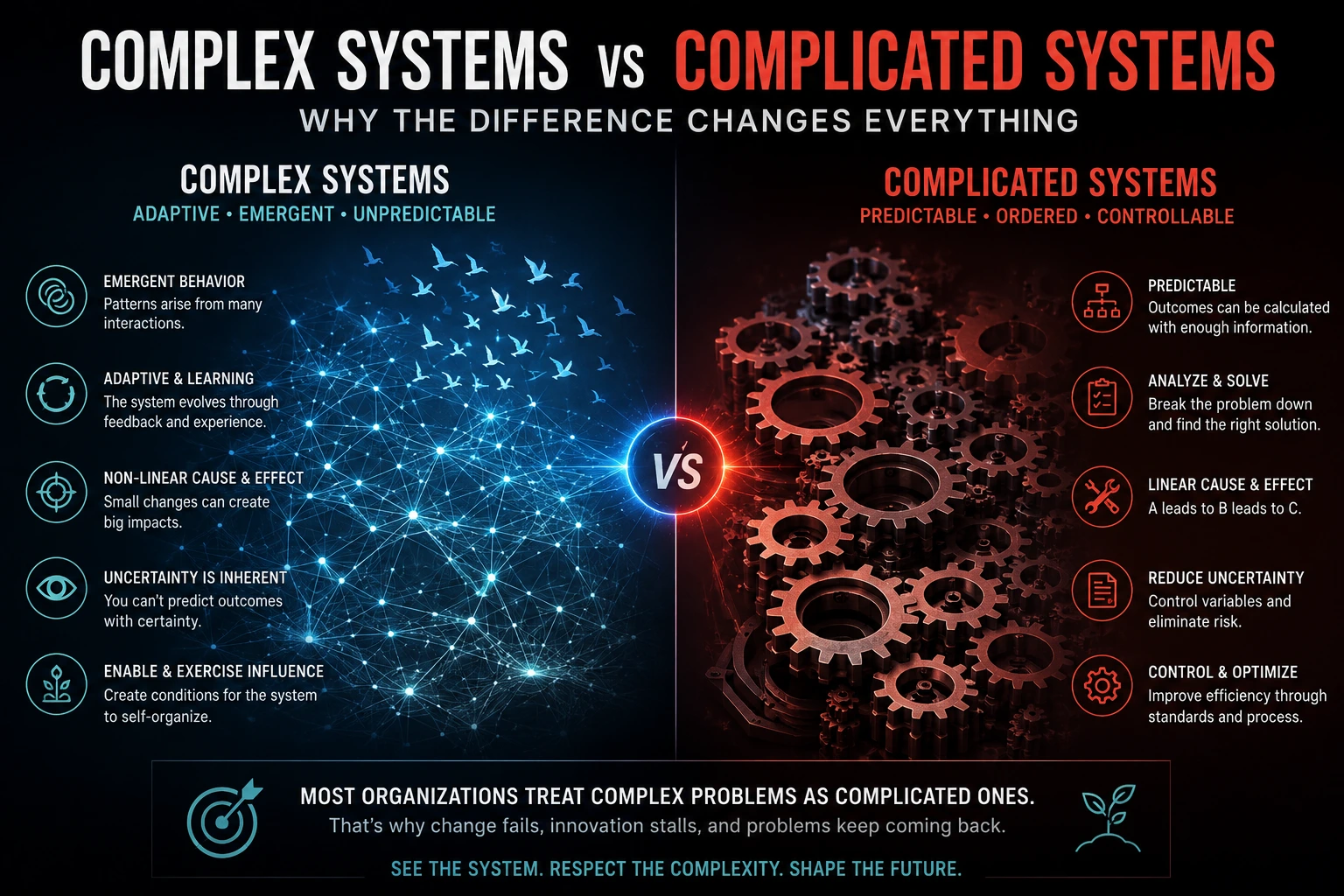
Complex Systems vs Complicated Systems: Why the Difference Changes Everything
One of the biggest mistakes in leadership, management, and organizational transformation is treating complex problems as if they were merely complicated. There is a difference between…
-

What Are Leverage Points? How Small Changes Create Large System Effects
Leverage points are places within a system where a change can produce a disproportionately large effect. In organizations, they may involve information flows, feedback loops, rules,…
-
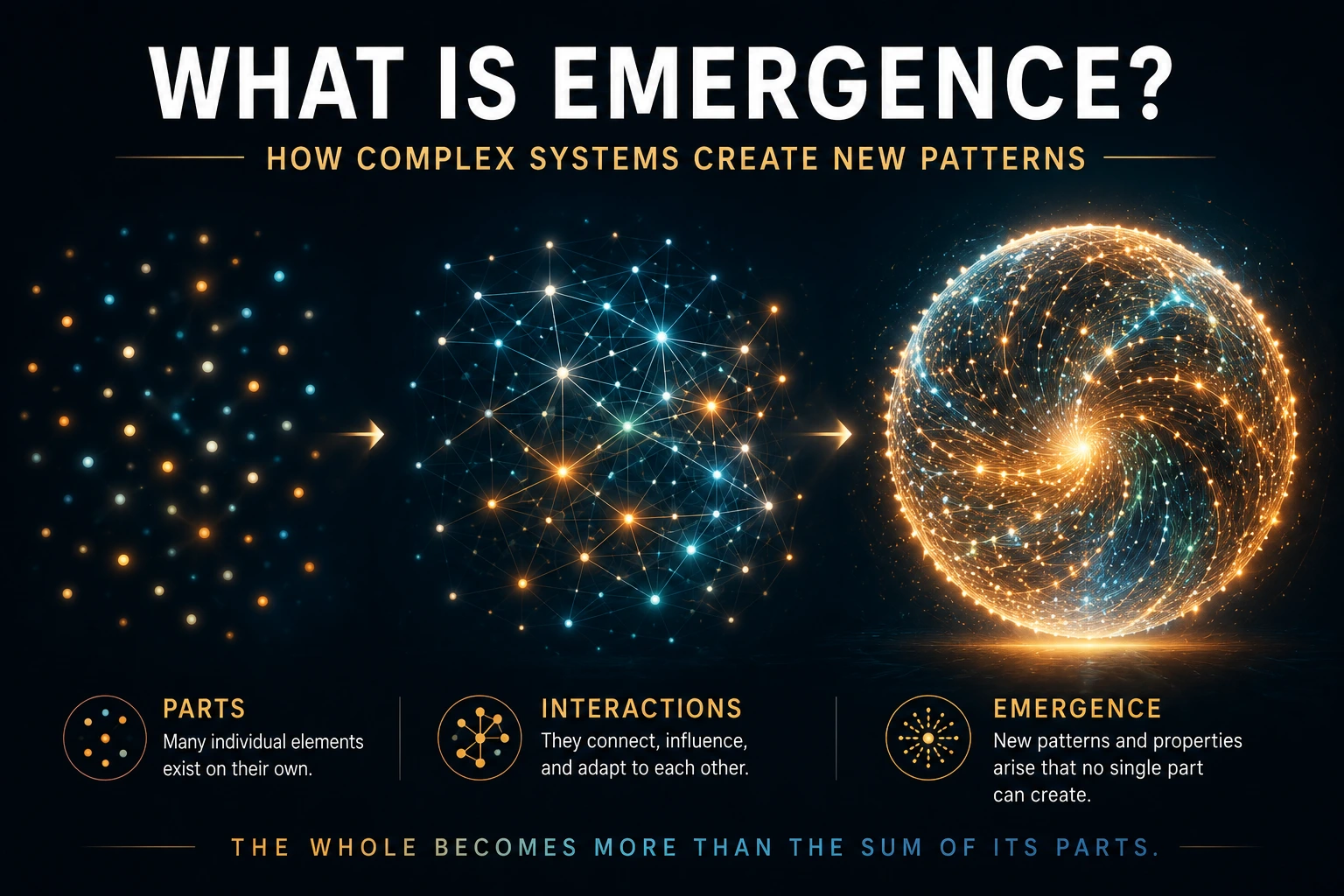
What Is Emergence? Definition and Examples in Systems Thinking
Emergence is the appearance of system-level patterns, properties, or behavior through interactions among the system’s parts. The key is the interaction: examining each part separately does…
-
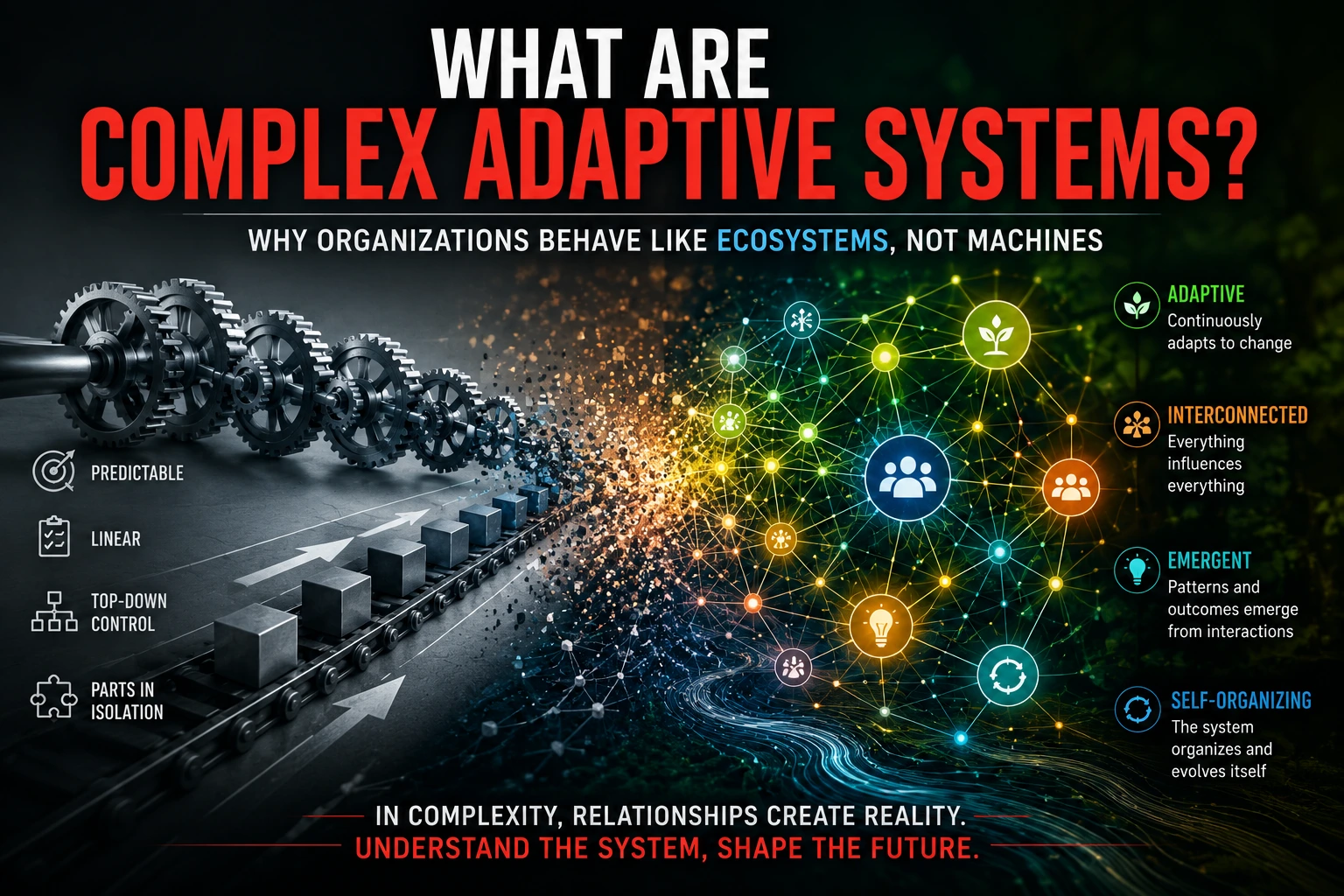
What Are Complex Adaptive Systems? A Guide to Emergence, Adaptation, and Complexity
Complex adaptive systems are one of the most important concepts for understanding organizations, leadership, transformation, culture, markets, societies, ecosystems, and human behavior. Many leaders still approach…
-
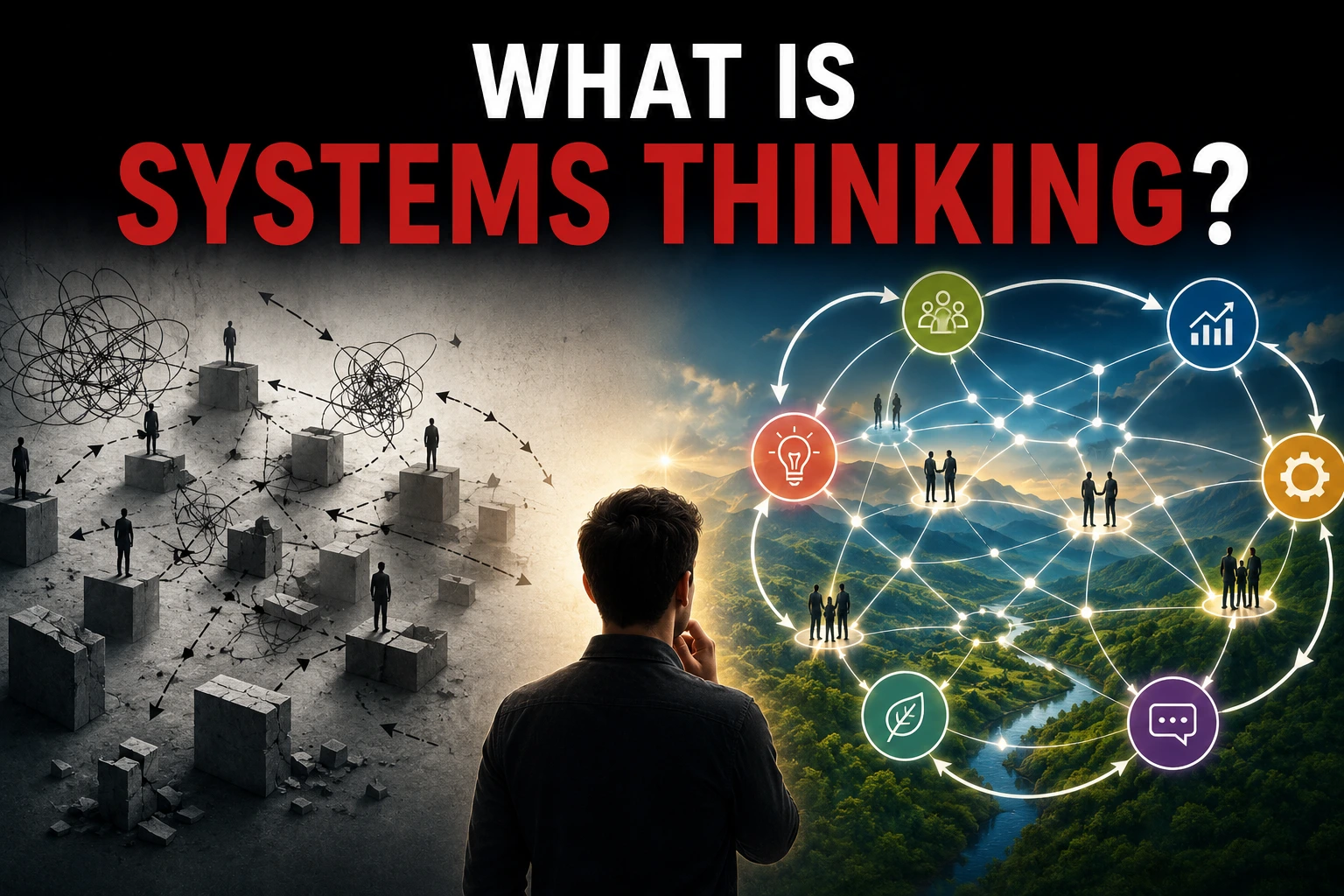
What Is Systems Thinking? A Guide to Understanding Complex Systems
Systems thinking is one of the most important intellectual frameworks for understanding complexity. Whether we are trying to understand organizations, societies, economies, cultures, ecosystems, or even…