Tag: complex adaptive systems
-

Systems Change Management: A Guide for Complex Organizations
Learn how systems change management works in complex organizations and use feedback, leverage, sequencing, and adaptive governance to improve change.
-

Why Organizations Become Siloed (And Why Reorganizations Usually Fail to Fix It)
Organizational silos rarely appear overnight. They emerge gradually when growing systems become better at optimizing individual parts than integrating the whole. Estimated reading time: 30–35 minutes…
-
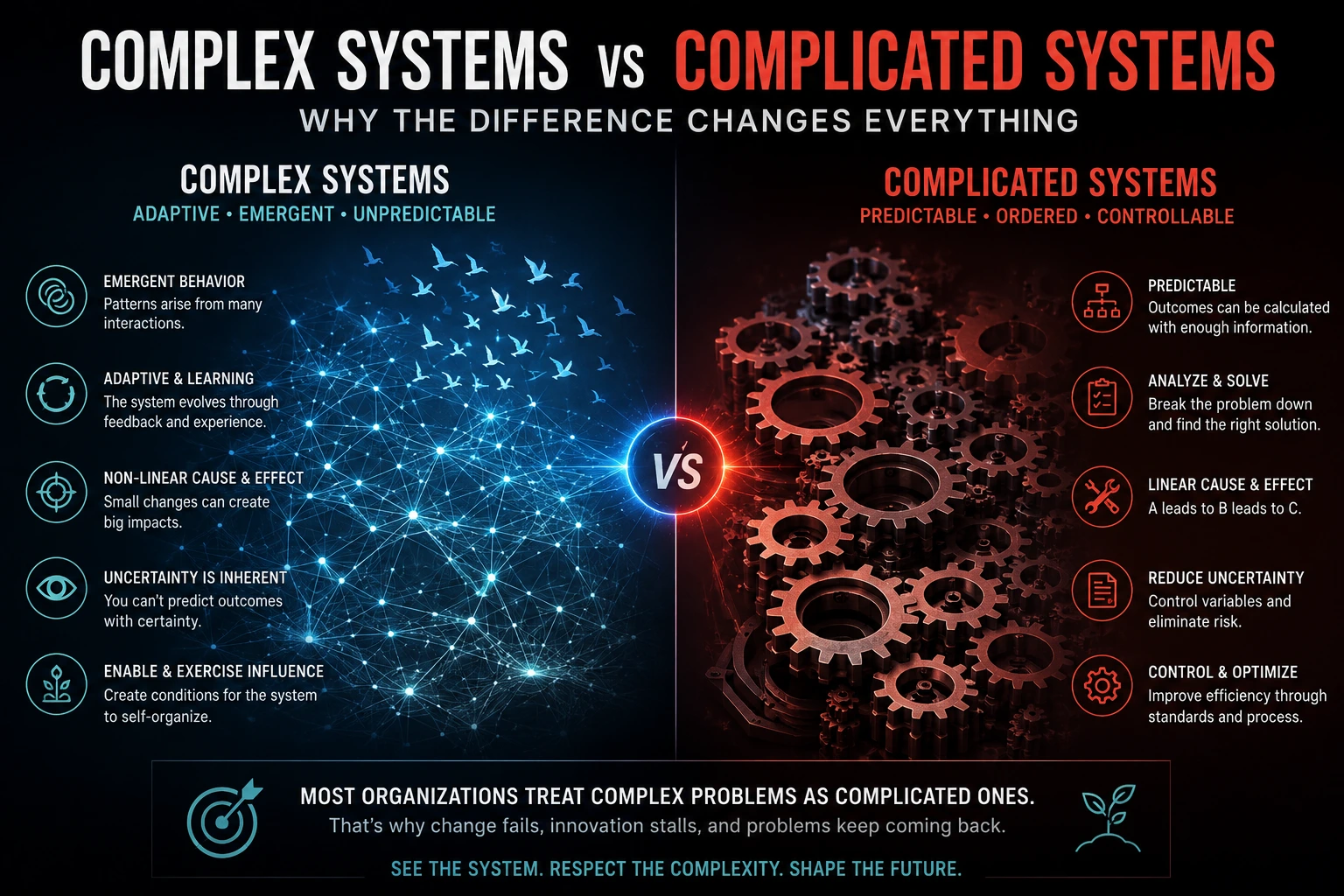
Complex Systems vs Complicated Systems: Why the Difference Changes Everything
One of the biggest mistakes in leadership, management, and organizational transformation is treating complex problems as if they were merely complicated. There is a difference between…
-
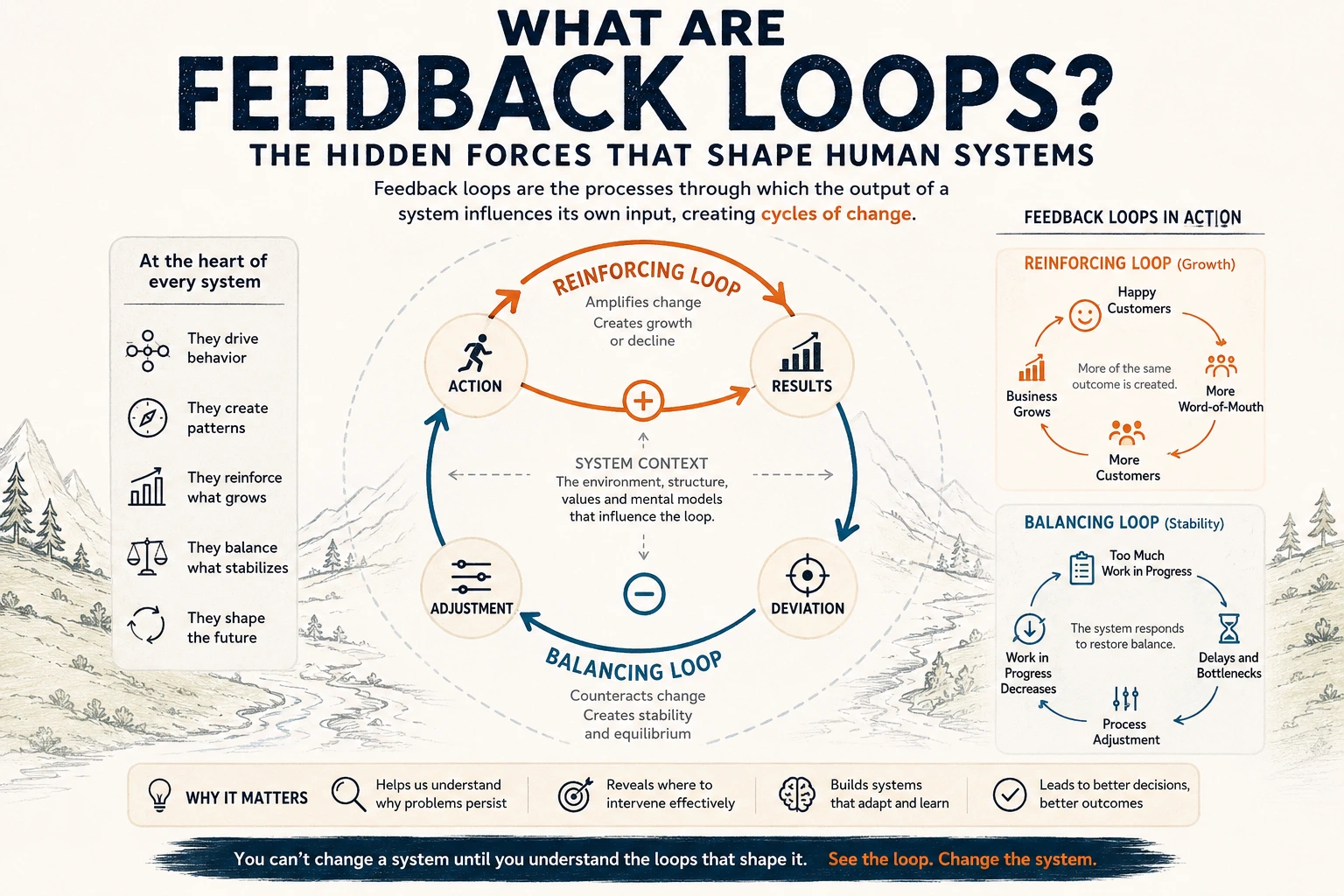
What Are Feedback Loops? The Hidden Forces That Shape Human Systems
How feedback loops analysis prevents problems keep returning no matter how often organizations try to fix them? Why do some behaviors become stronger over time while…
-
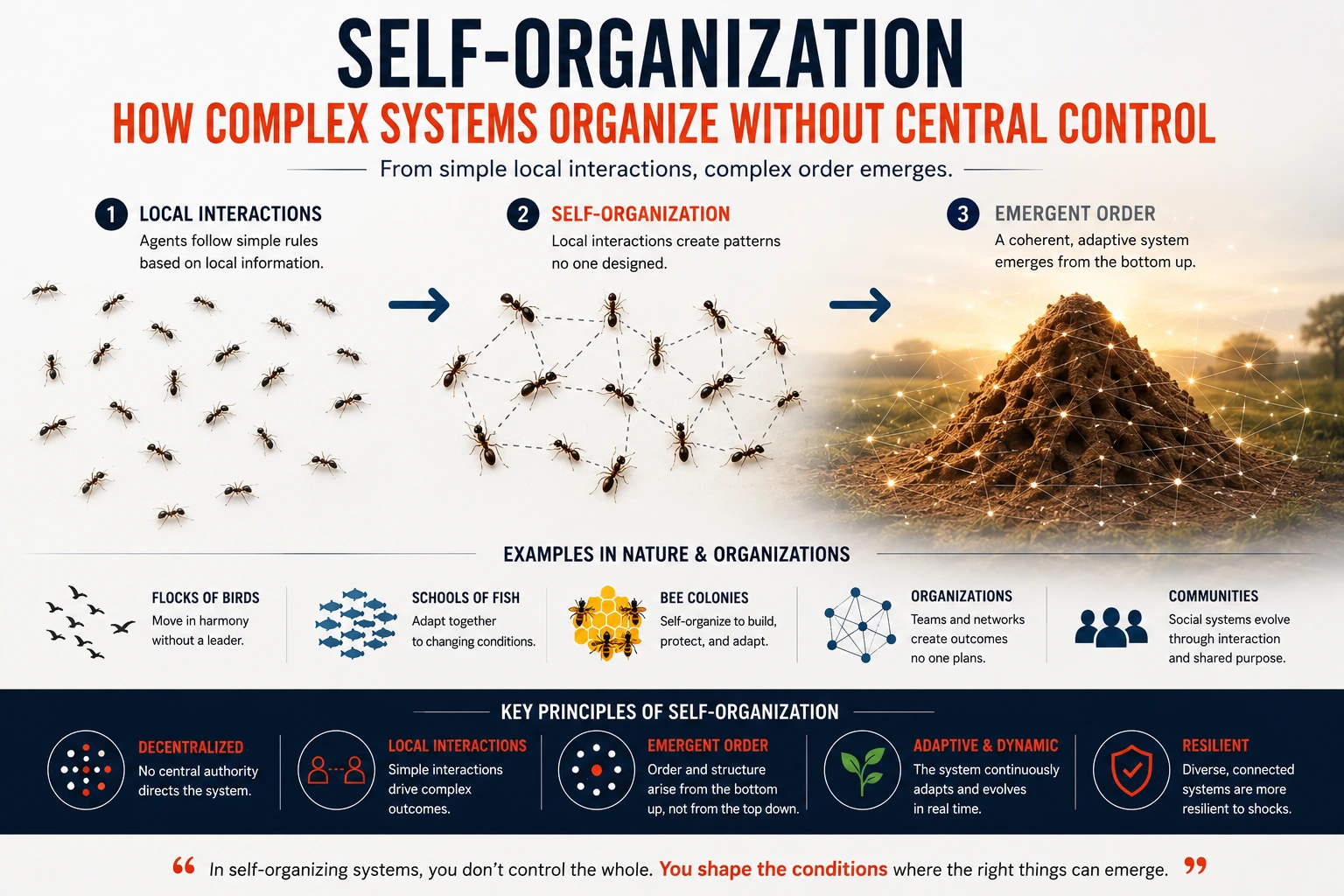
What Is Self-Organization? How Complex Systems Organize Without Central Control
Self-organization is one of the most important concepts in complexity science, systems thinking, organizational transformation, and System Shaping. It explains how order, structure, coordination, and collective…
-

What Are Leverage Points? How Small Changes Create Large System Effects
Some interventions change almost nothing without leverage points detection. Others reshape entire systems. Organizations invest millions in transformation programs that produce little lasting change. Meanwhile, a…
-
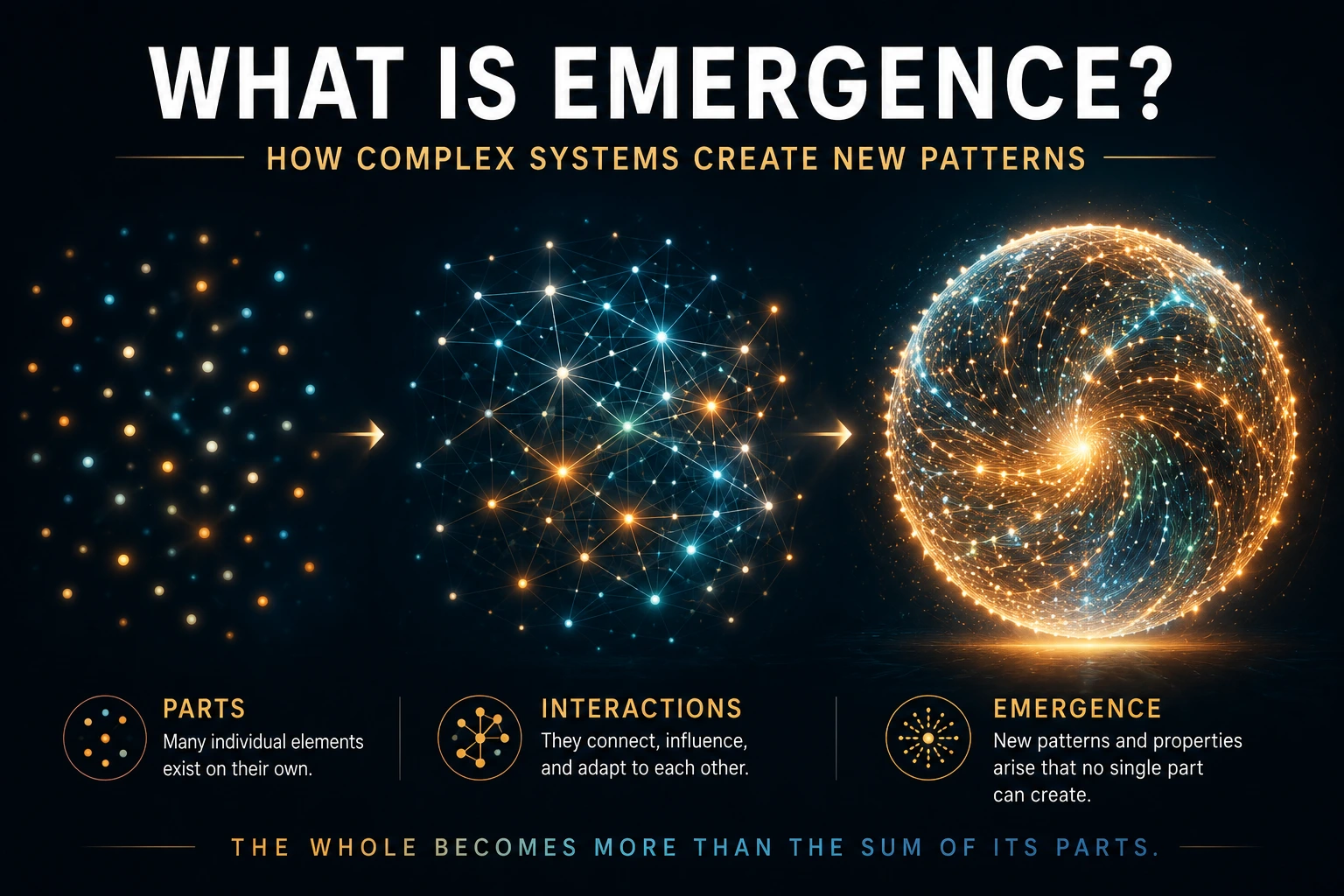
What Is Emergence? Definition and Examples in Systems Thinking
Emergence is the appearance of system-level patterns, properties, or behavior through interactions among the system’s parts. The key is the interaction: examining each part separately does…
-
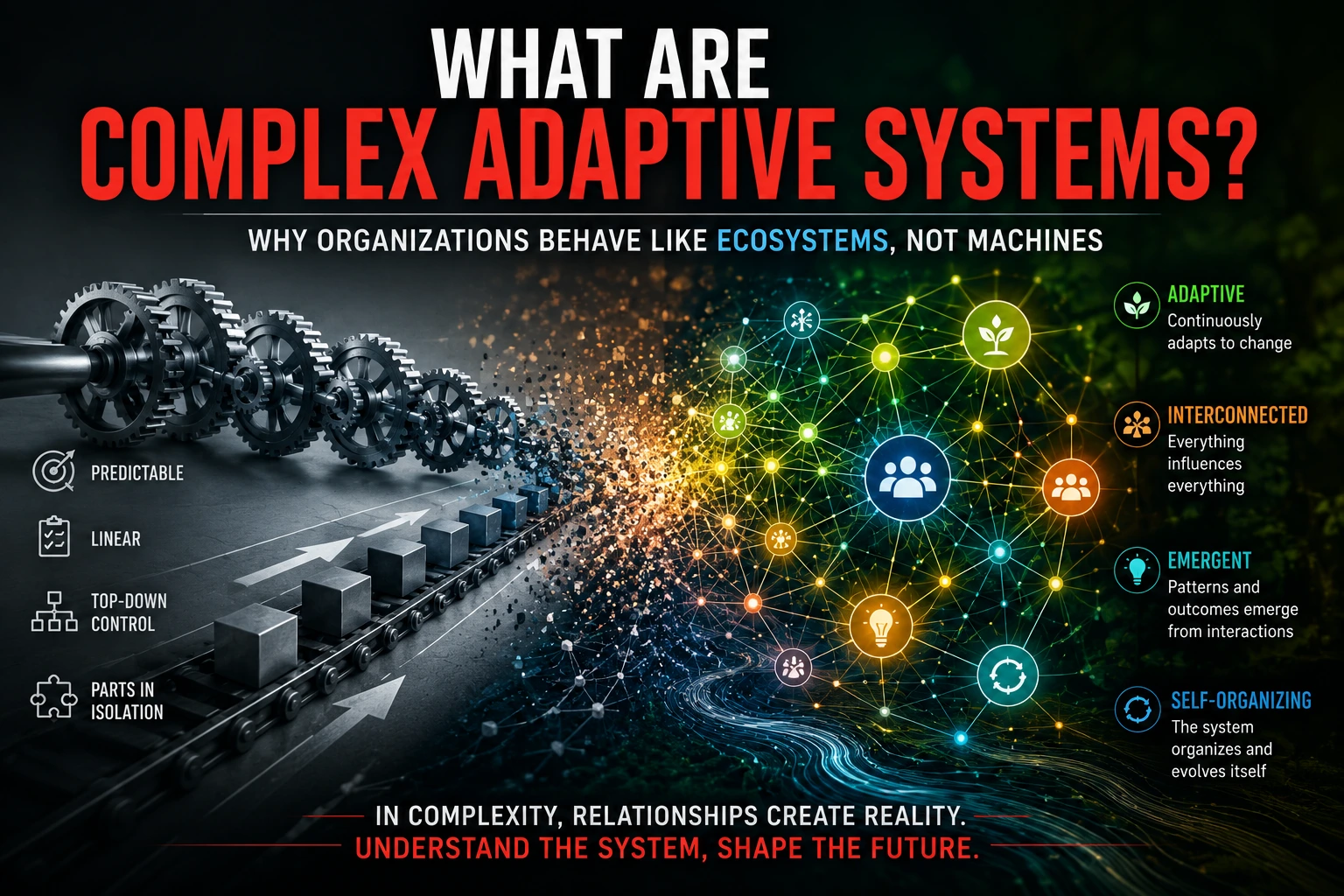
What Are Complex Adaptive Systems? A Guide to Emergence, Adaptation, and Complexity
Complex adaptive systems are one of the most important concepts for understanding organizations, leadership, transformation, culture, markets, societies, ecosystems, and human behavior. Many leaders still approach…