Category: Systems Thinking & Coaching
Systems don’t change one person at a time — they shift through patterns, feedback loops, and culture. In this category, explore practical frameworks for systemic coaching, tools to map and shape complex dynamics, and strategies that move beyond surface interventions toward real transformation.
-
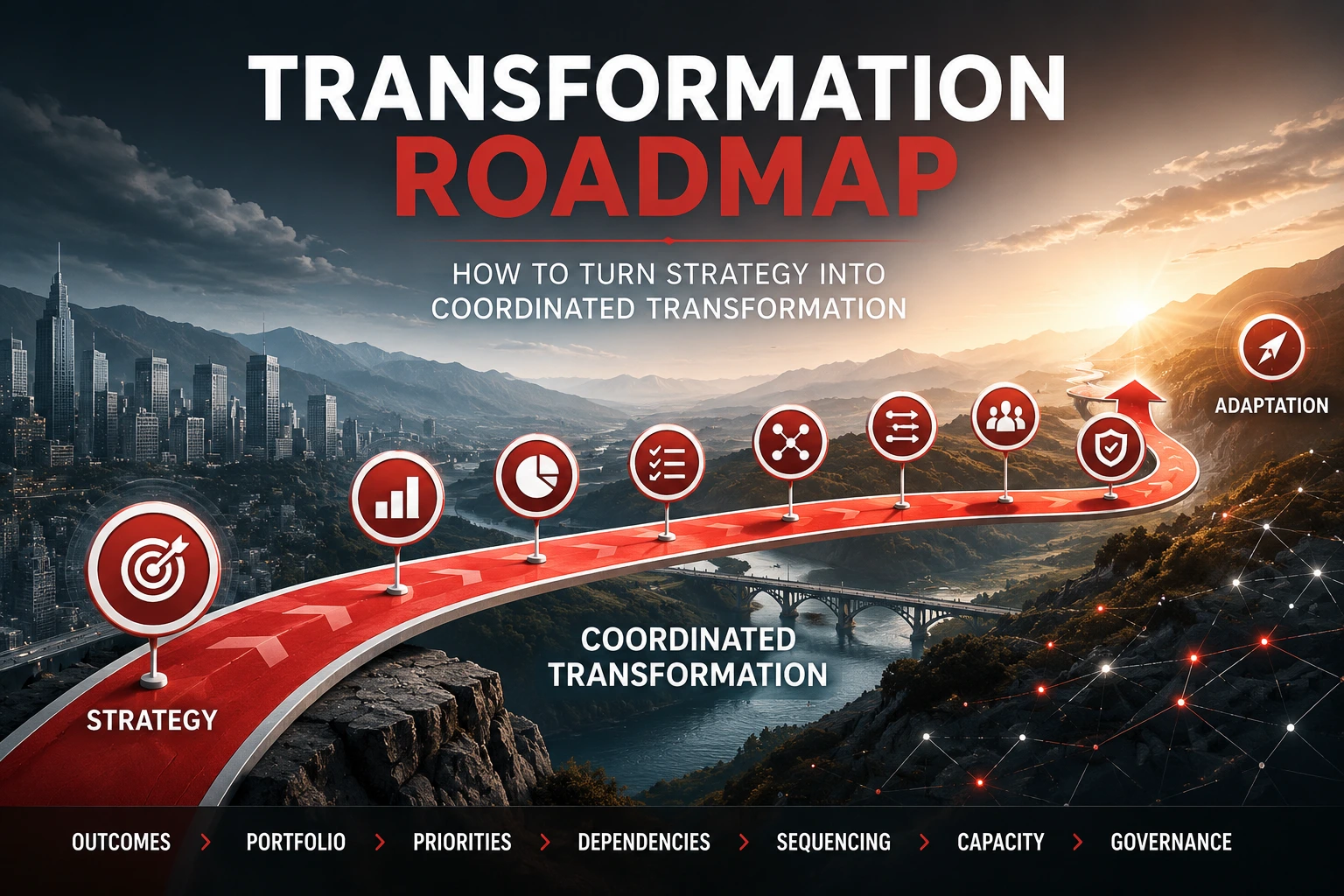
Transformation Roadmap: How to Turn Strategy Into Coordinated Transformation
A transformation roadmap connects strategy, outcomes, initiatives, dependencies, sequencing, organizational capacity, governance and adaptation into one coordinated system for enterprise transformation.
-
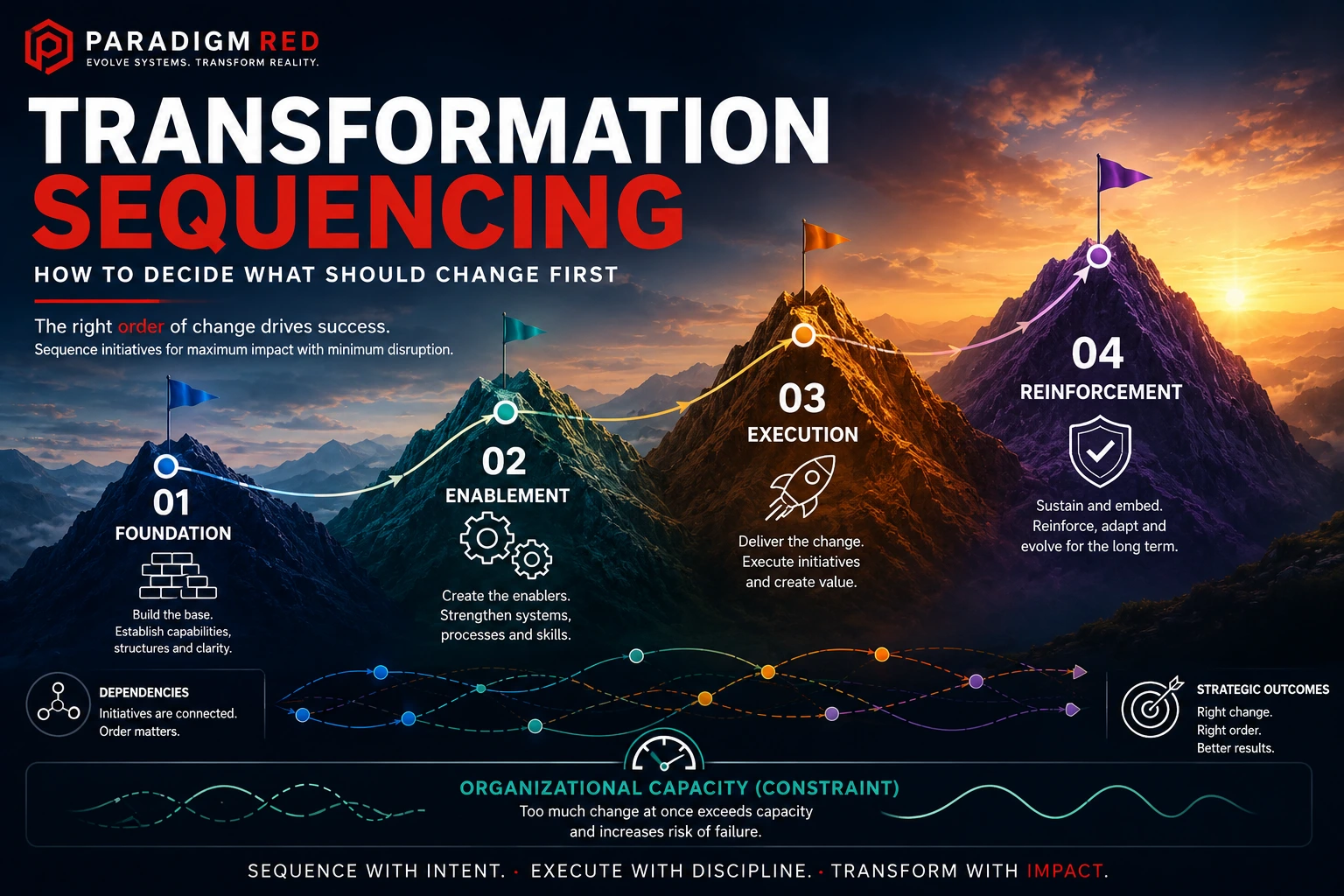
Transformation Sequencing: How to Decide What Should Change First
Transformation sequencing determines the right order of change by integrating dependencies, capacity, readiness, risk and strategic value.
-
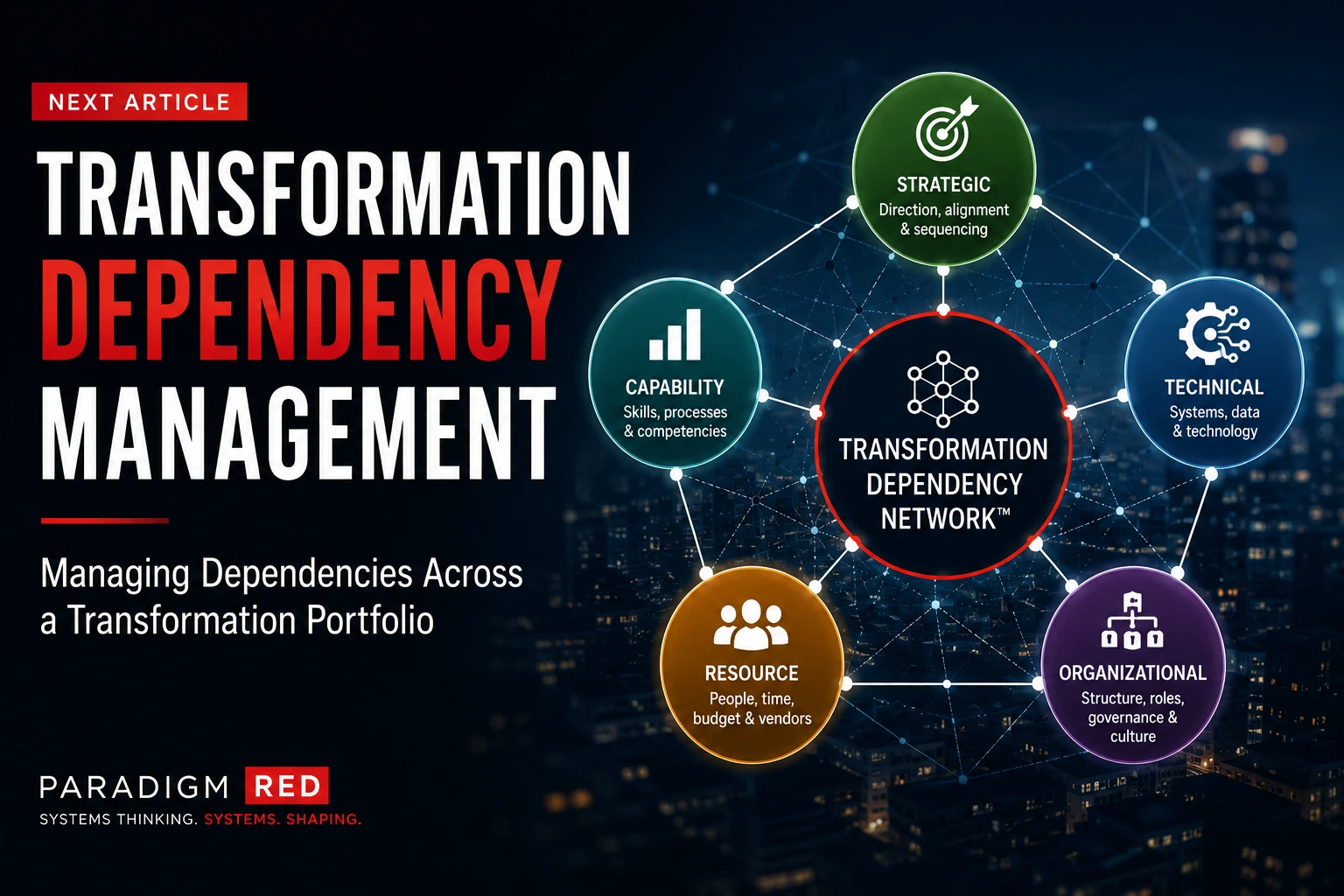
Transformation Dependency Management: How to Manage Dependencies Across a Transformation Portfolio
Learn how to map, sequence, govern, prioritize, and resolve dependencies across complex transformation portfolios.
-
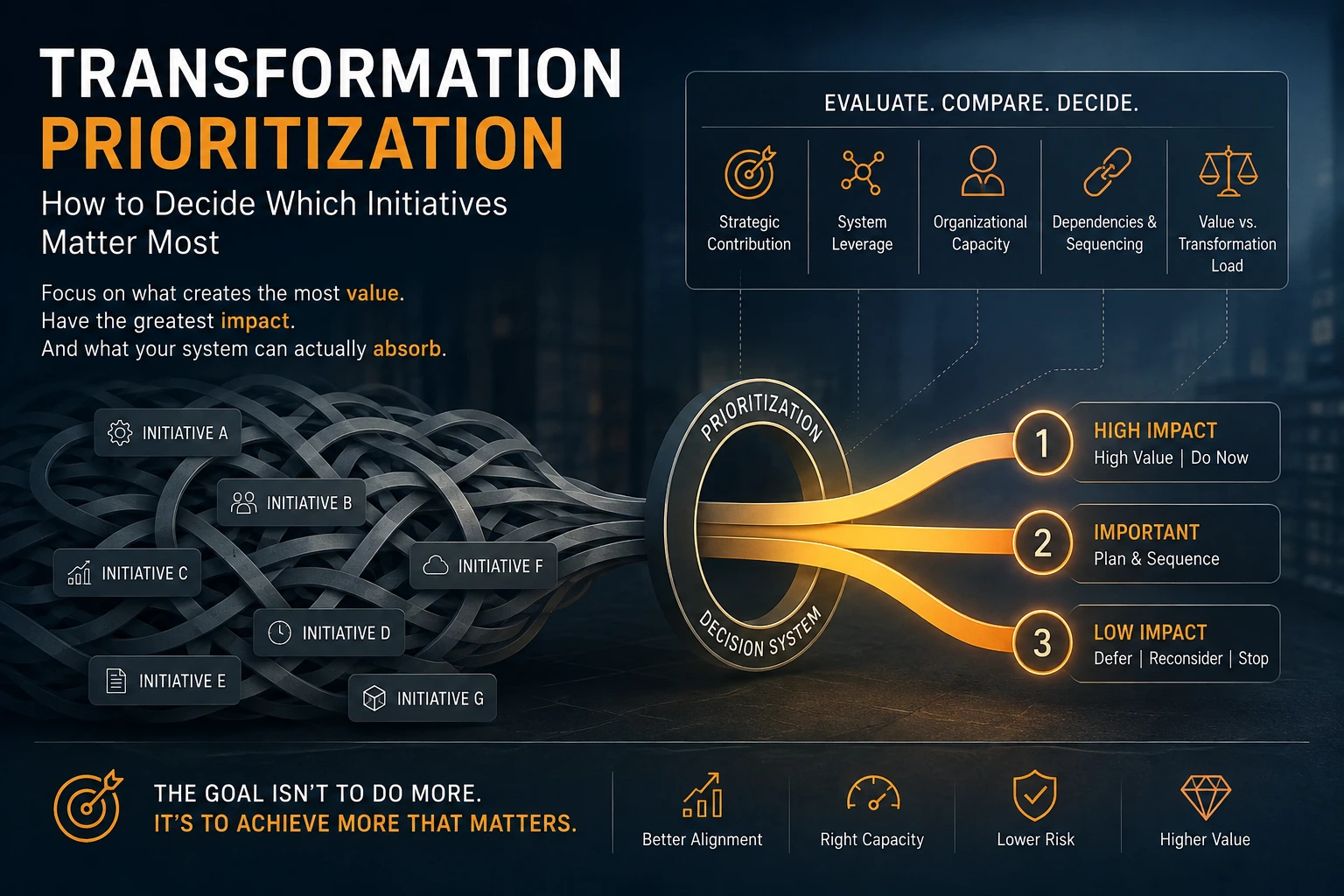
Transformation Prioritization: How to Decide Which Initiatives Matter Most
How to prioritize transformation initiatives by strategic value, system leverage, organizational capacity, dependencies, and transformation load.
-
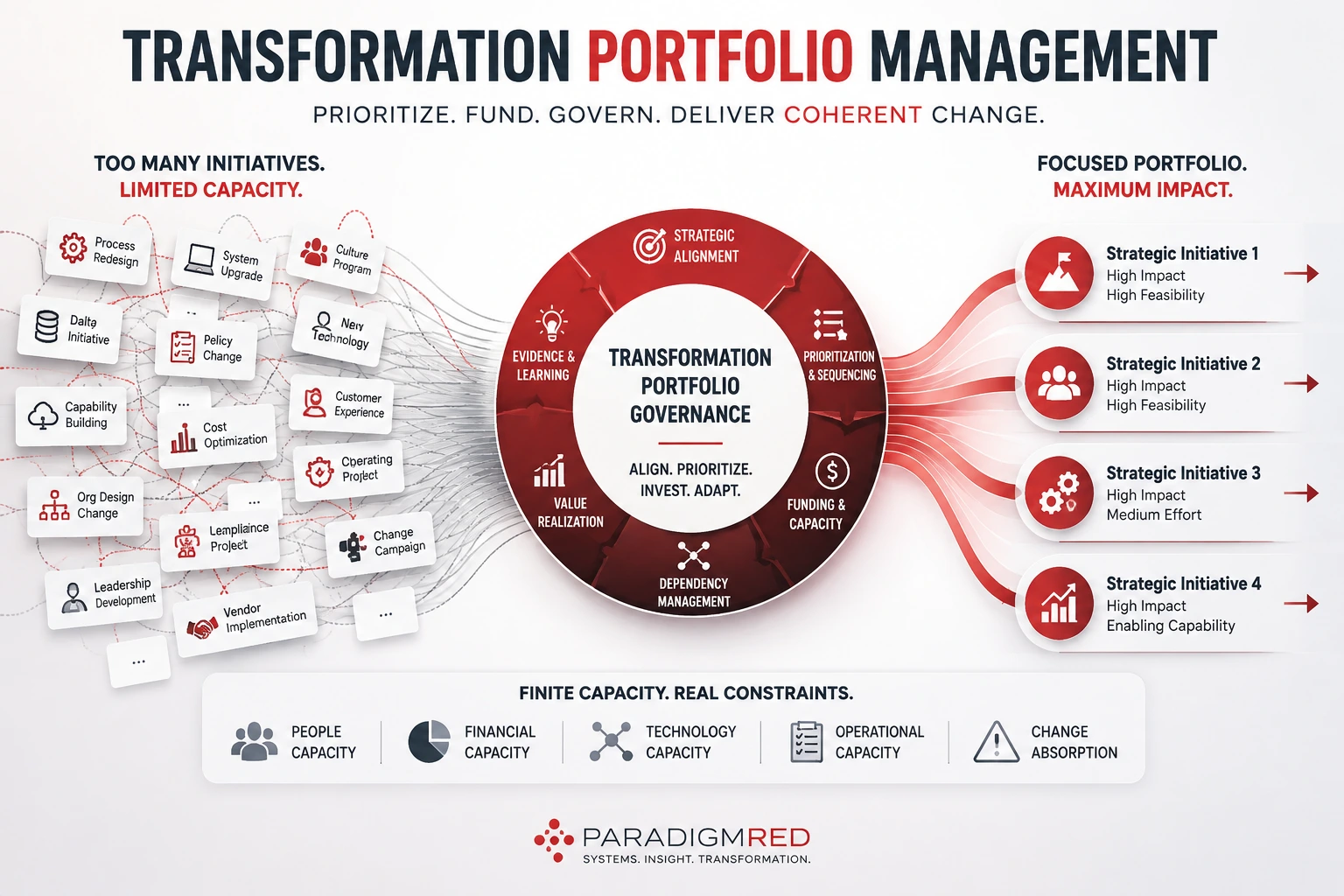
Transformation Portfolio Management: How to Prioritize, Fund, and Govern Enterprise Change
Transformation portfolio management helps organizations prioritize, sequence, fund, and govern interconnected initiatives within real capacity constraints.
-
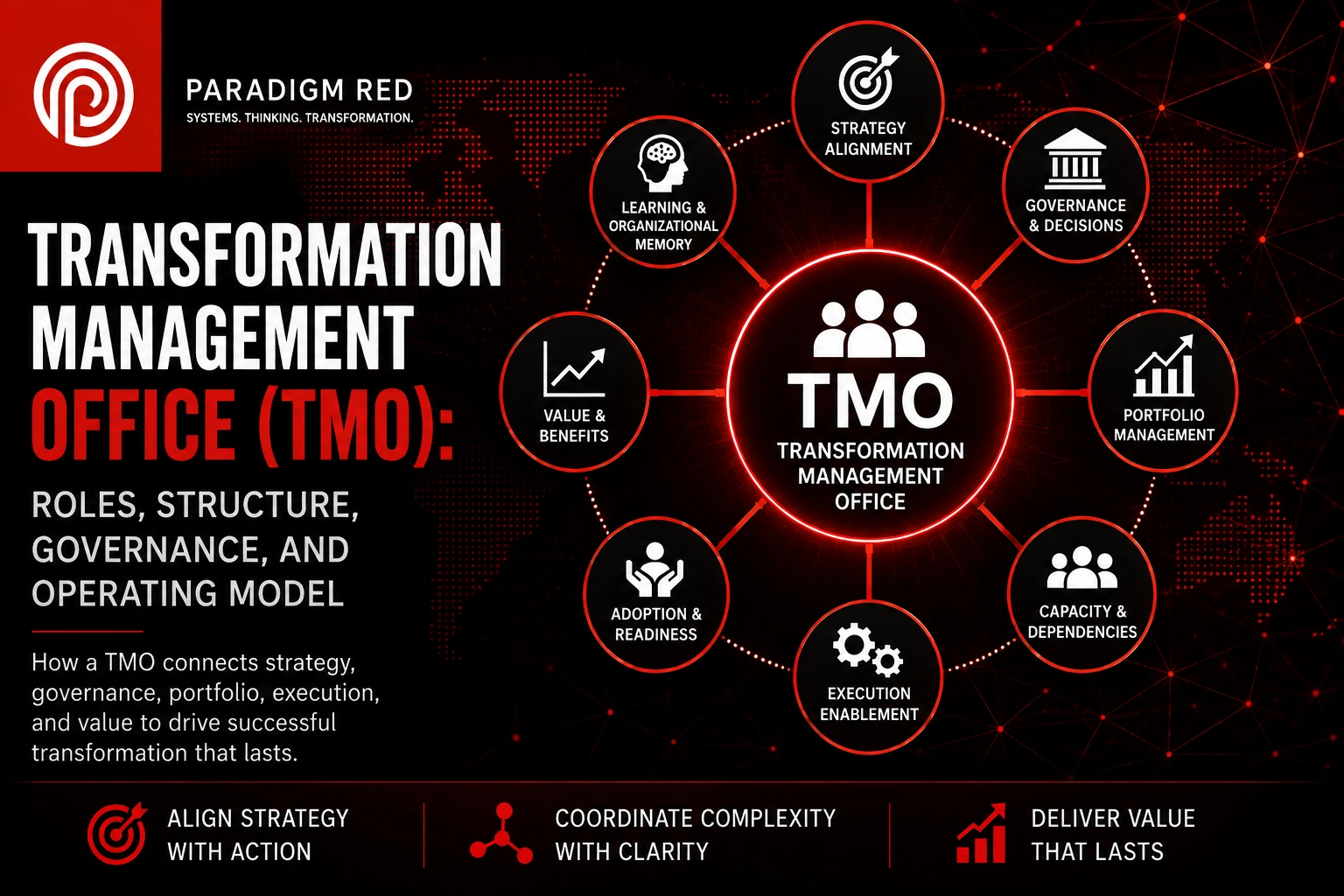
What Is a Transformation Management Office? Roles, Structure, Governance, and Operating Model
A Transformation Management Office connects enterprise strategy with portfolio decisions, governance, capacity, execution, adoption, benefits and organizational learning. This guide explains its roles, structure, operating models,…
-
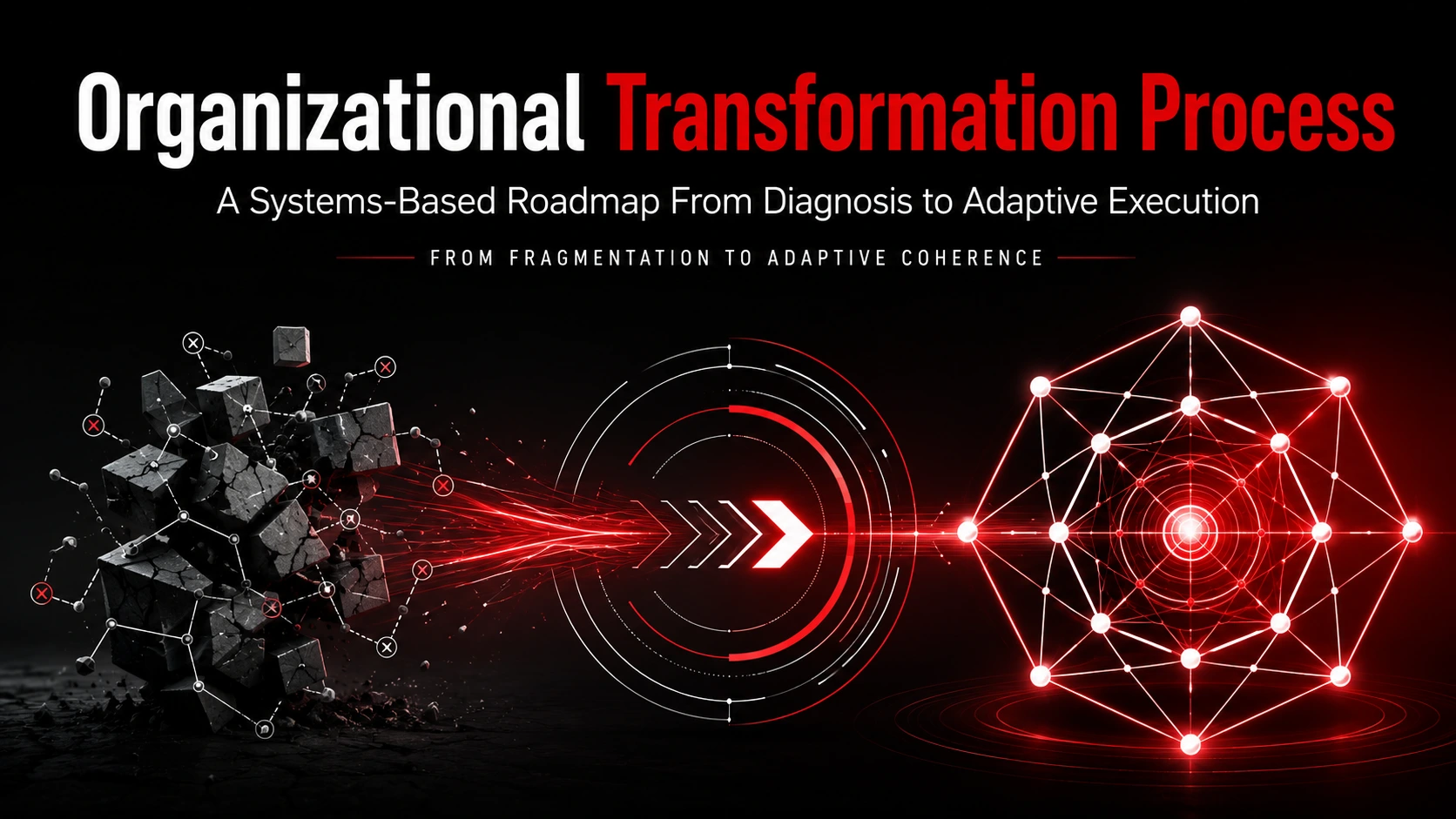
Organizational Transformation Process: A Systems-Based Roadmap From Diagnosis to Adaptive Execution
Organizational transformation is not a larger change project. It is an adaptive process that connects diagnosis, strategy, governance, intervention, feedback, learning, and institutionalization so the organization…
-
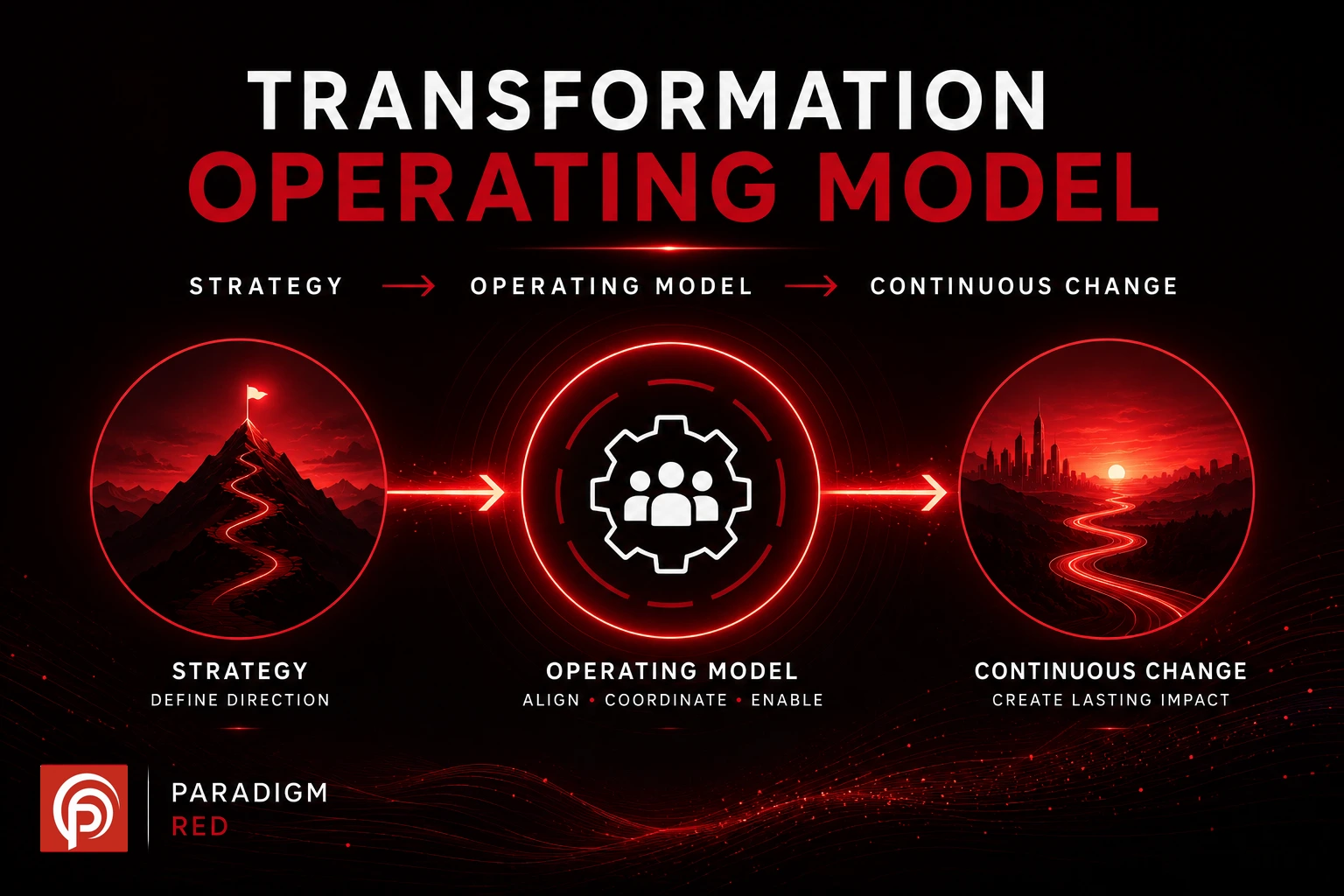
Transformation Operating Model: How to Turn Strategy Into Continuous Change
A transformation operating model connects strategy, governance, decision rights, funding, capabilities and organizational learning so transformation becomes a repeatable organizational capability rather than a temporary program.
-
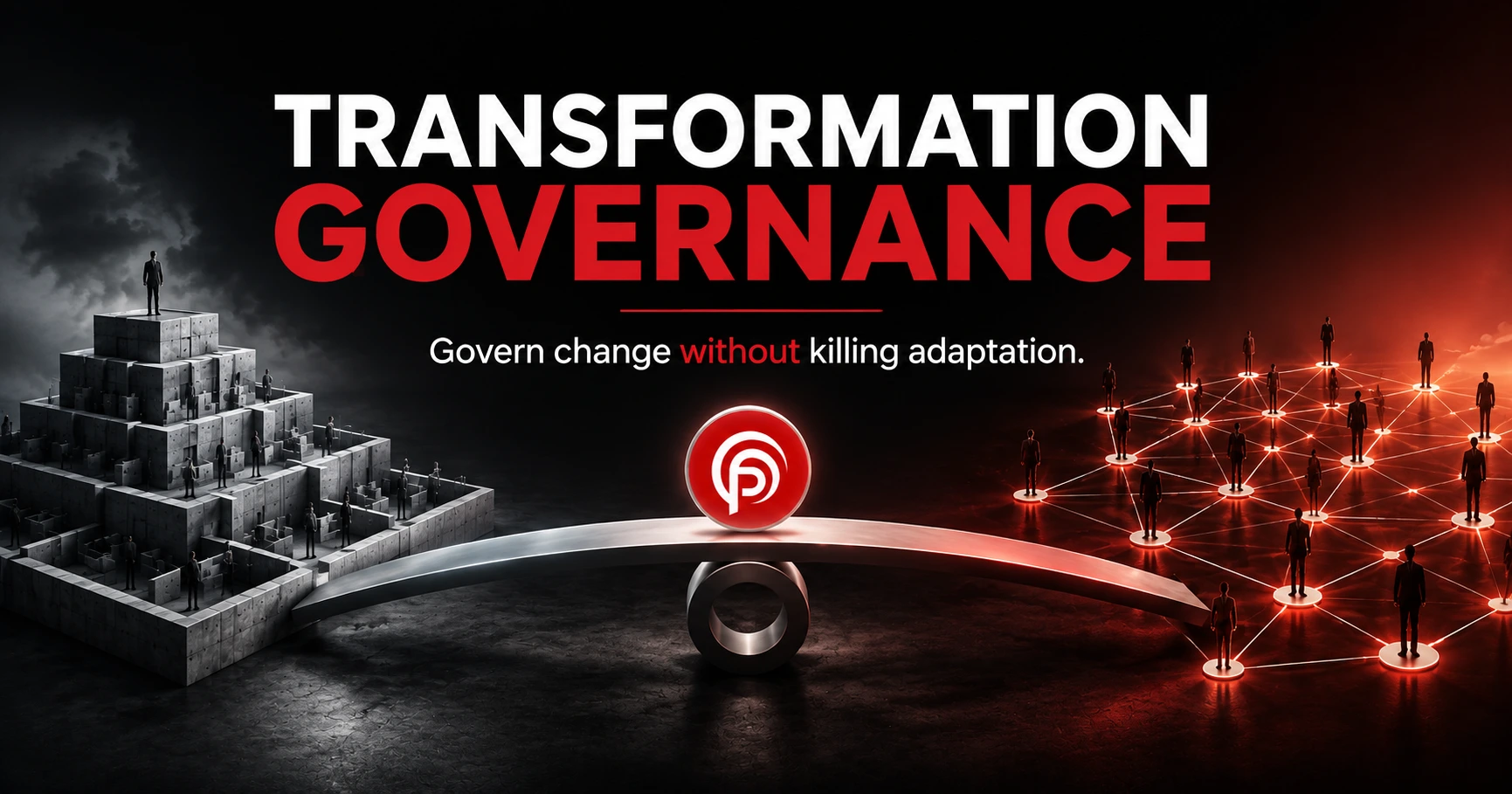
What Is Transformation Governance? How to Govern Change Without Killing Adaptation
Transformation governance should not add another layer of meetings and reporting. It should create a decision system that aligns complex change, distributes authority intelligently and turns…
-

Why Strategy Execution Fails: Fix the Execution System
Learn why strategy execution fails, how the execution gap forms, and how leaders can redesign the organizational system that turns strategy into results.