Category: Leadership & Culture
Leadership is more than decisions — it’s the culture that holds a system together. In this category, we explore trust, psychological safety, and the deeper dynamics that allow organizations to grow, adapt, and thrive in complexity.
-

Normalization of Deviance: How Bad Practices Become Normal
Learn how repeated exceptions become accepted practice, with workplace examples, a software-release case, and a practical exception-review template.
-

Escalation of Commitment: Why Teams Keep Funding Failing Projects
Learn why teams keep funding struggling projects, distinguish escalation of commitment from sunk-cost fallacy, and use a practical review to decide whether to continue, change, pause,…
-

Premortem Analysis: How to Run One + Template and Example
Run a practical premortem analysis with a 60-minute agenda, a copy-and-fill worksheet, and a completed transformation example.
-
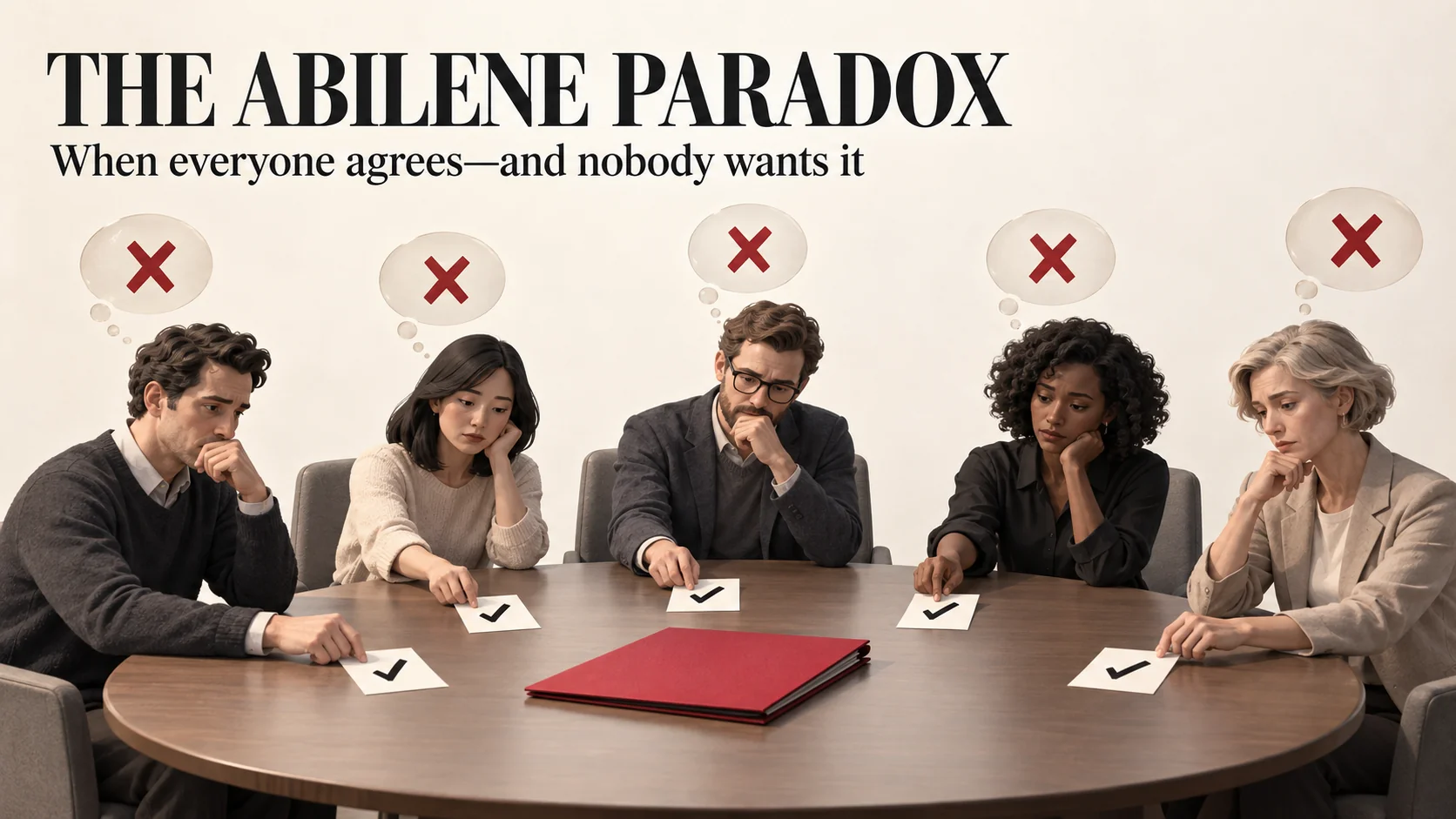
Abilene Paradox: Why Teams Agree to Decisions Nobody Wants
Understand the Abilene paradox, explore workplace examples, compare it with groupthink, and learn how to prevent decisions nobody actually wants.
-

Change Saturation: How to Measure When an Organization Has Too Much Change
Identify change saturation with a practical assessment, worked example, and decision rules for sequencing, simplifying, or pausing competing initiatives.
-

Transformation Management Office Maturity Model: 5 Stages from Coordination to System Shaping
A practical Transformation Management Office maturity model covering five stages—from reporting and coordination to adaptive governance and System Shaping.
-
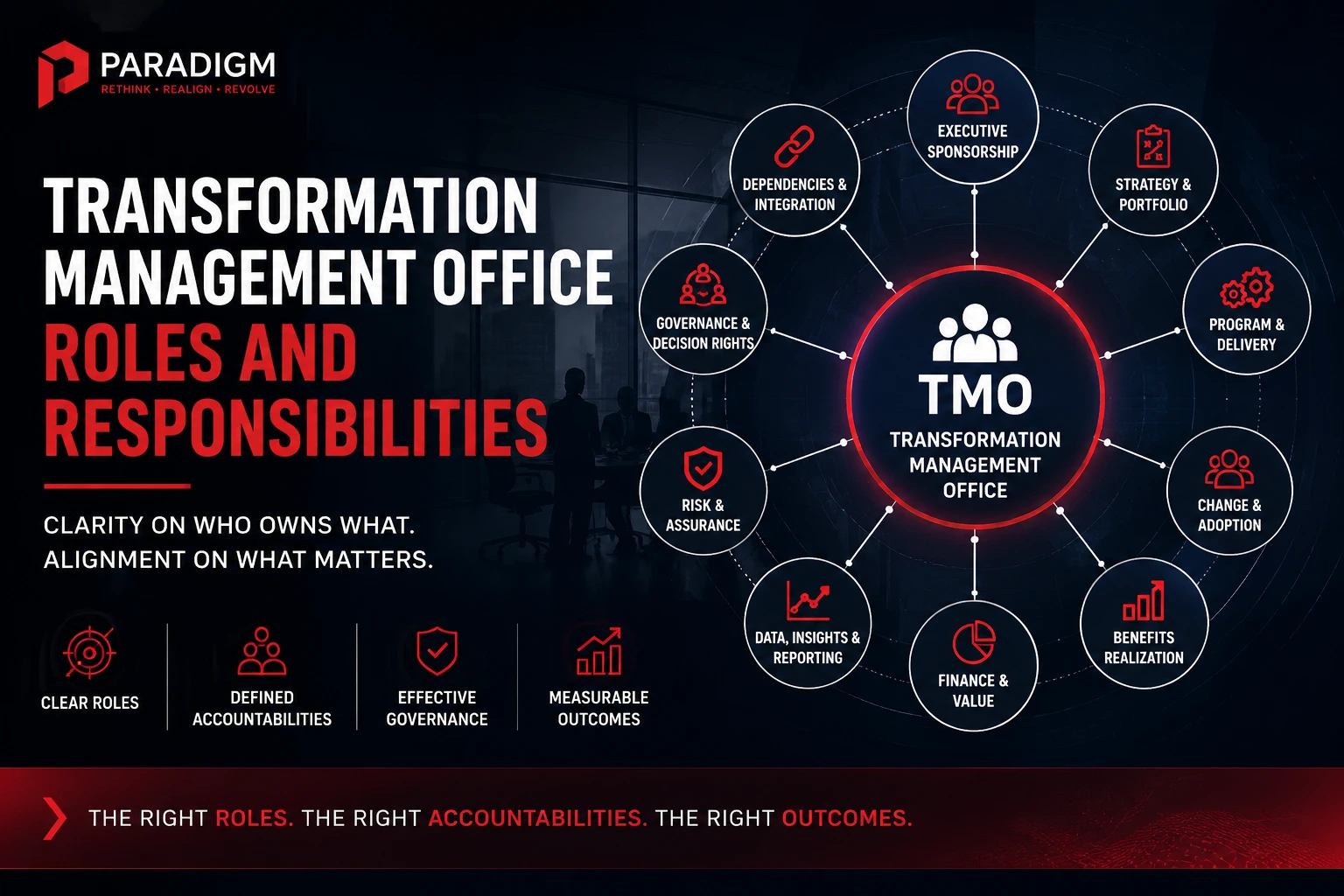
Transformation Management Office Roles and Responsibilities: Who Owns What in a TMO?
A practical guide to Transformation Management Office roles and responsibilities, including decision rights, governance, RACI, portfolio coordination, adoption and benefits realization.
-

Transformation Management Office Structure: Roles, Reporting Lines, and Team Models
A practical guide to Transformation Management Office structure, including TMO roles, reporting lines, decision rights, staffing, centralized, federated and hybrid models, interfaces, and structural evolution.
-

What Is Organizational Learning? How Organizations Learn, Remember, and Adapt
Organizational learning is how organizations turn experience into shared knowledge, changed action, retained memory, and better adaptation. Explore the process, major frameworks, examples, failure points, and…
-
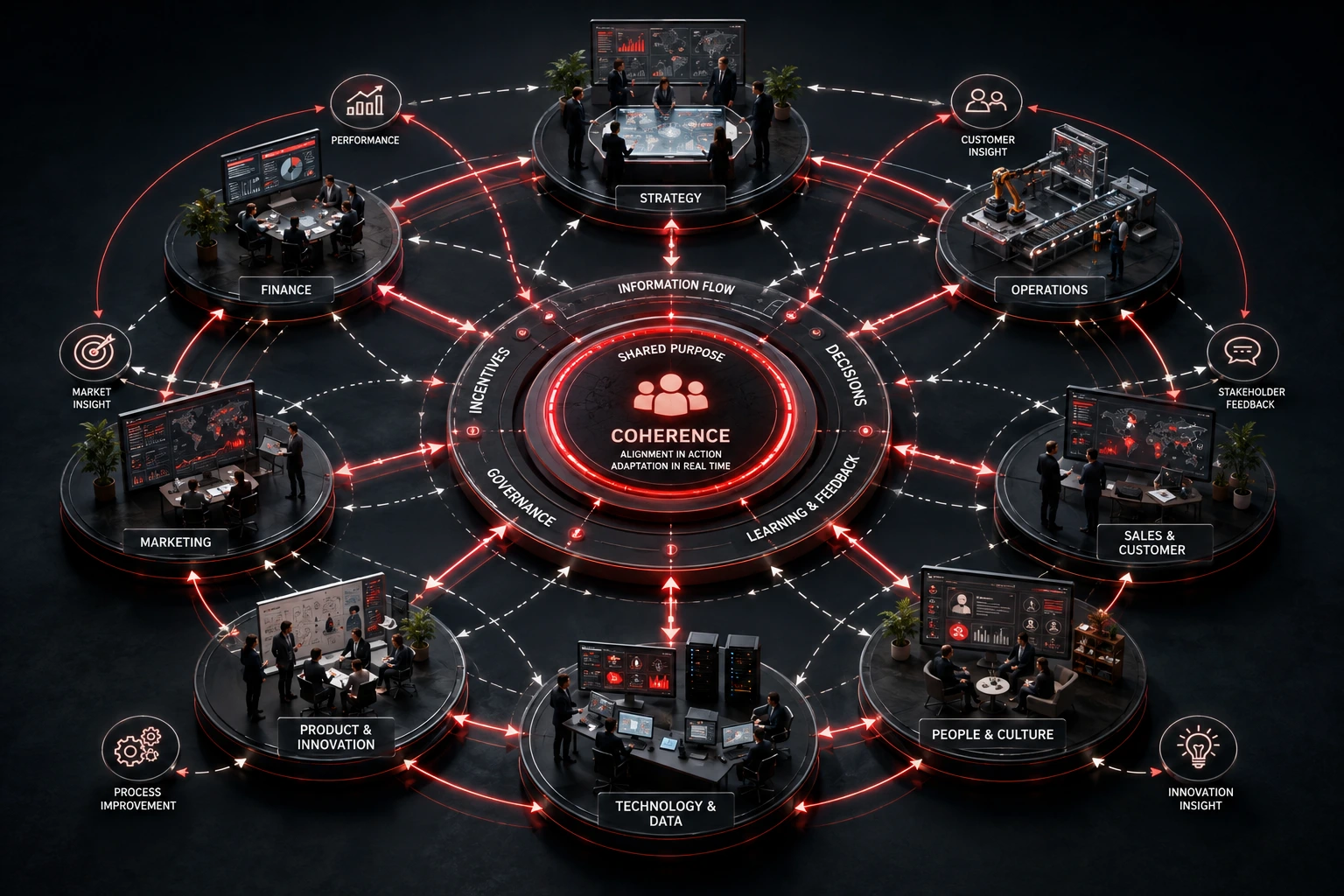
What Is Organizational Coherence? Definition, Framework, and How to Build It
Organizational coherence is the capacity of strategy, structures, information, decisions, incentives, operations, and learning to reinforce one another so specialized teams can function as one adaptive…